

Forehead Reduction FAQ: Pain, Healing and Practical Questions
This page answers the questions people ask once they have read about forehead reduction: what the pain feels like, how long numbness lasts, when you can wash your hair, how to sleep, how long swelling shows, who can have it and whether insurance pays. The answers reflect how Op. Dr. Ahmet Dilber works in Istanbul. You receive written aftercare instructions in English and Turkish.
Send your photos on WhatsAppRead about the procedure


Ratings as of November 2026
Acıbadem Bakırköy
where Dr. Dilber operates, with one night of hospital care
1 year
of follow-up after surgery, in person or on WhatsApp
Licensed
for international health tourism by the Turkish Ministry of Health
How much does it hurt, and how does the forehead feel afterwards?
Most questions in the first weeks are about comfort and sensation. These answers describe what is usual and when to send photos.
What does the pain feel like after surgery?
Most people describe tightness and mild pain across the forehead and scalp rather than sharp pain; pressure or a headache in the forehead is usual for the first weeks. It is strongest in the first days. Dr. Dilber prescribes a painkiller for 4 days and an antibiotic for 5 days, and most patients feel well enough to go out the day after surgery.
Will my forehead or scalp feel numb?
Yes, numbness on top of the scalp, behind the hairline, is common, because small sensory nerves are stretched during surgery. Feeling returns over several months as the nerves reconnect. Mention any change that lasts in your follow-up photos on WhatsApp.
Is itching along the incision normal?
Yes. Itching is common as the wound heals and the nerves recover. Do not scratch or pick at the incision line. If itching comes with redness, heat or discharge, send photos on WhatsApp so Dr. Dilber can review them.
Can I still move my eyebrows afterwards?
Yes. The operation removes skin at the hairline and does not weaken the muscles that raise the eyebrows. It does not lift the brows either, although a minimal lift can be requested. Expression can feel stiff while swelling and numbness settle.
Forehead reduction results
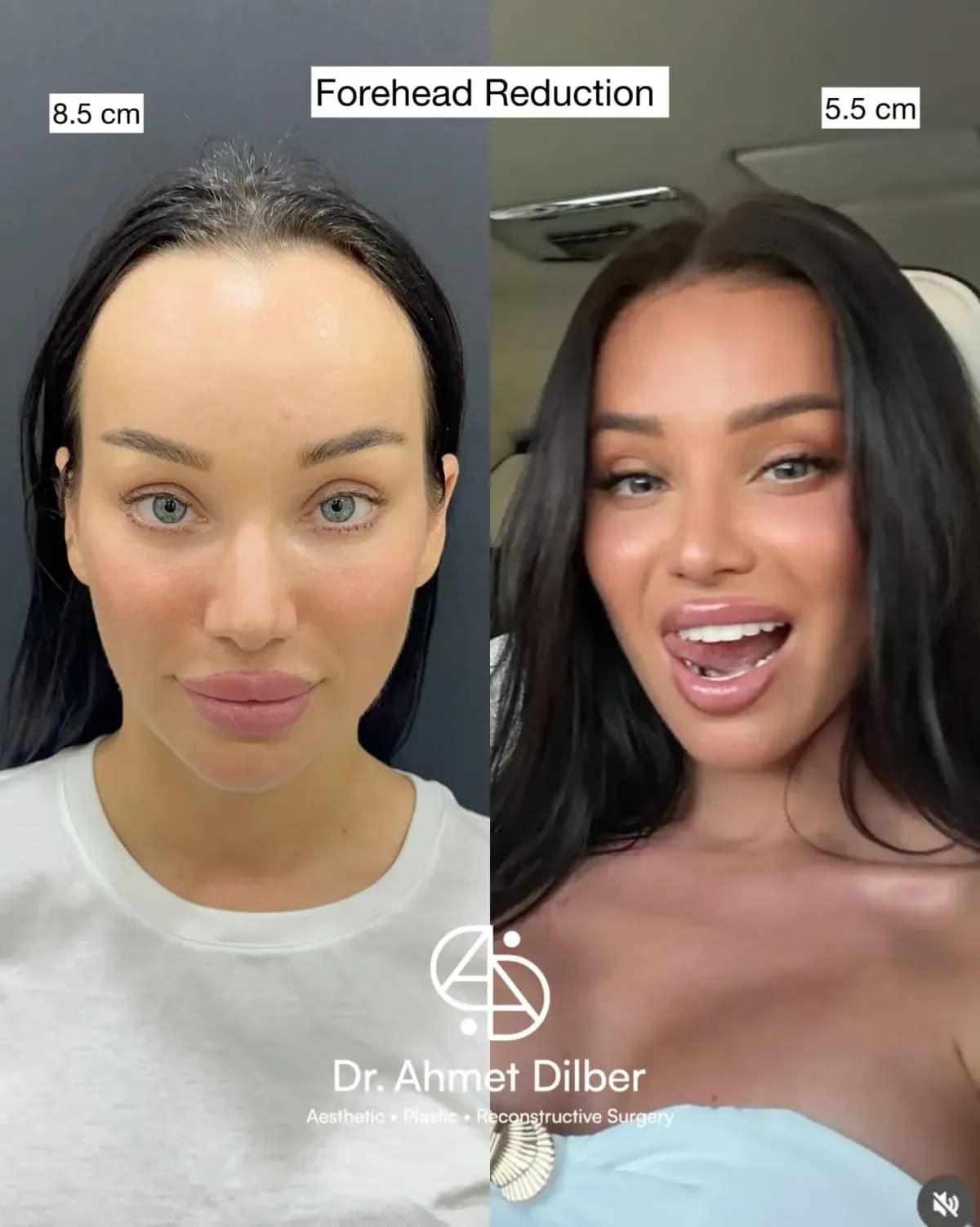
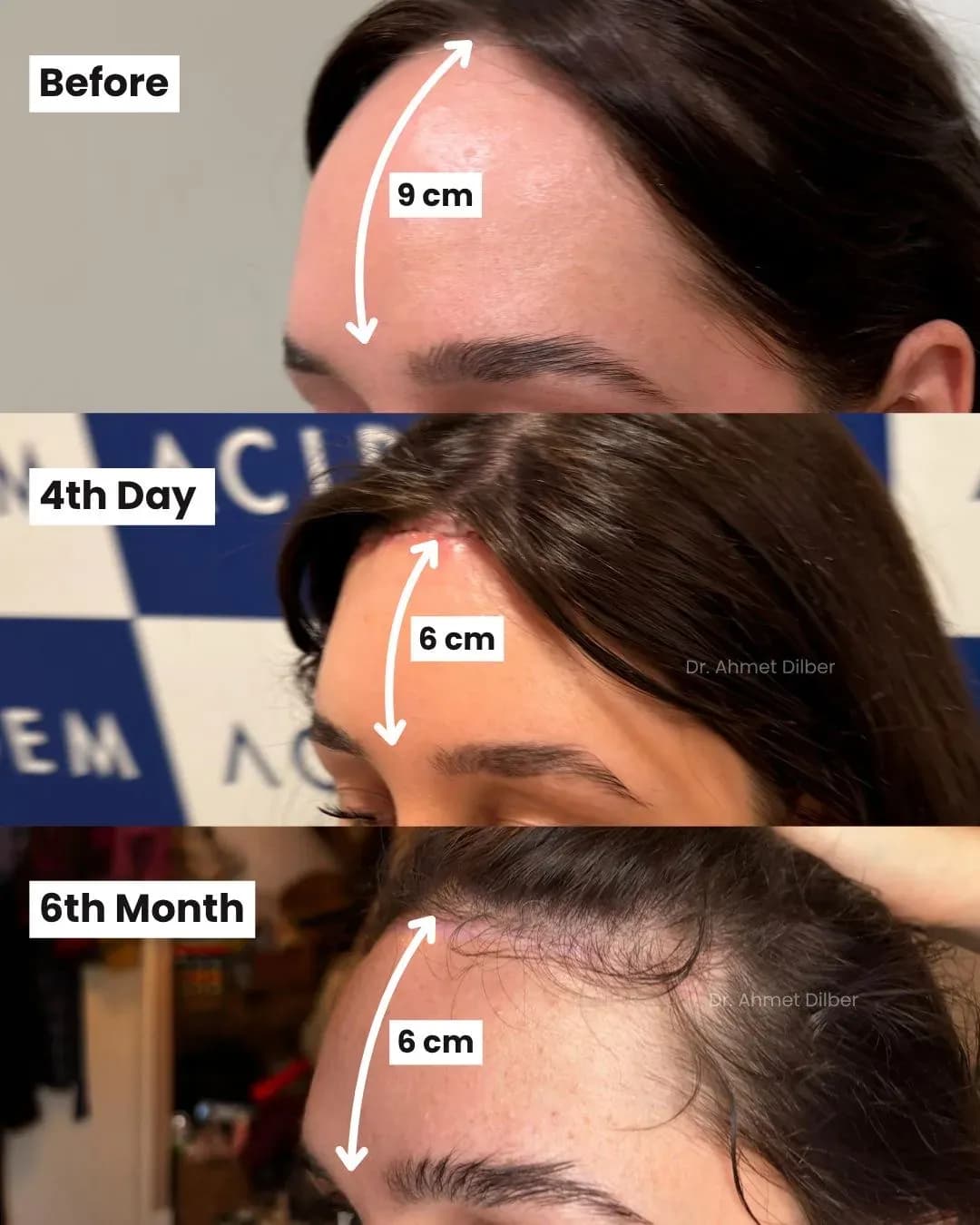
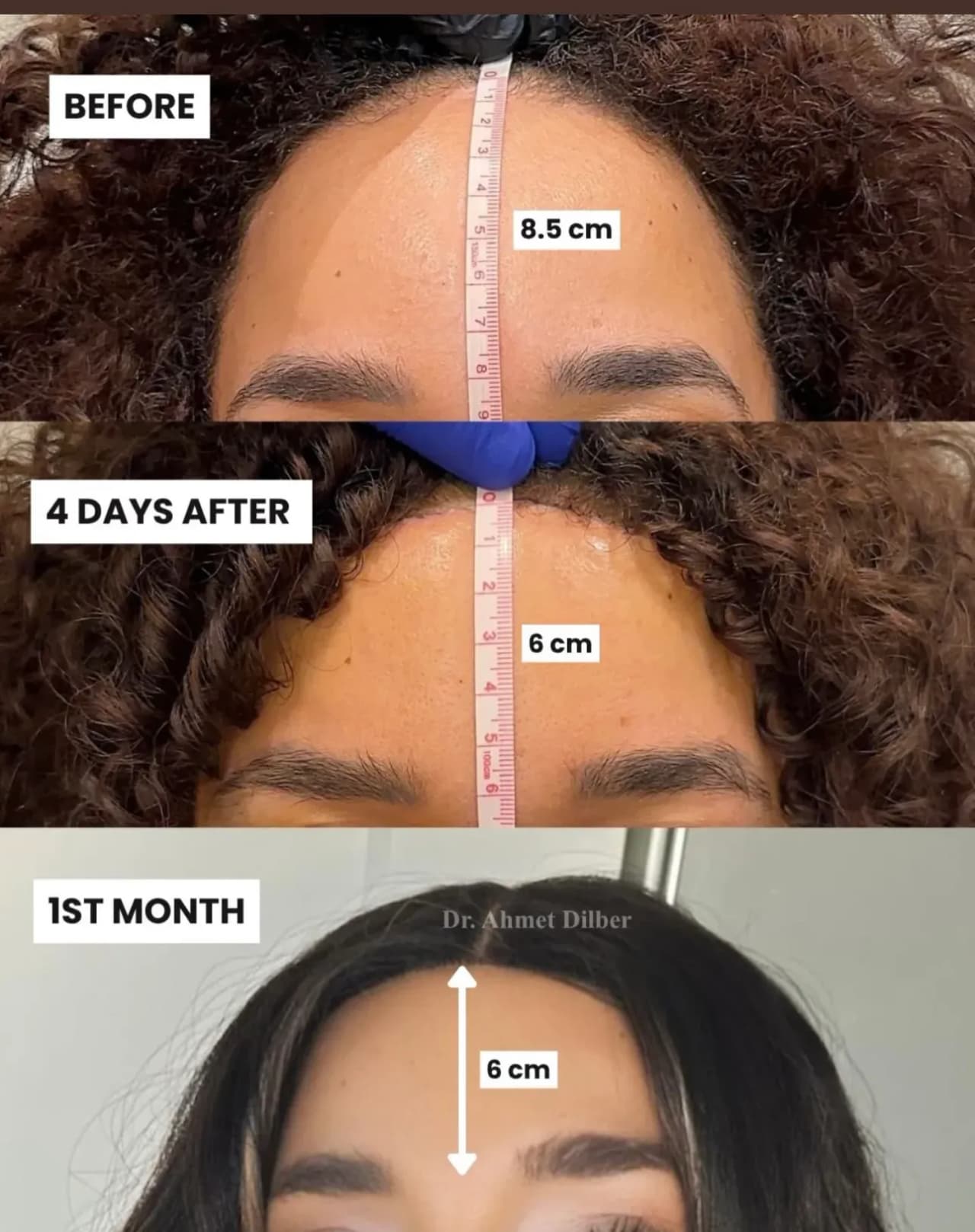
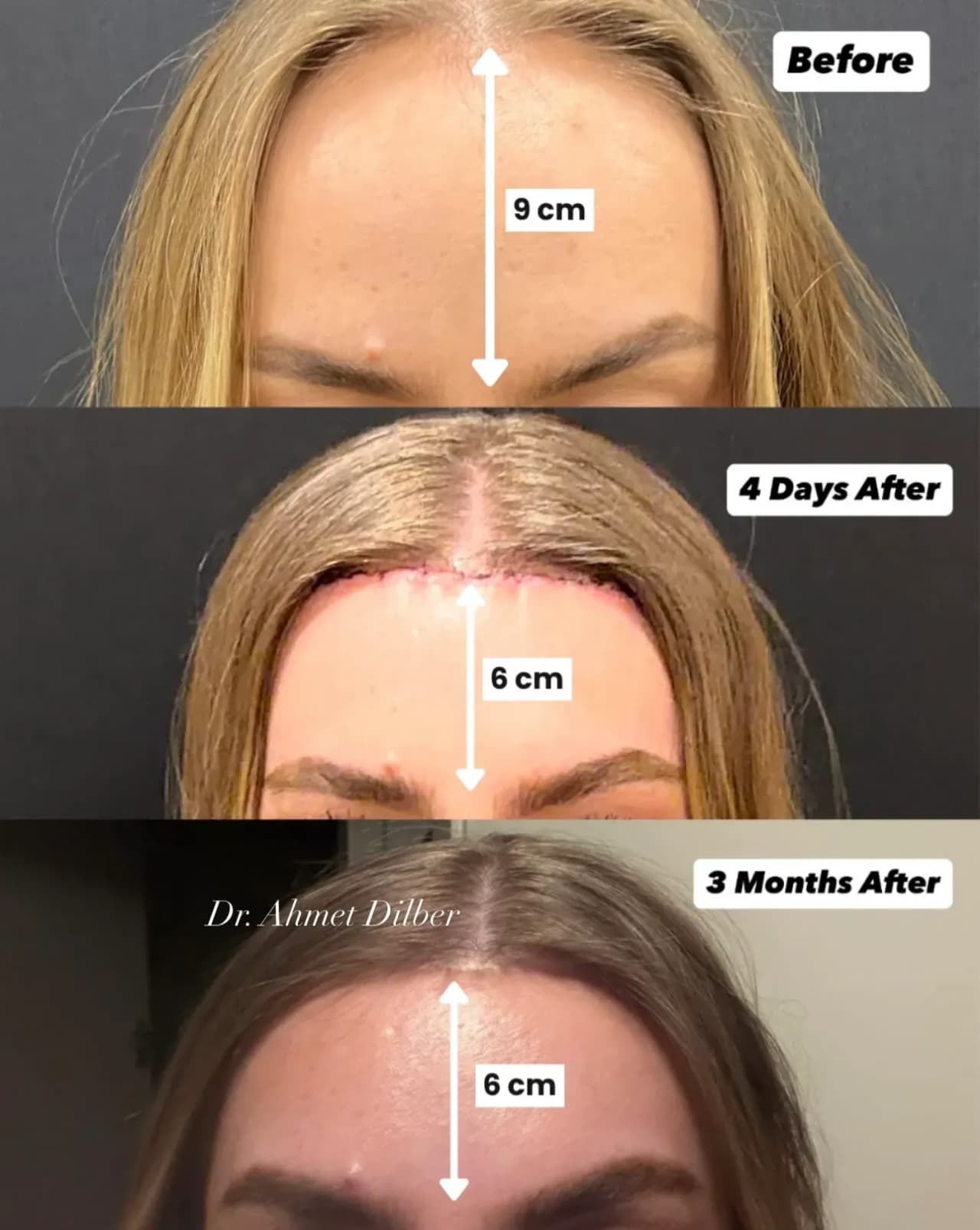
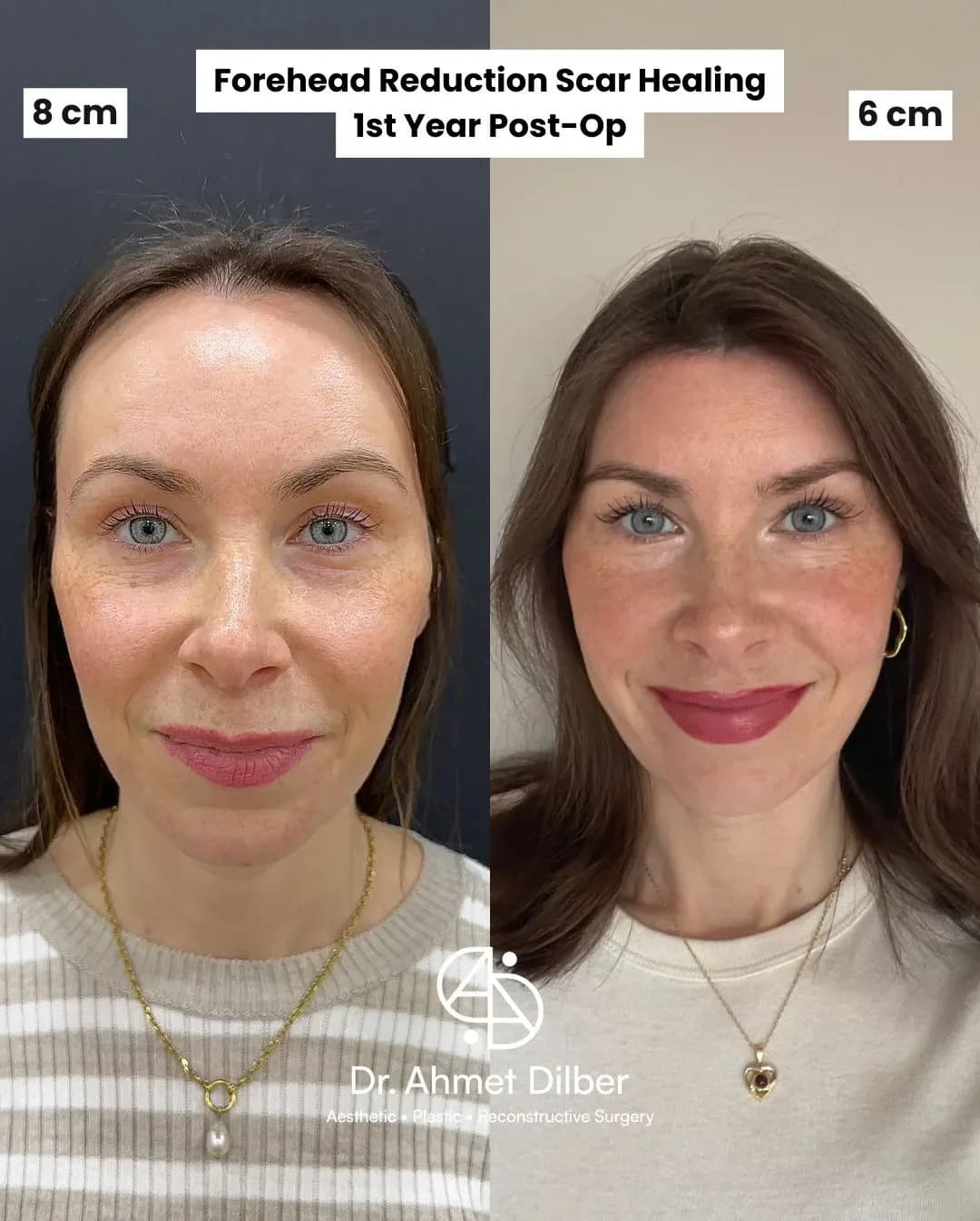
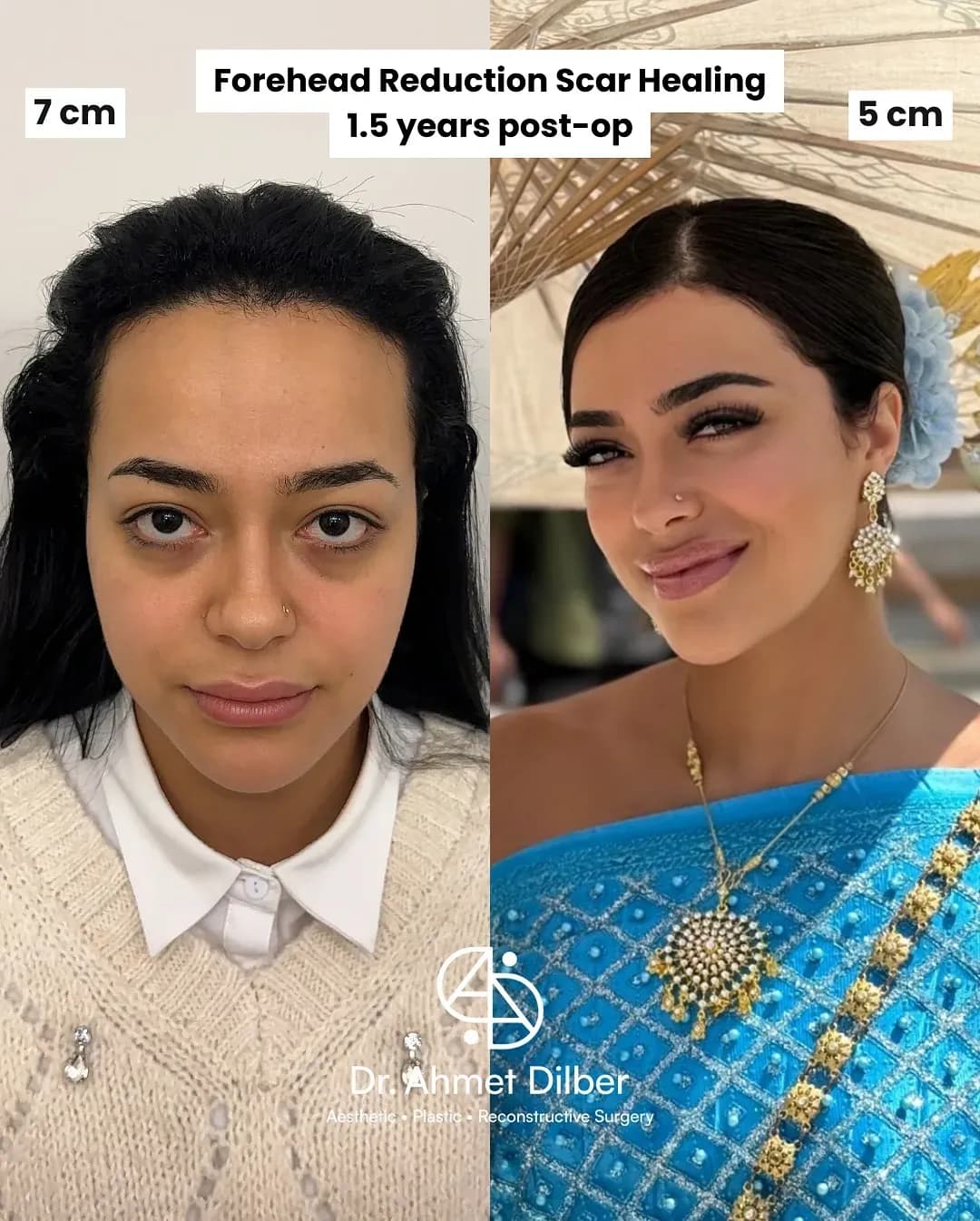
Before and after photos of Op. Dr. Ahmet Dilber's patients, from @drahmetdilber on Instagram. Results vary.
Your stay in Istanbul
You see Dr. Dilber at his practice in Ataköy, have surgery at Acıbadem Bakırköy Hospital and can stay at a nearby hotel.
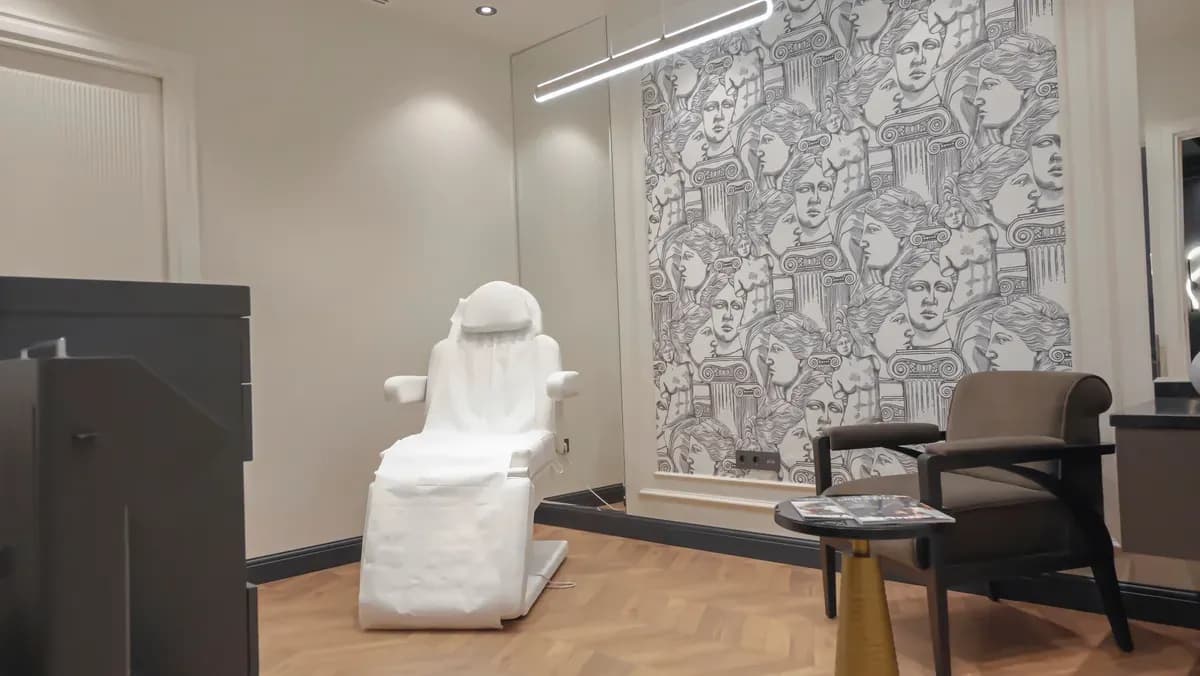
The practice in Ataköy 
Acıbadem Bakırköy Hospital 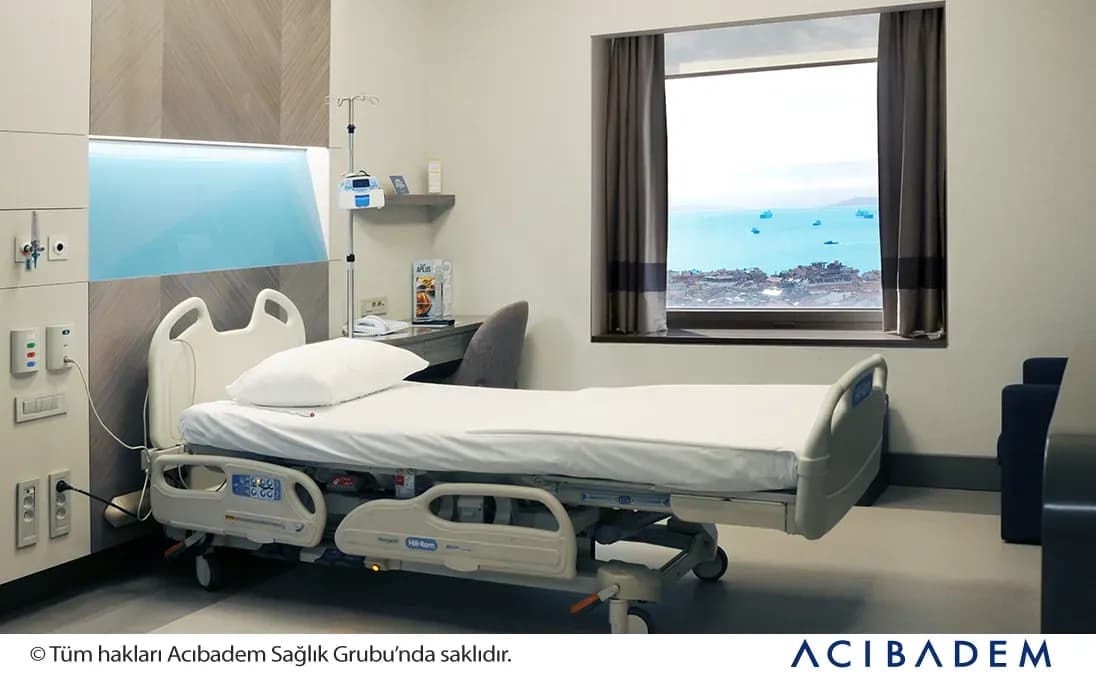
Patient room 
Hotel room, on request
When can you wash your hair, how should you sleep, and how long does swelling last?
These are the practical questions about the days after surgery. Dr. Dilber gives you written aftercare instructions in English and Turkish before you leave Istanbul.
When can I wash my hair?
You can shower from day 2 with warm or cold water; keep hot water, hot air and strong water pressure off the scalp, and do not blow-dry with heat. The plaster comes off at the Ataköy practice on day 4. After that, wash the incision line gently, use shampoo only (no conditioner or hair oils) for the first month and pat it dry without rubbing.
How should I sleep in the first week?
Sleep on your back with your head propped up on 2 to 3 pillows for the first days, and drink about 3 litres of water a day. This helps swelling go down and keeps pressure off the incision. Avoid sleeping face down until Dr. Dilber confirms the wound has healed enough.
How long does the swelling last?
Swelling starts across the forehead and can move down towards the eyes before it fades. It usually settles in 4 to 5 days, and most facial swelling is gone within the first week. Most people return to work after 5 days; physically heavy work comes later.
Will I have bruising?
Some people bruise around the eyes or upper eyelids as swelling moves down. It fades as the swelling settles. If one side swells much more than the other, or swelling increases after the first days, send photos on WhatsApp straight away.
When can I exercise or wear a hat?
Walking is fine from the day after surgery. Avoid strenuous exercise and contact sport for 6 weeks, and swimming for 4 weeks. A loose hat protects the scar from the sun, you can wear a hair band from day 1 to cover the tape, and a wig comes later.
Who can have forehead reduction, and will insurance pay?
Is there a minimum age?
Yes. Dr. Dilber treats adults only: you must be 18 or over, with no medical condition that rules out surgery. He decides suitability from your photos and medical history, and examines you in person before surgery.
Is forehead reduction allowed in my religion?
Some people ask whether cosmetic surgery is permitted in their faith. That is a personal decision, and the practice does not advise on religious questions. If it matters to you, speak with a religious adviser you trust before you decide.
Is forehead reduction worth it?
It is worth considering if your hairline is high but stable and you accept a scar along the hairline. It suits you less if your hair is still receding or a scar would worry you. The candidacy guide helps you judge.
Will the NHS or my insurance pay for it?
Usually not. The NHS does not fund forehead reduction done for appearance, and private health insurers generally exclude cosmetic surgery, so check your policy. The NHS treats urgent complications but does not usually fund corrective cosmetic surgery.
Can I have the consultation from abroad?
The first step is remote: you send photos and your medical history on WhatsApp, Dr. Dilber's assistant presents them, and Dr. Dilber decides. A video consultation can be arranged. He examines you in person in Ataköy the day before surgery.
What risks should you ask about, and what happens after you fly home?
Any cosmetic surgery carries risks. For forehead reduction they include bleeding, infection, numbness or altered sensation behind the hairline, a visible or widened scar, hair loss along the incision, an uneven hairline and the need for revision surgery. Dr. Dilber explains each one at your consultation in Ataköy, before you agree to surgery.
You stay in Istanbul until day 4, when the plaster comes off and the wound is checked at the Ataköy practice; you can fly home after that check. Back home, you send photos on WhatsApp at 1, 3, 6 and 12 months, and Dr. Dilber and his assistants review your healing and adjust creams or medication if needed. If you notice redness, discharge, an opening wound or increasing pain, send photos straight away; he advises on treatment and whether you should see a doctor locally. Read about aftercare after you fly home.
The table points to the page that answers each topic in full.
Where to read more
Suitability
What it covers: Hairline stability, scalp movement, age
Page: Candidacy guideRecovery
What it covers: Plaster, work, exercise, follow-up by day
Page: RecoveryScar
What it covers: Where it sits and how it heals
Page: ScarBrow position
What it covers: When a brow lift fits better
Page: Brow lift comparisonCost
What it covers: What decides your written quotation
Page: CostAfter you return home
What it covers: Photo follow-up, problems, local care
Page: Aftercare
What else do patients ask about forehead reduction?
Small bumps or ingrown hairs can appear along the incision as it heals. Do not squeeze, pick or try to remove them yourself, and do not follow treatment tips from forums. Send a clear photo on WhatsApp, say when it started and whether it is red, painful or discharging. Dr. Dilber reviews it and tells you whether it needs treatment or a check by a local doctor.
Answer comes with the content seed.
Answer comes with the content seed.
Answer comes with the content seed.
Answer comes with the content seed.
Answer comes with the content seed.
Answer comes with the content seed.
Explore the practice
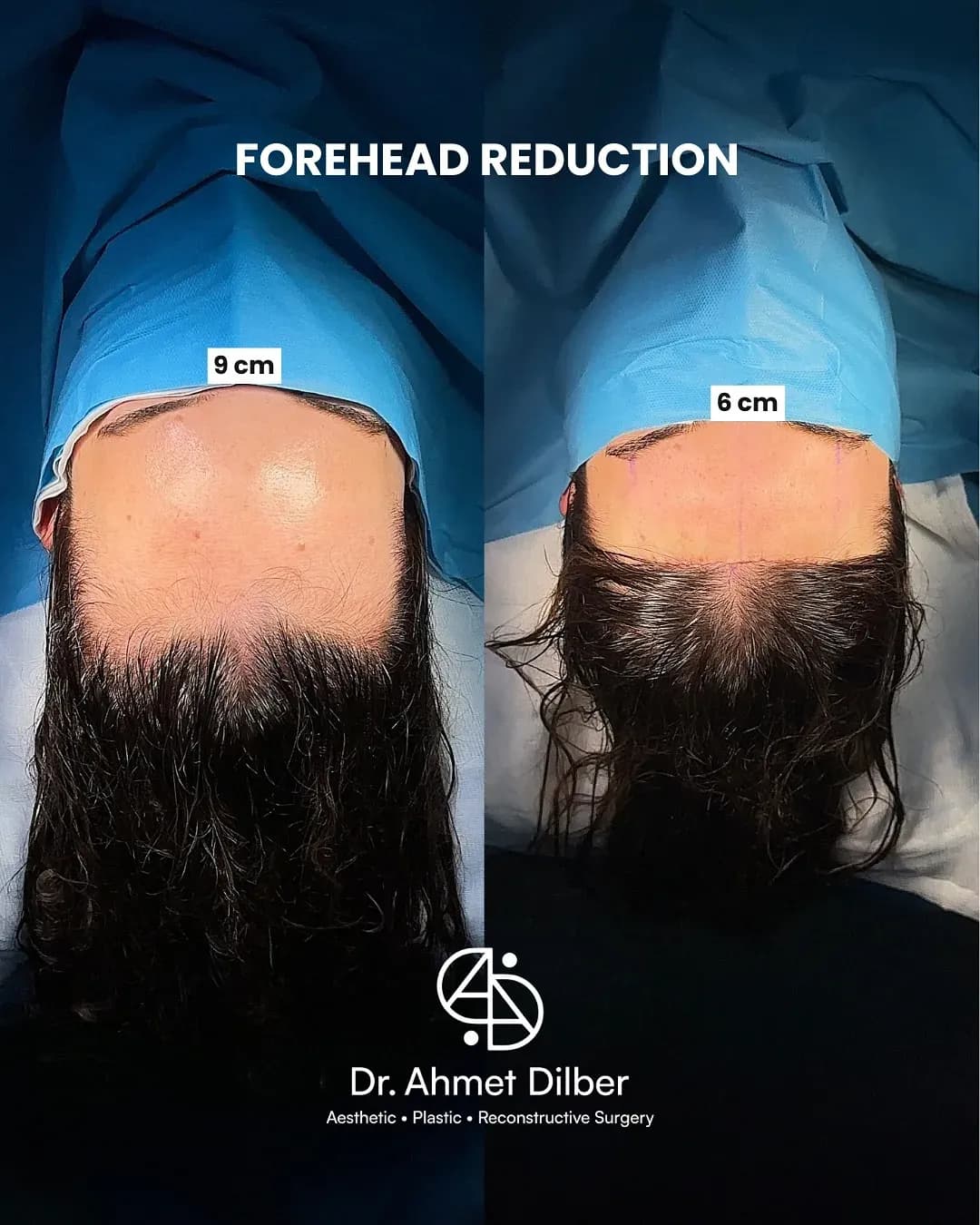 Before and after resultsBefore and after photos of Dr. Dilber's patients. Results vary.See the gallery →
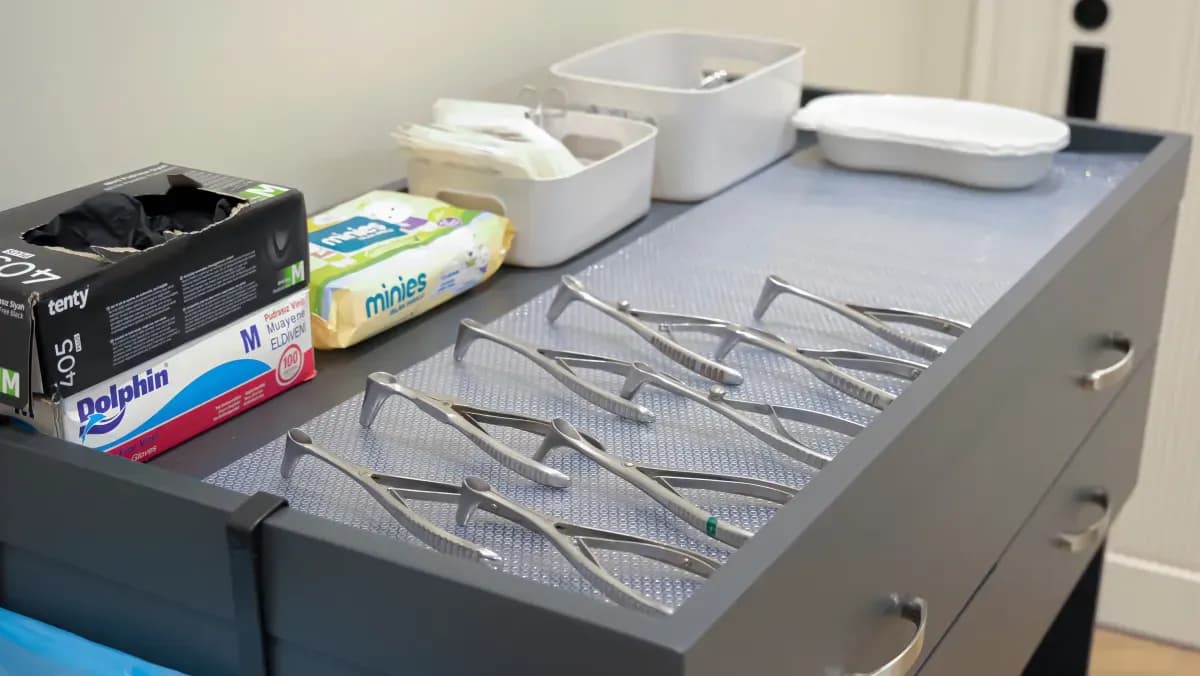 Patient guide (PDF)The guide we send every patient: timeline, medication, aftercare.Download the guide →
Still have a question? Send three photos and ask.
Photograph your forehead from the front, left and right with your hair pulled back, and add your question. Dr. Dilber reviews them, and the team replies on WhatsApp.
