

Forehead Reduction Before and After Photos: Men and Women
These before and after photos show forehead reduction patients of Op. Dr. Ahmet Dilber, men and women, each published with written consent. Every caption gives the surgery date, the photo date and the view. Compare photos taken from the same angle, in the same light and with the hair pulled back. Your own result depends on your hairline, scalp and healing.
Send your photos on WhatsAppRead about the procedure

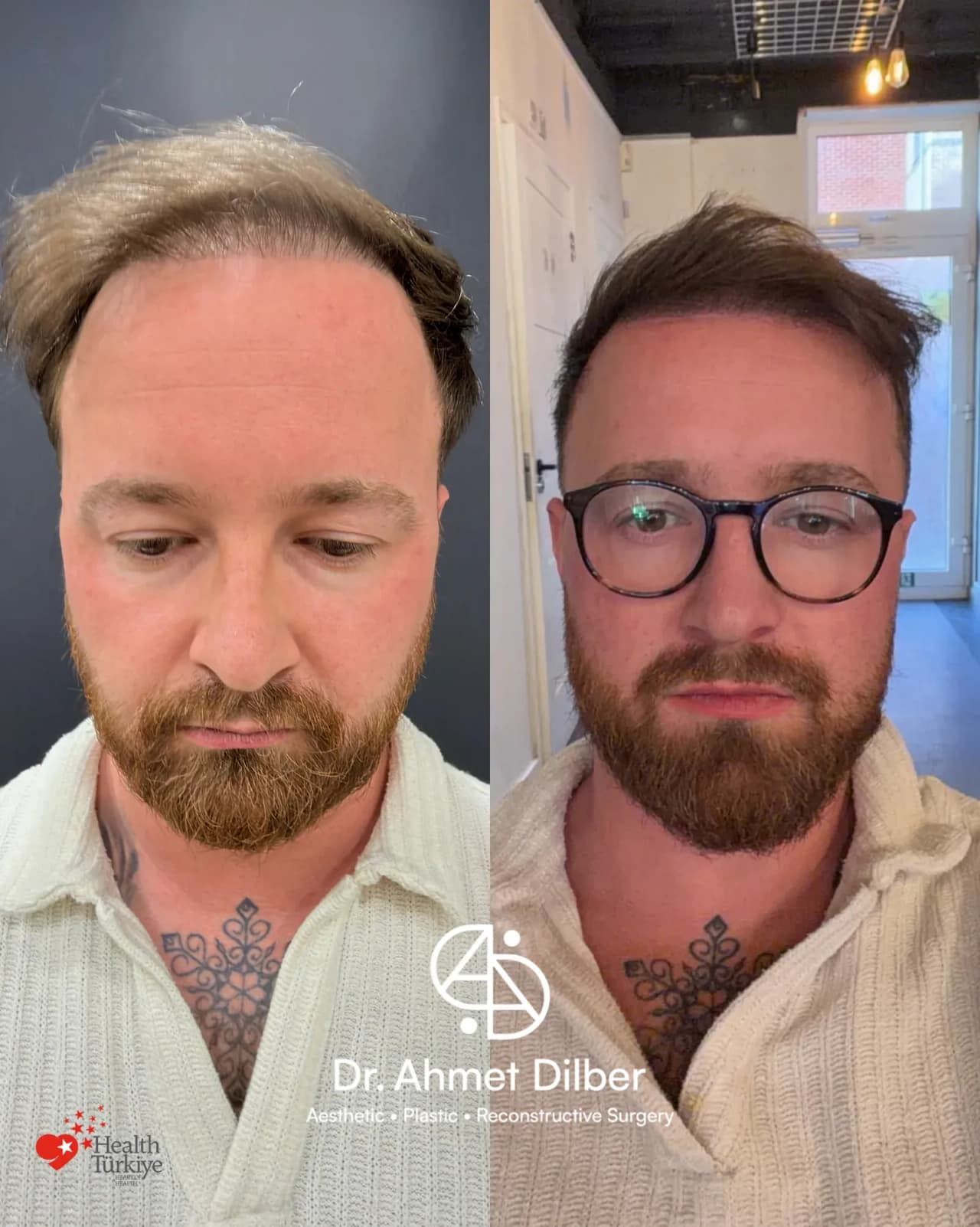
Before and after, forehead reduction. Results vary.
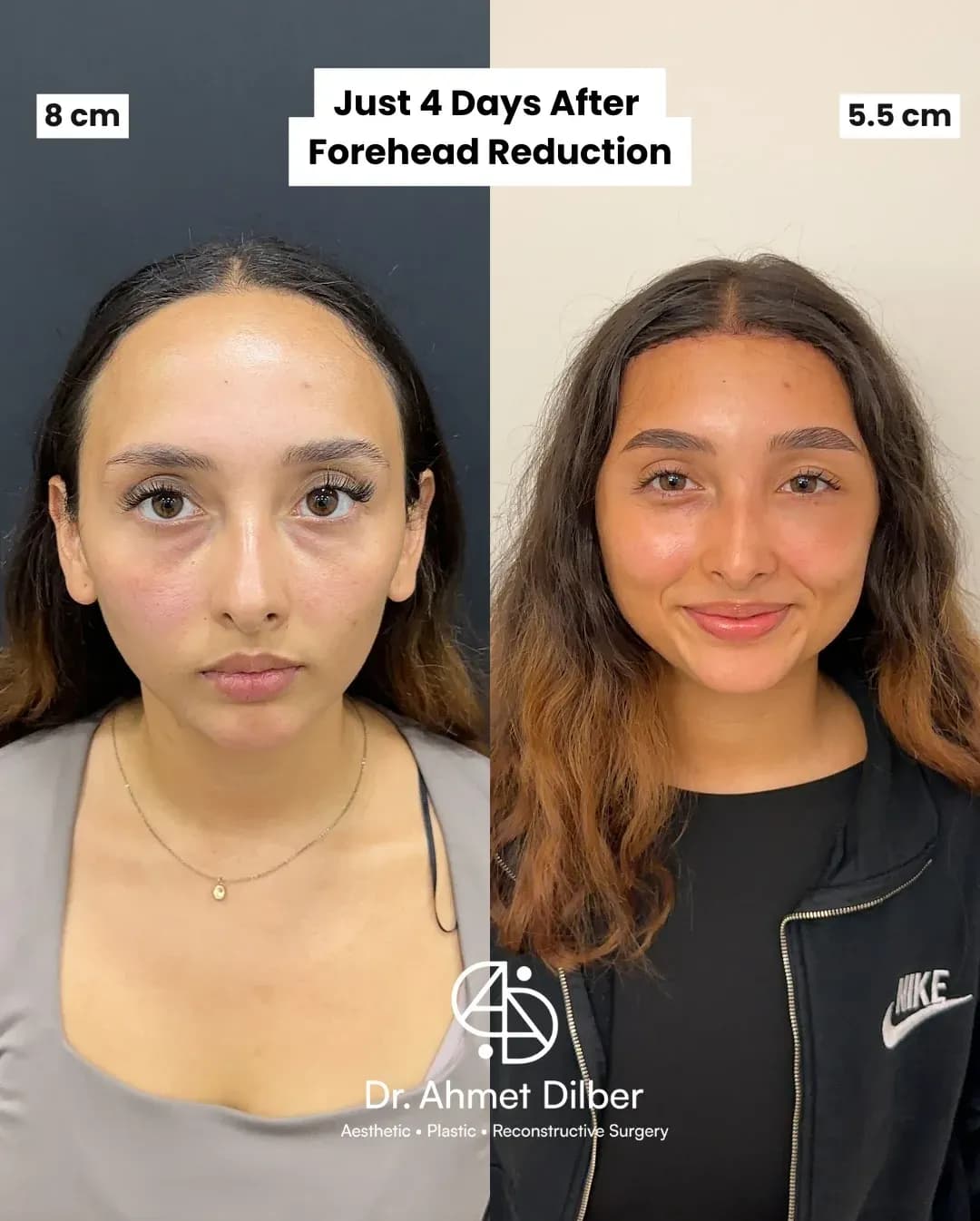
Before and after, forehead reduction. Results vary.
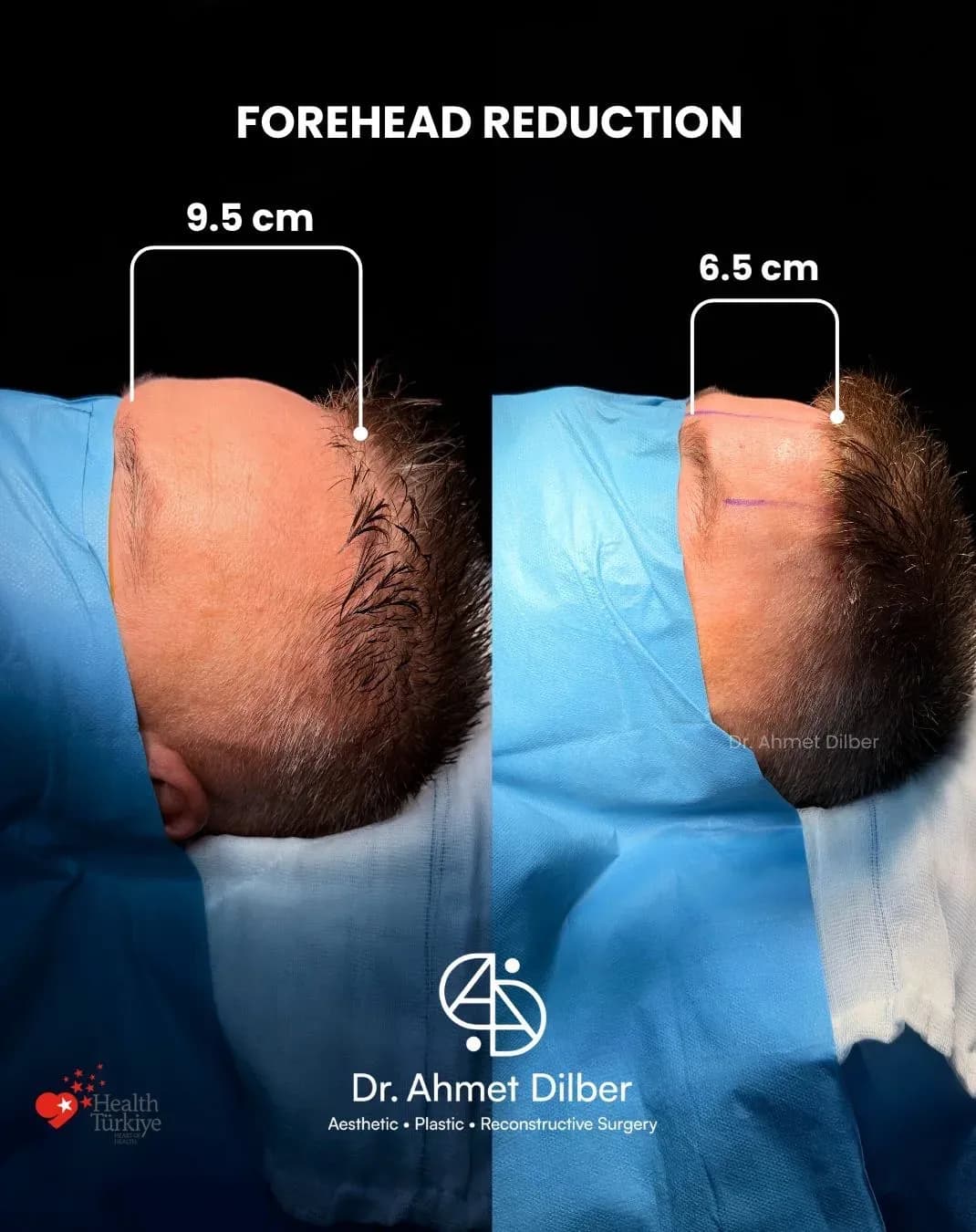
Before and after, forehead reduction. Results vary.



Ratings as of November 2026
Acıbadem Bakırköy
where Dr. Dilber operates, with one night of hospital care
1 year
of follow-up after surgery, in person or on WhatsApp
Licensed
for international health tourism by the Turkish Ministry of Health
What do these before and after photos and captions show?
Each case shows one patient before surgery and at a later stage of healing. The caption names the procedure, says whether the patient is a man or a woman, and gives the view and two dates: the date of surgery and the date the after photo was taken. The gap between them tells you the healing stage. If another procedure was done in the same operation, such as rhinoplasty, the caption says so.
Photos are taken at the practice in Ataköy or sent by the patient during follow-up, and the caption says which. They are not retouched. Before and after views of a case are matched for angle and distance as closely as possible. Cases are chosen to show different hairlines and healing stages, including the scar; a patient example does not show how often complications occur.
Every patient shown gave written consent for publication, separate from consent for surgery, and can withdraw it at any time; the photos are then removed. Dr. Dilber reviews each case and caption before it is published. Read more about Dr. Dilber.



Forehead reduction results
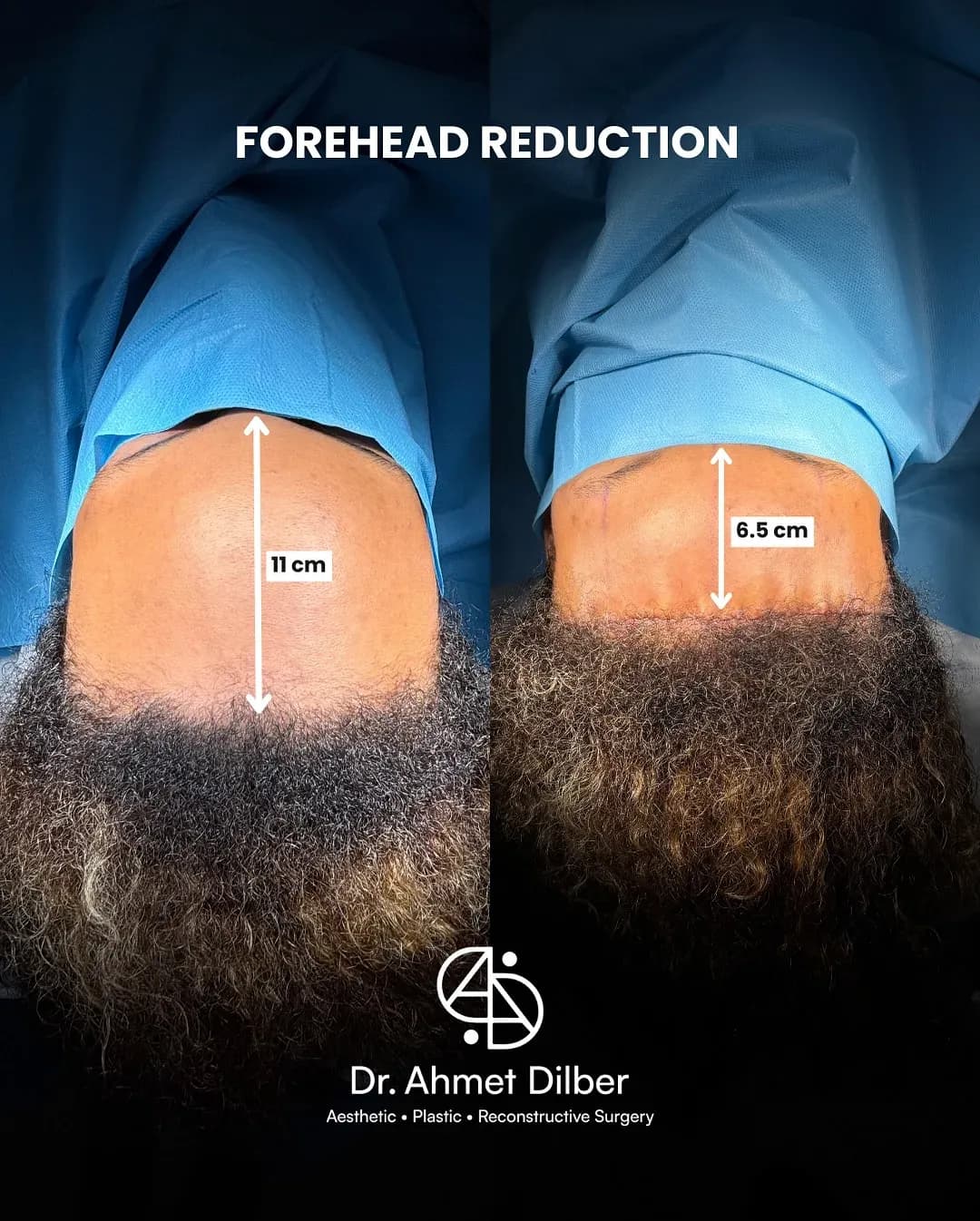
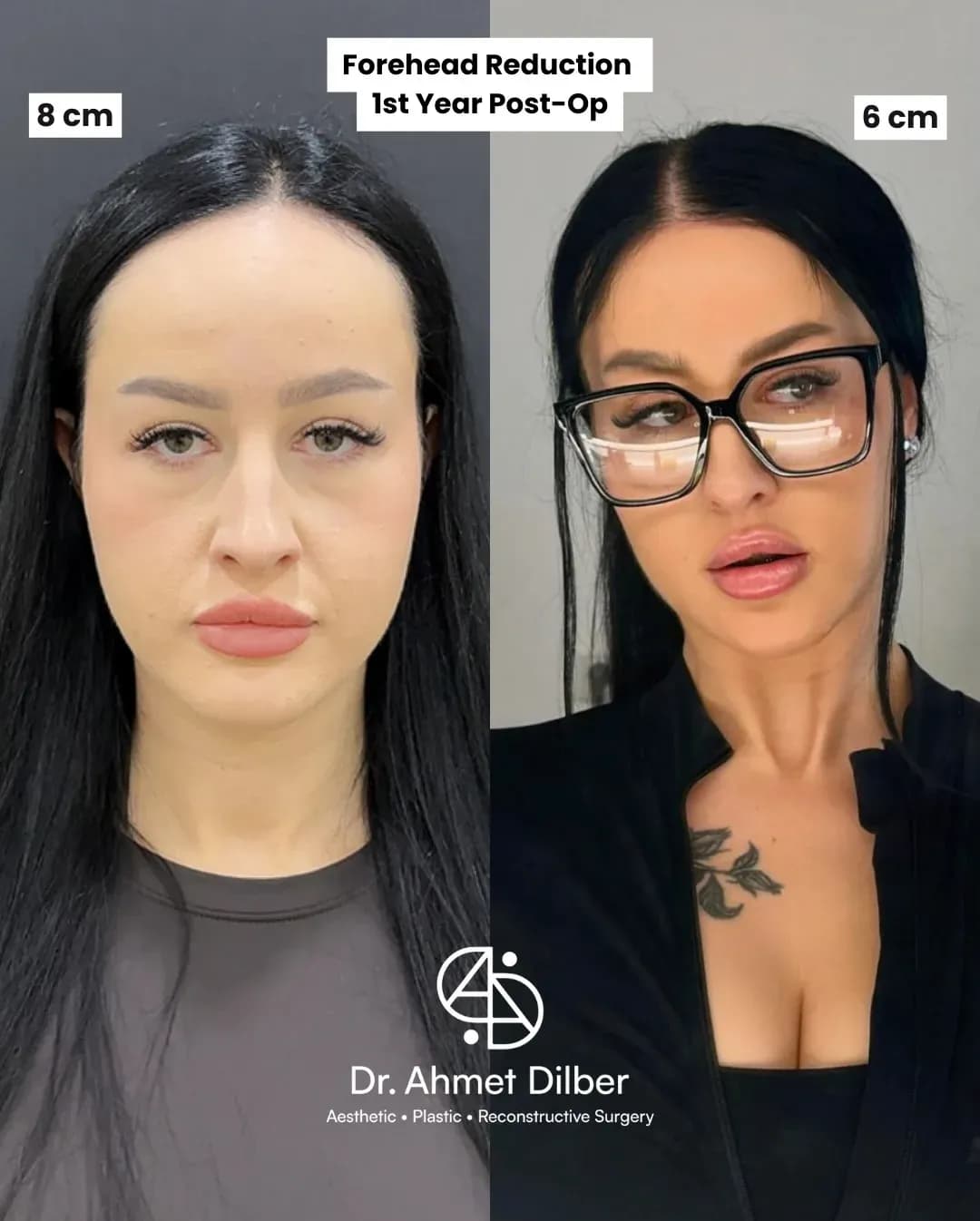
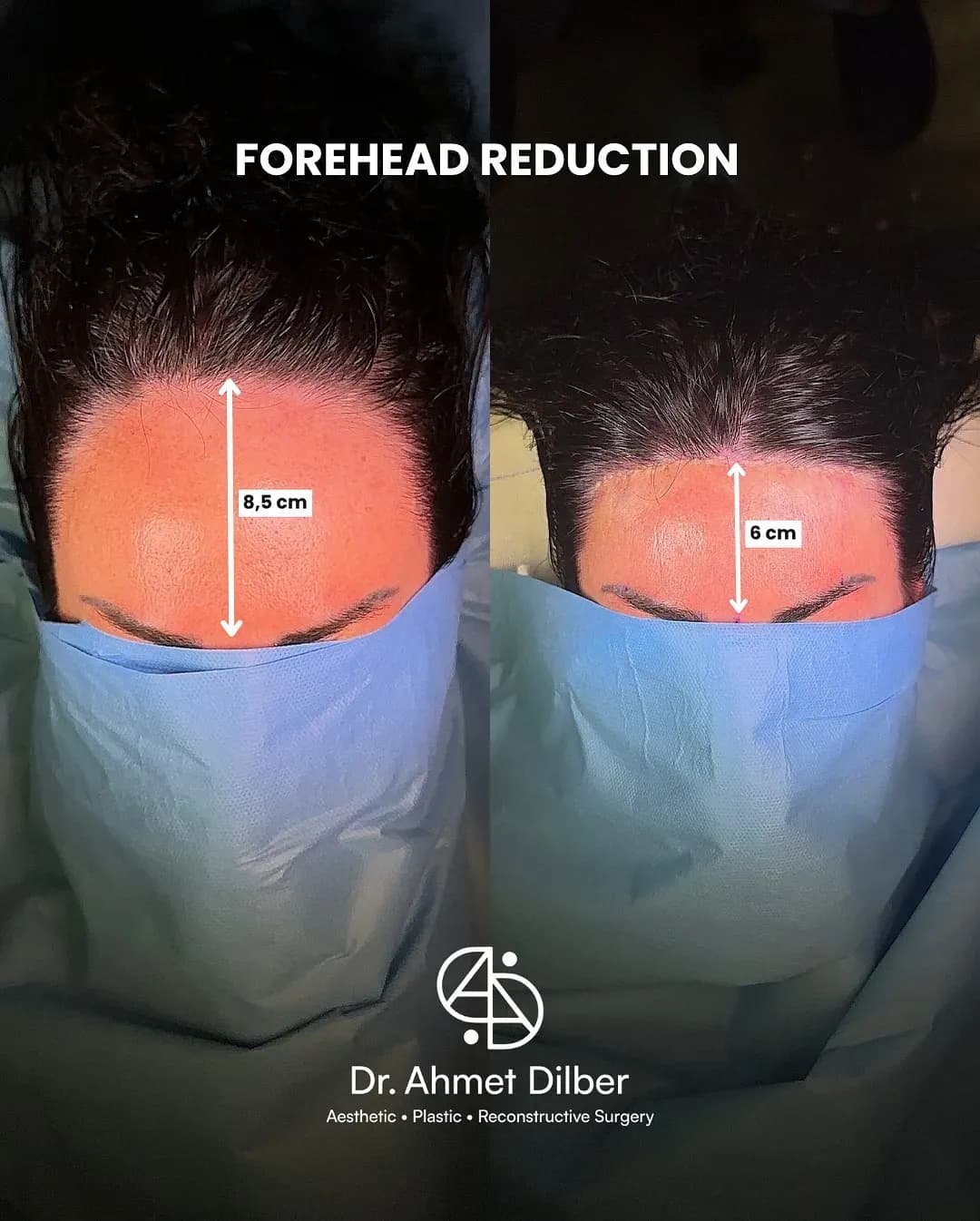
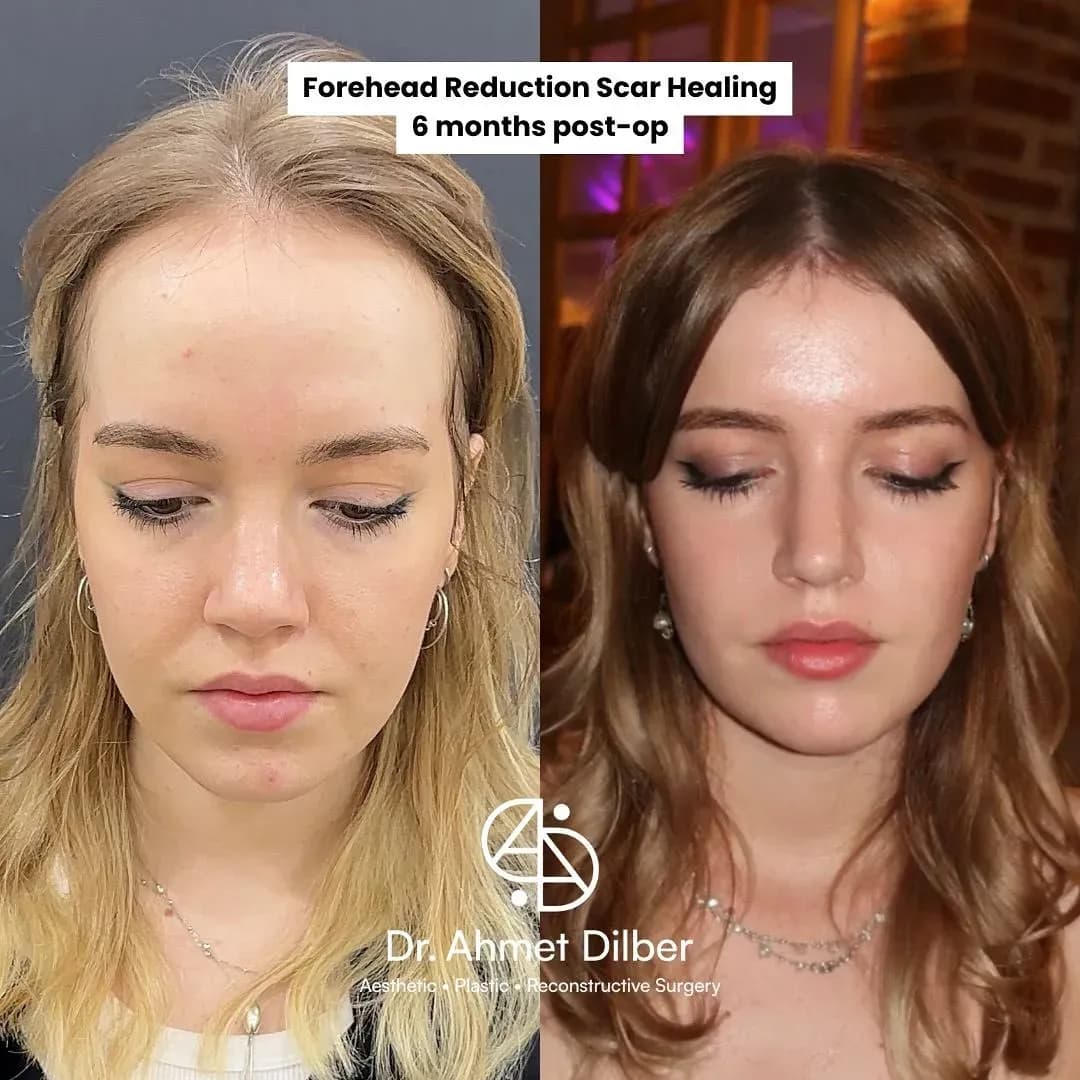
Before and after photos of Op. Dr. Ahmet Dilber's patients, from @drahmetdilber on Instagram. Results vary.
How should you read a forehead reduction before and after photo?
Check these six points before you compare a case with your own forehead.
Match the angle
Front, side and close-up views show different things. Forehead height is clearest from the front; the scar and the hairline edge show best from the side or in close-up. Compare matching views only.
Check the time since surgery
Read both dates in the caption. In the first weeks the incision is red, scabs come off in about 2 weeks, and redness keeps fading for several months. An early photo and a late photo show different stages, not different results.
Look at the lighting
Bright, flat light softens a scar; side light shows every edge. Look for before and after photos taken in similar light, and be cautious when the after photo is brighter or softer than the before photo.
Check the hair
The hair should be pulled back in both photos so the hairline is visible. A fringe, styling or a change of hair colour can hide the scar or make the forehead look shorter than it is.
Check the expression
Raised eyebrows lift the forehead skin and change its height. A neutral expression in both photos gives a fair comparison. Forehead reduction does not lift the brows, although a minimal lift can be requested.
Note combined procedures
If rhinoplasty or another procedure was done at the same time, the face changes beyond the hairline. The caption lists every procedure, so you can tell which change comes from which operation.
Your stay in Istanbul
You see Dr. Dilber at his practice in Ataköy, have surgery at Acıbadem Bakırköy Hospital and can stay at a nearby hotel.

The practice in Ataköy 
Acıbadem Bakırköy Hospital 
Patient room 
Hotel room, on request
What do forehead reduction results look like in women?
Many women who ask about forehead reduction have a naturally high hairline that has not changed for years. Because the hairline is stable, the main question is how far the scalp can come forward, which depends on how loose it is and how tall the forehead is now. Women's photos usually show the hairline brought forward across the front, with the forehead shorter in proportion to the nose and chin.
Longer hair often covers the scar once healed, and hair can grow through the incision line, so look at the close-up views to see the hairline edge with the hair pulled back. If you usually wear your hair up or short, ask to see cases with a similar style. Hairline lowering for women covers this in more detail.
What is different in men's before and after photos?
In men, a high forehead is often linked to hair loss, with receding temples. Forehead reduction moves the existing hairline forward; it does not stop hair loss. If the hairline is still moving back, the scar can show later, so Dr. Dilber checks whether it has stabilised before recommending surgery. Older photos and details of any hair-loss treatment help him judge this, so send them with your first photos.
Men often wear their hair shorter. Forehead reduction works with short hair and the result is visible straight away, so look closely at the close-up views to see how the scar appears. Dr. Dilber performs forehead reduction, not hair transplants; if more density is wanted later, a hair-transplant clinic can add it about one year afterwards. See forehead reduction for men and forehead reduction vs hair transplant.
What can photos not show about the scar and risks?
A photo shows one moment. It cannot show how the scar felt during healing, how long numbness lasted or how the hair behaved around the incision in the months between photos. The scar sits along the hairline and matures over about one year; how fine it becomes depends on your skin, the tension on the closure and your aftercare. The scar page and the recovery guide explain each stage.
Any cosmetic surgery carries risks. For forehead reduction they include bleeding, infection, numbness or altered sensation behind the hairline, a visible or widened scar, hair loss along the incision, an uneven hairline and the need for revision surgery. Dr. Dilber goes through each one with you at the in-person consultation at his practice in Ataköy, the day before surgery.
After the day 4 check you can fly home. Dr. Dilber and his assistants then review your WhatsApp photos at 1, 3, 6 and 12 months, adjust creams or medication if needed and advise whether to see a doctor locally. See risks and aftercare after you fly home.
What a before and after photo can and cannot tell you
Dates in the caption
What the photo shows: Healing stage at that moment
What it cannot show: How the scar will look laterMatched angle and light
What the photo shows: A fair view of the hairline change
What it cannot show: Your own scalp loosenessHairline close-up
What the photo shows: Scar width and hair at the edge
What it cannot show: Numbness or altered sensationProcedure list
What the photo shows: Which change came from which operation
What it cannot show: Your recovery timeWritten consent
What the photo shows: The patient agreed to publication
What it cannot show: A typical result for everyone
Frequently asked questions
Look at the hairline close-ups and their dates. Early photos show a red line along the hairline; later photos show how it has settled. The sutures dissolve within about 6 months, and hair can grow through the incision line and hide it. How fine the scar becomes varies with skin, closure tension and aftercare, and some people develop a widened scar. Dr. Dilber reviews the scar at each follow-up photo check.
Answer comes with the content seed.
Answer comes with the content seed.
Answer comes with the content seed.
Answer comes with the content seed.
Answer comes with the content seed.
Answer comes with the content seed.
Answer comes with the content seed.
Explore the practice
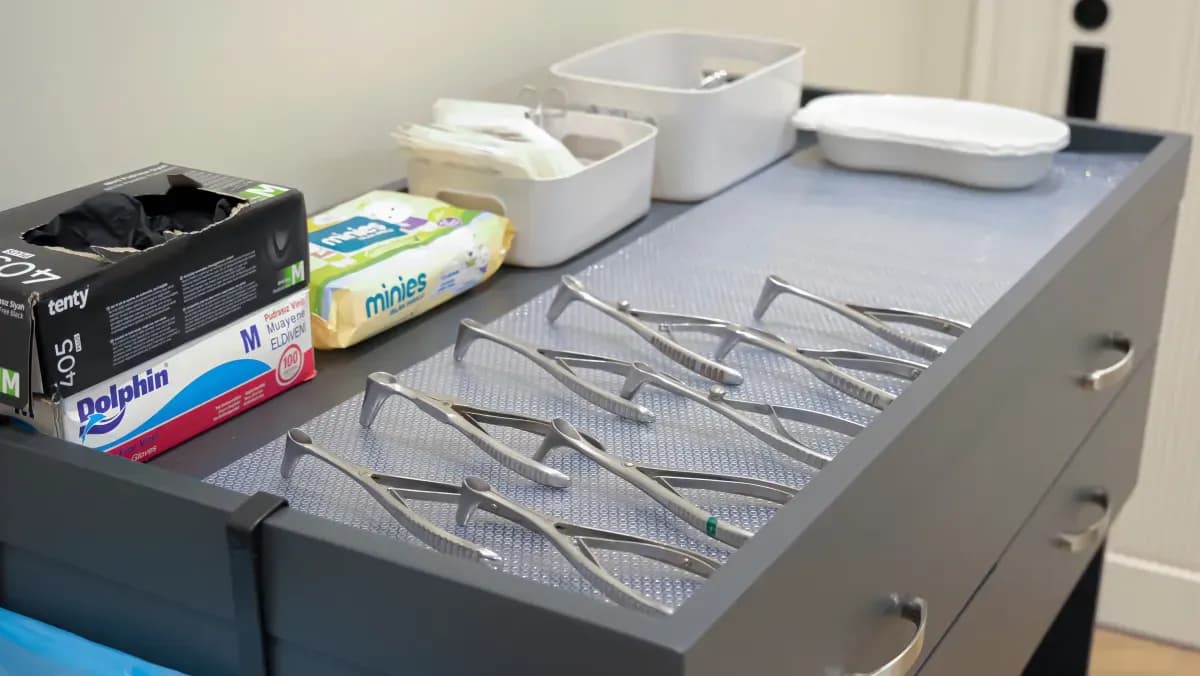
Send three photos. See what may be possible for you.
Photograph your forehead from the front, left and right with your hair pulled back. Dr. Dilber reviews them, and the team replies on WhatsApp with his view and cases that match your concern.
