

Forehead Reduction for Men: Planning Around Future Hair Loss
Forehead reduction can suit men whose high hairline is stable, either high by nature or no longer receding. The main question for men is future hair loss: if the hairline keeps moving back, the scar along it can become visible. Op. Dr. Ahmet Dilber reviews your hair-loss history, scalp and hairline shape and tells you whether forehead reduction suits you.
Send your photos on WhatsAppCompare with a hair transplant

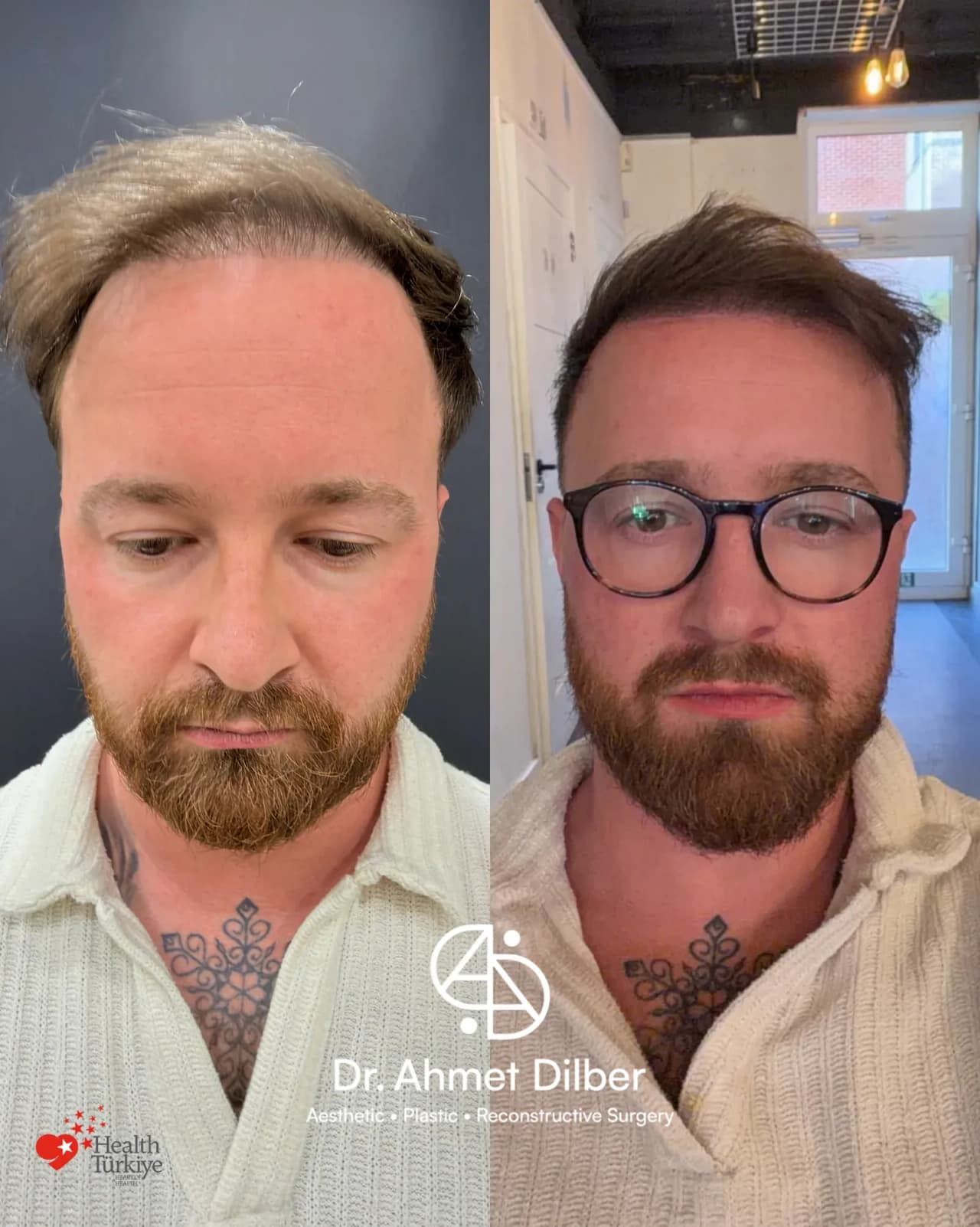
Before and after, forehead reduction. Results vary.
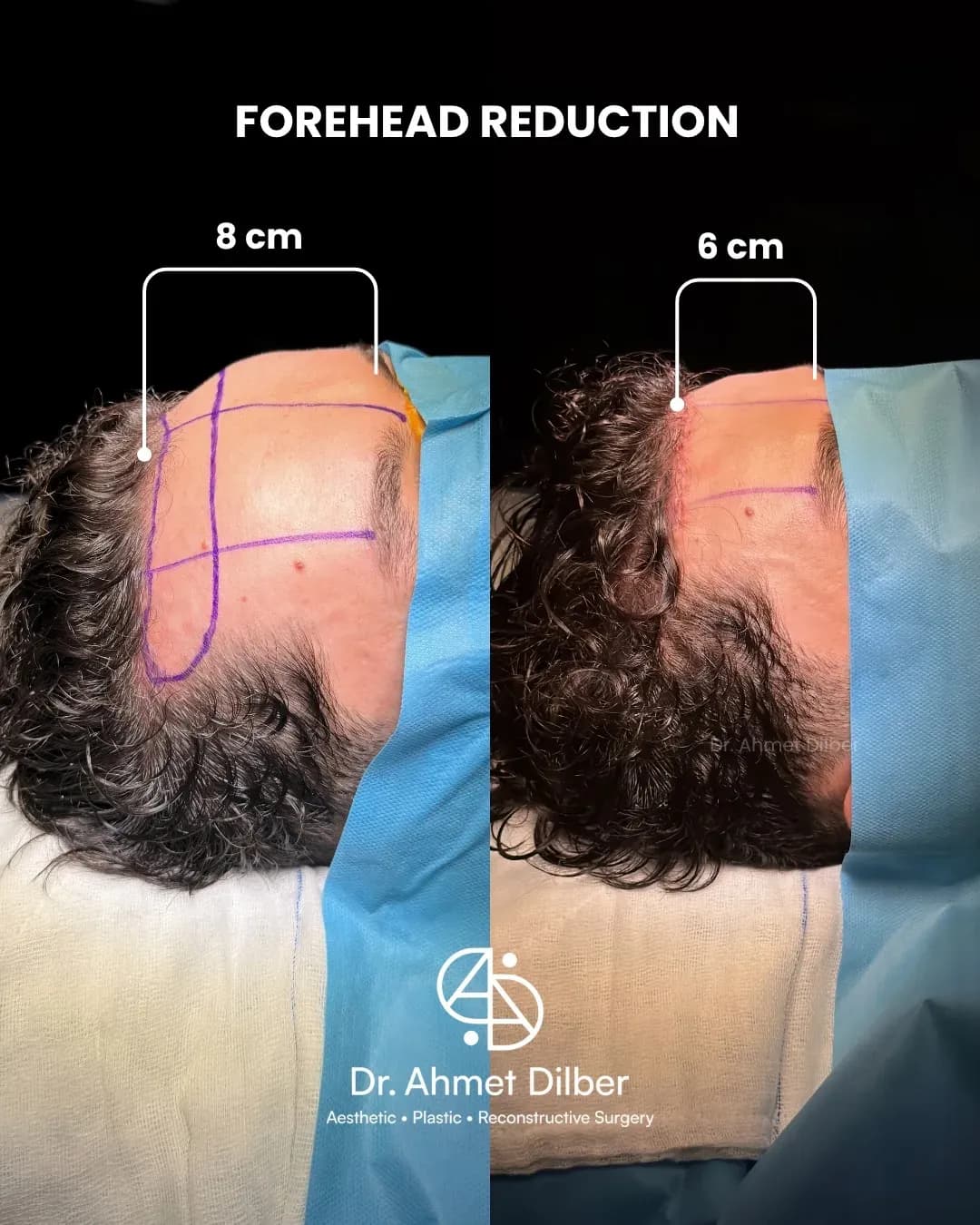
Before and after, forehead reduction. Results vary.
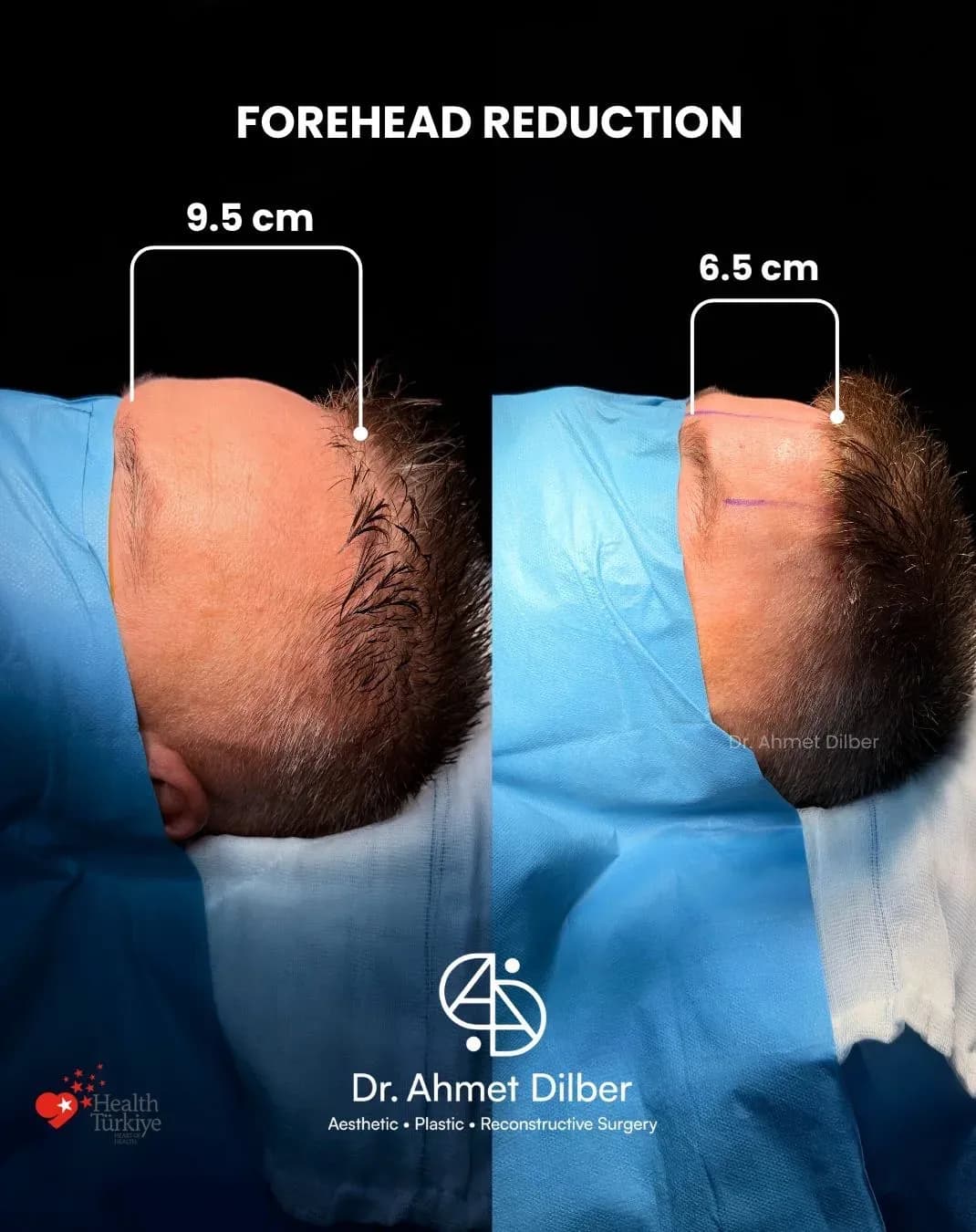
Before and after, forehead reduction. Results vary.



Ratings as of November 2026
Acıbadem Bakırköy
where Dr. Dilber operates, with one night of hospital care
1 year
of follow-up after surgery, in person or on WhatsApp
Licensed
for international health tourism by the Turkish Ministry of Health
Why does male pattern hair loss change the decision?
A hairline that has always been high and one that is receding can look the same in a single photo, but they are different problems. According to the NHS, male-pattern hair loss is common and often runs in families, and it usually starts at the temples and front of the scalp. If your hairline is still moving back, that process continues after surgery.
Forehead reduction moves your existing hairline forward once. It does not stop genetic hair loss behind it. If hair keeps thinning, the forehead can look high again over the years and the scar along the hairline can become easier to see. So history matters more than forehead height alone. Older photos from five or ten years ago, family history and any hair-loss medicines you use show whether the hairline is stable.
Op. Dr. Ahmet Dilber is a plastic, reconstructive and aesthetic surgeon who trained at Istanbul University Cerrahpaşa Faculty of Medicine and completed his residency at Okmeydanı Training and Research Hospital. He performs forehead reduction; he does not perform hair transplants. Read more about Dr. Dilber.



Forehead reduction results
Before and after photos of Op. Dr. Ahmet Dilber's patients, from @drahmetdilber on Instagram. Results vary.
How does Dr. Dilber assess men for forehead reduction?
The same rules apply to everyone: over 18, no medical condition that rules out surgery, and Dr. Dilber's decision. His assistant presents your photos and history to him first, then he examines you in person at his practice in Ataköy the day before surgery.
Your hairline history
Has the hairline been in the same place for years, or is it still moving back? Send one or two older photos with your current ones and tell Dr. Dilber's assistant about hair loss in your family and any hair-loss medicines you take. A stable hairline is the clearest case for surgery. The candidacy guide covers what else he looks at.
Your scalp and hair
How far the hairline can come forward depends on how loose your scalp is. Dr. Dilber checks this by hand at the consultation. He also looks at hair density just behind the hairline, the temples and the crown. If thinning there is the main issue, he tells you that a hair transplant may fit better.
Your hairstyle and plans
Forehead reduction works whatever your hair length, so you do not need to grow your hair first. Tell the team how short you usually cut it. Plan for recovery too: most men return to work after 5 days, later if the job is physically heavy, and resume strenuous exercise after 6 weeks.
Your stay in Istanbul
You see Dr. Dilber at his practice in Ataköy, have surgery at Acıbadem Bakırköy Hospital and can stay at a nearby hotel.

The practice in Ataköy 
Acıbadem Bakırköy Hospital 
Patient room 
Hotel room, on request
What hairline shape and scar should men expect?
The new hairline is drawn with you at the consultation, and you agree its position and shape. For many men the plan keeps some recession at the temples rather than a straight, rounded line. If the temples thin later, a hairline that already follows their angle ages more naturally than one sitting low across the whole forehead. Your preference and hair history decide the final line.
The scar sits along the hairline. The sutures dissolve within about 6 months and are not removed, and hair can grow through the incision line and help hide it. The scar matures over about one year; while it is still settling, a very short clipper cut shows more of it. The scar page shows how the incision heals.
Any cosmetic surgery carries risks. For forehead reduction they include bleeding, infection, numbness behind the hairline, a visible or widened scar, hair loss along the incision, an uneven hairline and the need for revision.
What to bring to the assessment
Hairline history
What to show the clinician: Current photos plus one from five to ten years ago
Decision to confirm: Is the hairline stable enough for surgery?Temples
What to show the clinician: Front and side photos with hair pulled back
Decision to confirm: Keep the temple angles in the new line?Hair density
What to show the clinician: Close photo of the hair just behind the hairline
Decision to confirm: Enough hair to cover the scar long term?Hairstyle
What to show the clinician: Photo of your usual cut, including the shortest
Decision to confirm: When can you cut short again?Previous transplant
What to show the clinician: Date, grafts if known, donor area photo
Decision to confirm: Does the incision affect existing grafts?
What if you also want a hair transplant?
Dr. Dilber performs forehead reduction; he does not perform hair transplants. The two do different jobs. Forehead reduction lowers the central hairline in one operation by moving existing scalp. A hair transplant moves individual follicles, so it can fill the temples or add density. If you want one later, a hair-transplant clinic can do it about one year after forehead reduction.
Forehead reduction has clear advantages for many men. The new hairline is in place on the day, rather than growing in over many months. Hair length does not matter, so it works with short hair. The bone is never touched. Any thinning after surgery, which can appear around month 3, is usually minimal and mostly recovers by month 6.
The NHS notes that a hair transplant leaves its own scars in the donor area. Forehead reduction vs hair transplant compares the two.
What if your hair keeps receding after surgery?
After you leave Istanbul on day 4, you send photos of the hairline and scar on WhatsApp at 1, 3, 6 and 12 months. Dr. Dilber and his assistants review them and adjust creams or medication as needed. Whether to take hair-loss medicines is a separate decision to make with a doctor; tell him about any you take.
If the hairline moves back over the years, a hair transplant at a hair-transplant clinic is the usual way to fill the area in front of or around the scar. If a problem appears soon after you return home, such as redness, discharge or increasing pain, send photos straight away; he advises on treatment and whether you should see a doctor locally. Keep your GP informed of your surgery. Read about aftercare after you fly home and the recovery timeline.
What do men ask about the longer-term result?
Forehead reduction moves the hairline forward once, and that change is lasting. What can change over the years is the hair behind it. If you have male-pattern hair loss, thinning can make the forehead look higher again or expose the scar. This is why Dr. Dilber looks at your hairline history before surgery. Follow-up photos show early changes for up to a year.
Answer comes with the content seed.
Answer comes with the content seed.
Answer comes with the content seed.
Answer comes with the content seed.
Answer comes with the content seed.
Explore the practice
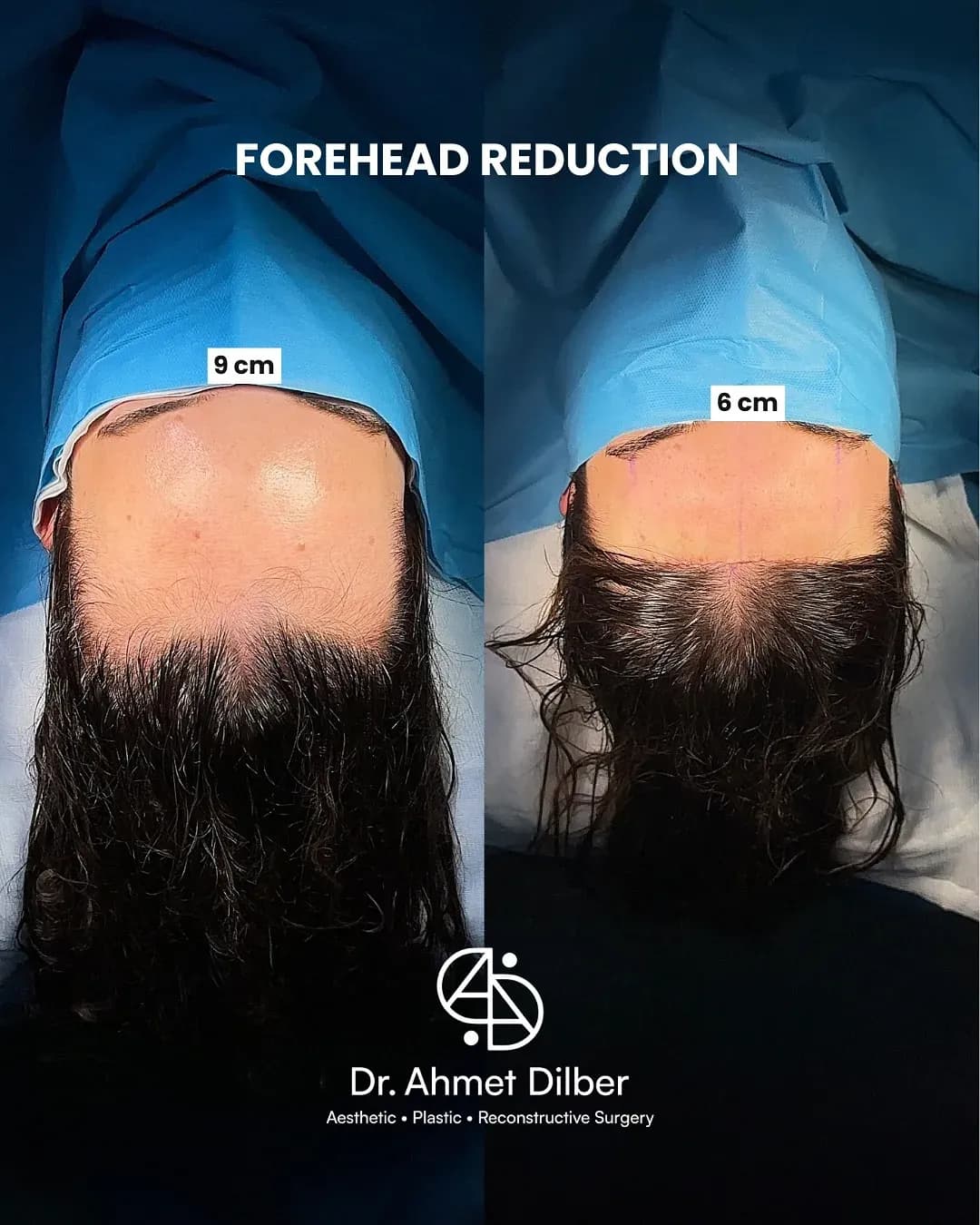 Before and after resultsBefore and after photos of Dr. Dilber's patients. Results vary.See the gallery →
 Patient guide (PDF)The guide we send every patient: timeline, medication, aftercare.Download the guide →
Send your photos. Include an older one.
Send front, left and right photos with your hair pulled back, plus one from a few years ago. Dr. Dilber reviews them, and his assistant replies on WhatsApp with his view on whether forehead reduction suits you.
