

Am I a Candidate for Forehead Reduction, and How Much Can Be Lowered?
You may be a candidate if you are 18 or over, your forehead is tall, your hairline is stable and your scalp moves enough to be brought forward. Good health matters too, and smoking must stop at least 10 days before surgery. How much can be lowered depends mainly on scalp laxity, so Dr. Dilber agrees the amount only after examining you. Your photos give a first answer.
Send your photos on WhatsAppRead about the procedure

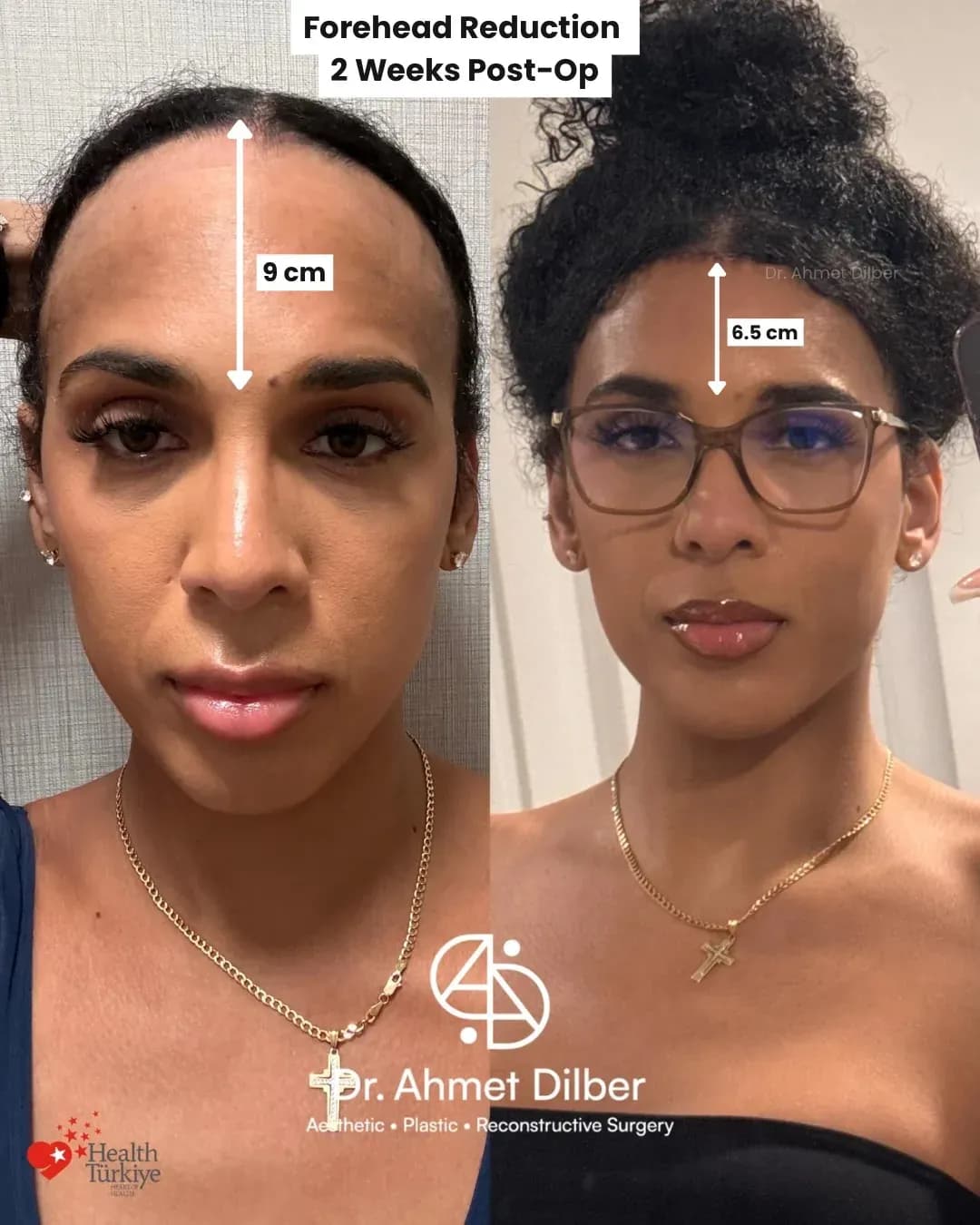
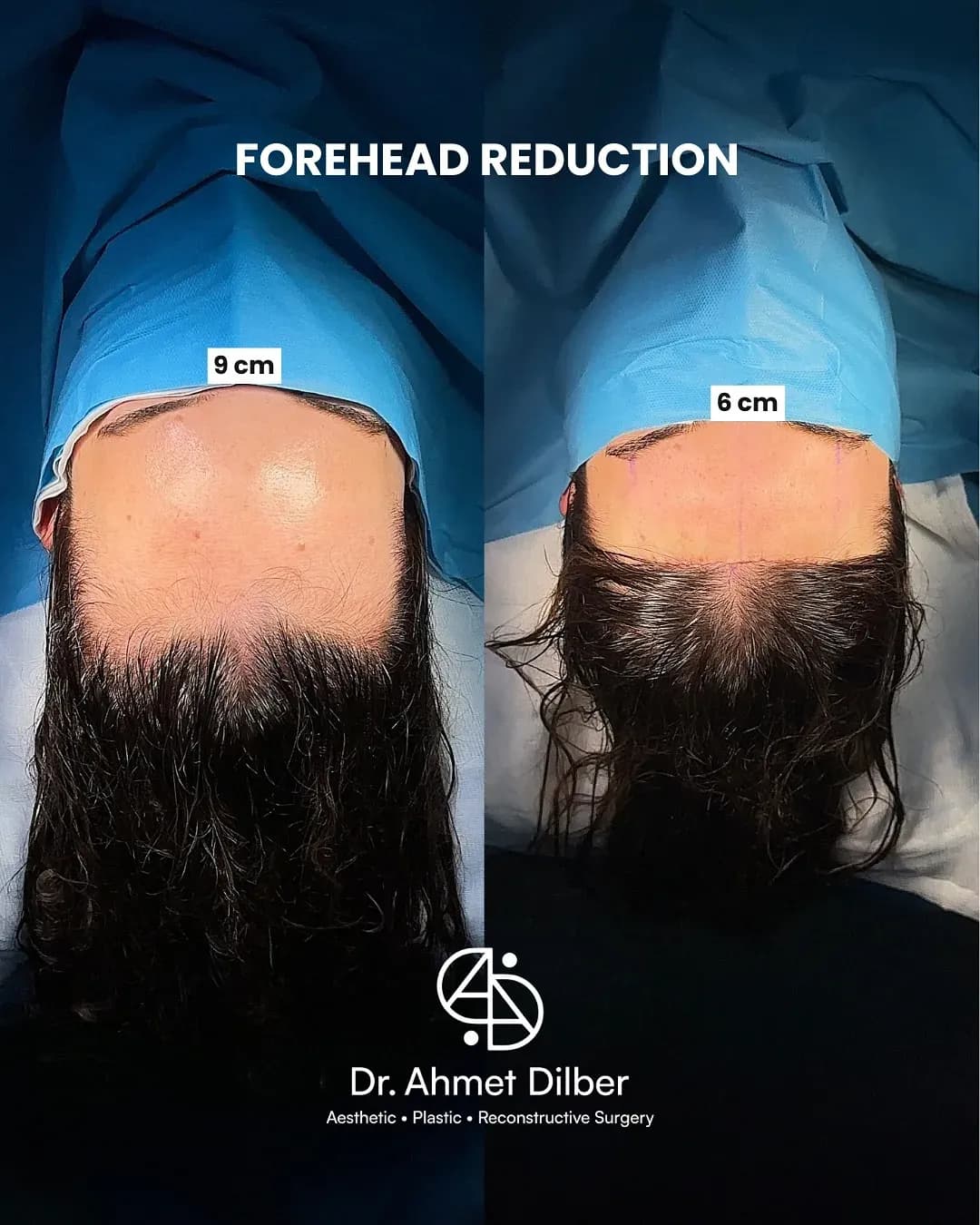
Before and after, forehead reduction. Results vary.
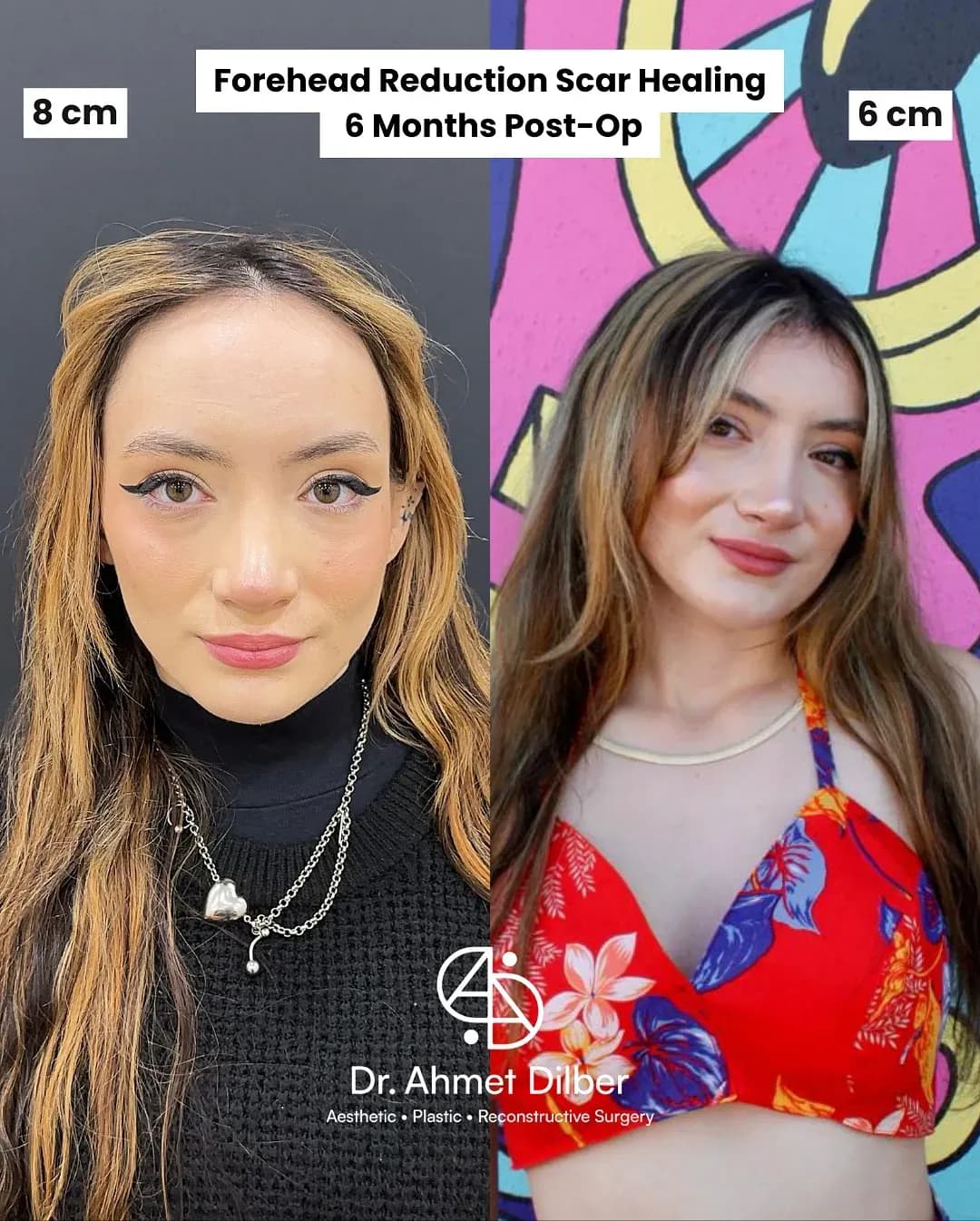
Before and after, forehead reduction. Results vary.
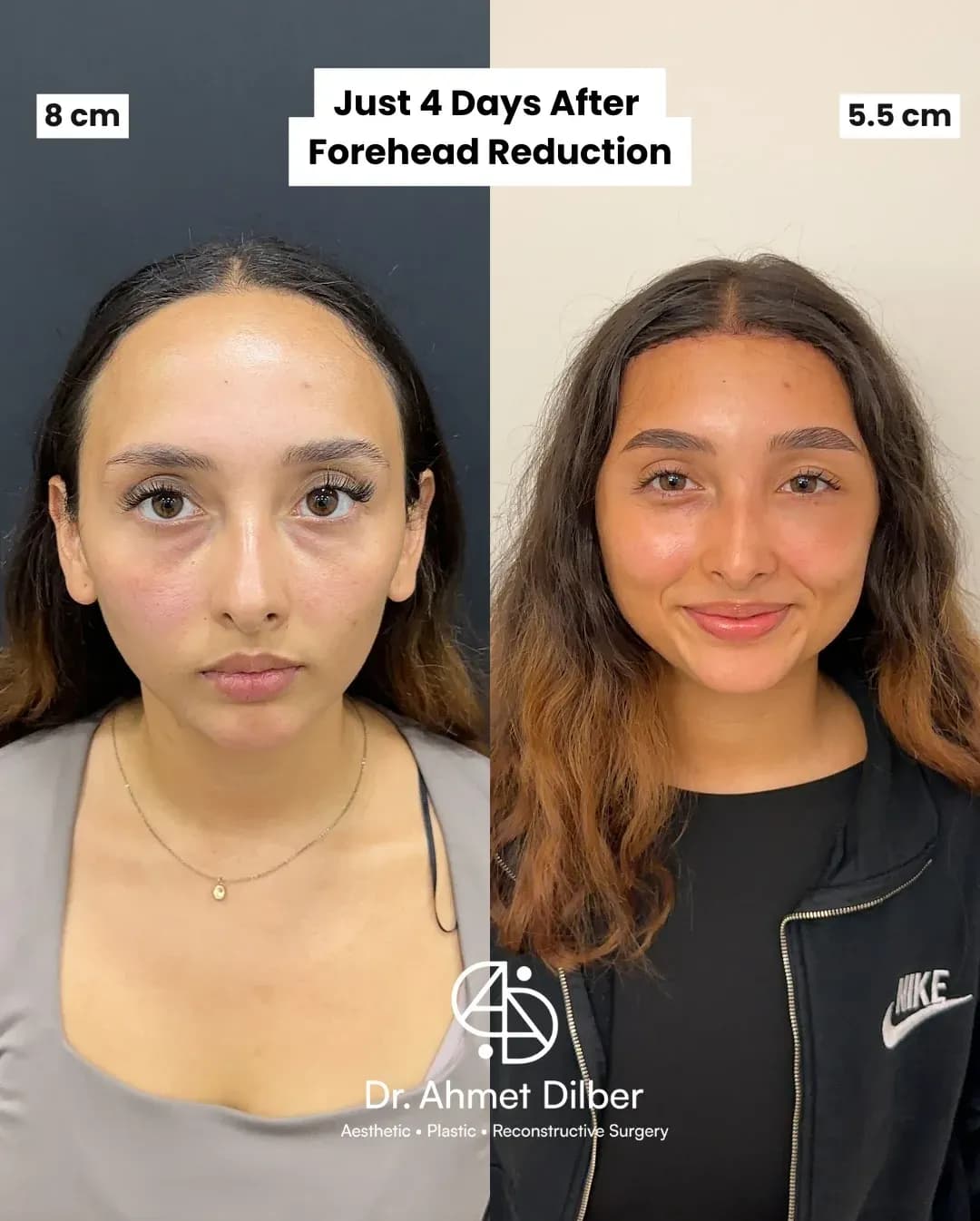
Before and after, forehead reduction. Results vary.



Ratings as of November 2026
Acıbadem Bakırköy
where Dr. Dilber operates, with one night of hospital care
1 year
of follow-up after surgery, in person or on WhatsApp
Licensed
for international health tourism by the Turkish Ministry of Health
What decides whether forehead reduction suits you?
Seven things decide candidacy: the height of your forehead, how loose your scalp is, the density and stability of your hair, your age, your medical history, smoking and any previous surgery in the area. A tall forehead with a tight scalp may allow only a small change, while a stable, dense hairline with a loose scalp leaves more room.
Forehead reduction moves the hair you already have, so the result shows straight away and hair length does not matter. The bone is never touched. It suits a hairline that is high by nature or has stopped receding. If hair loss is still active, the hairline can keep moving back and expose the scar. Men often need a closer look at hairline stability; see forehead reduction for men and for women.
Any cosmetic surgery carries risks. For forehead reduction they include bleeding, infection, numbness or altered sensation behind the hairline, a visible or widened scar, hair loss along the incision, an uneven hairline and the need for revision surgery. The risks and scar pages explain each one.



Forehead reduction results
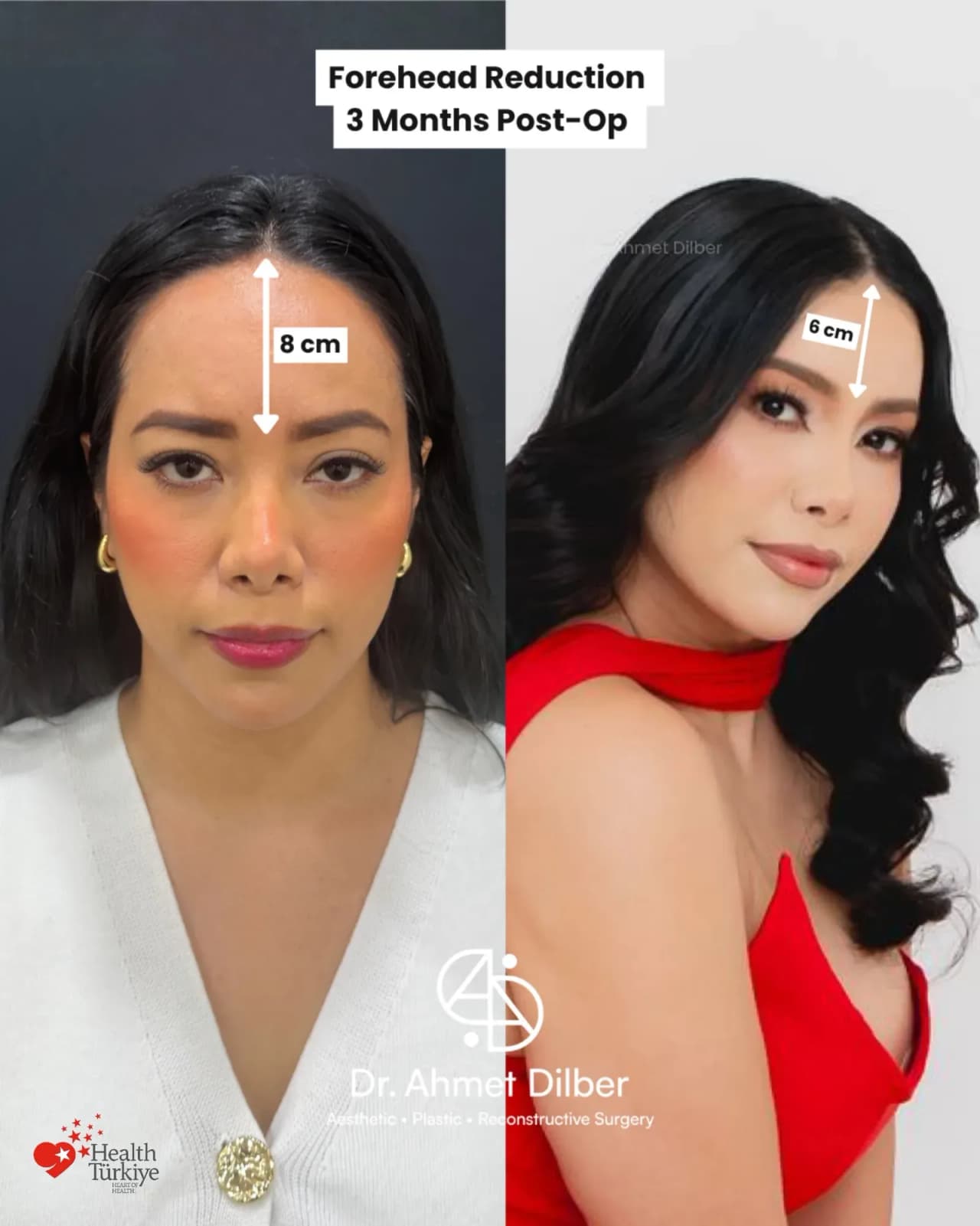
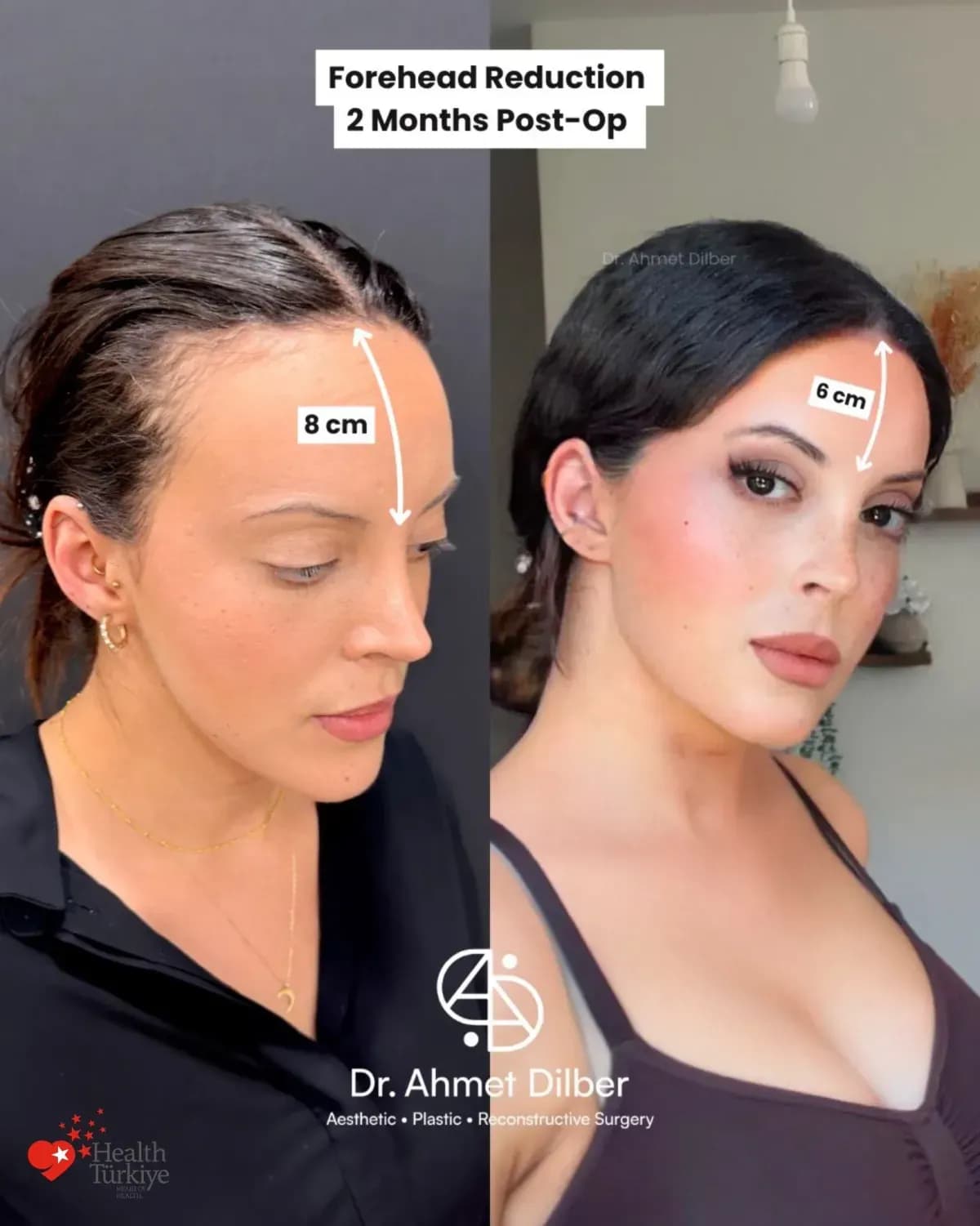
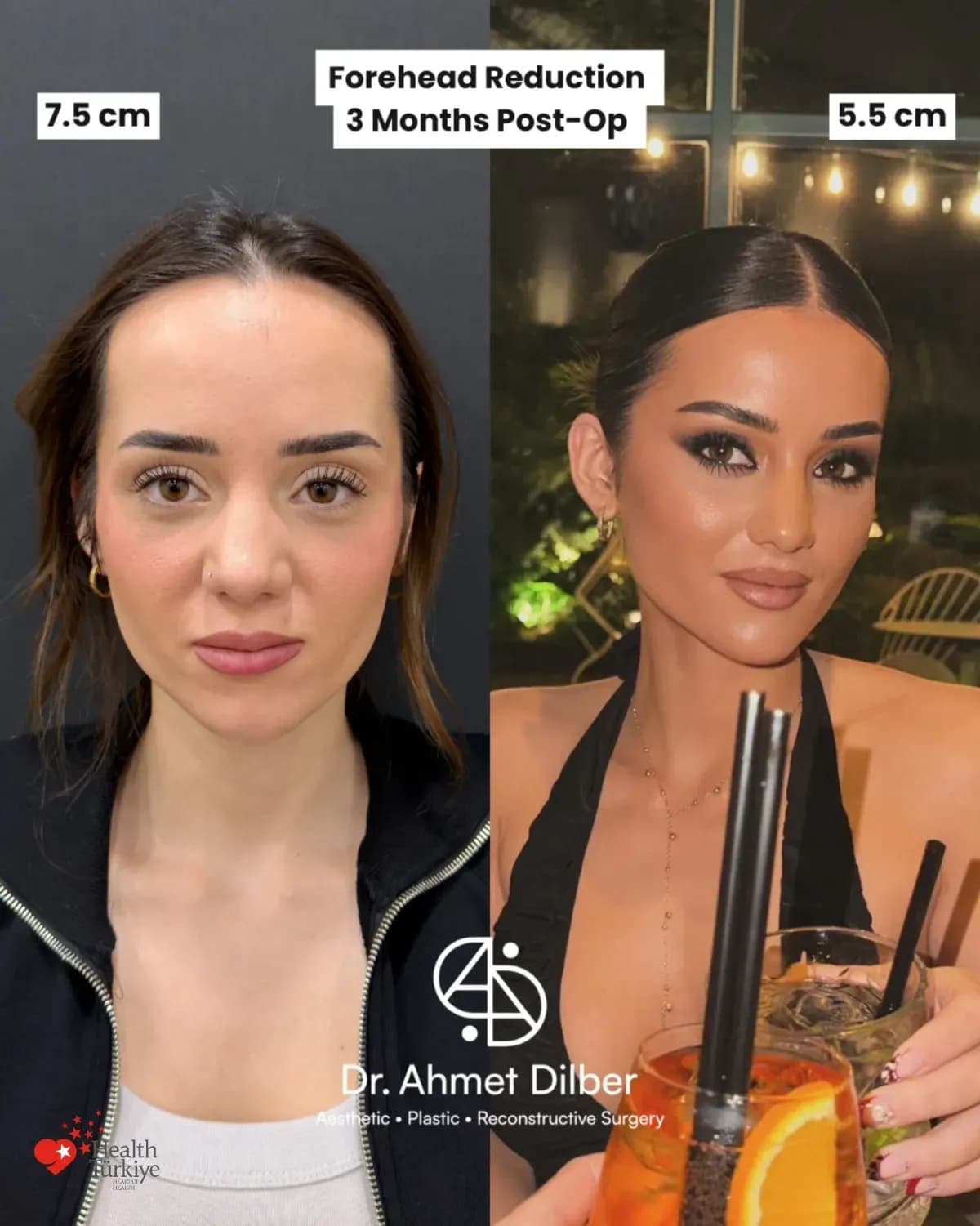
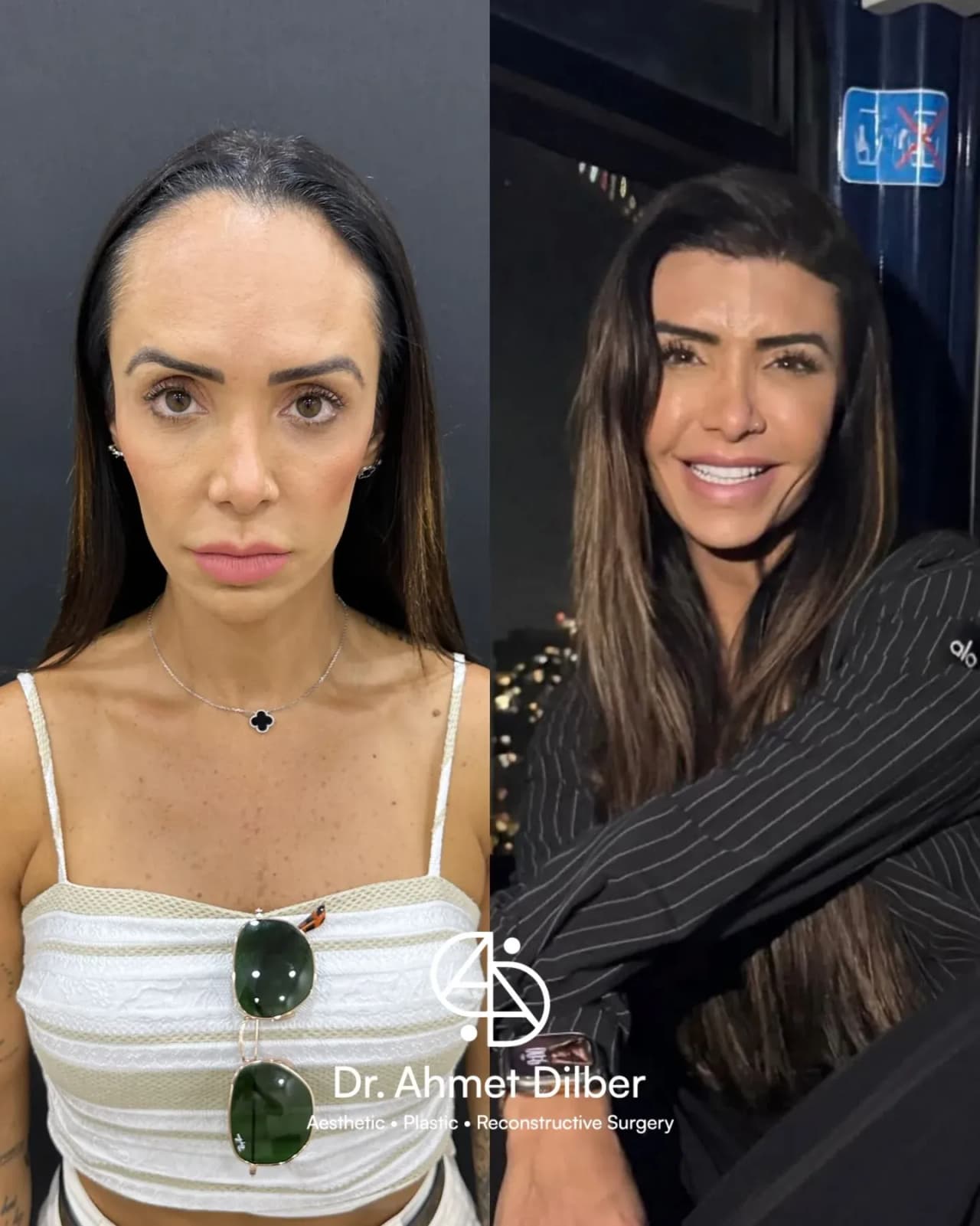
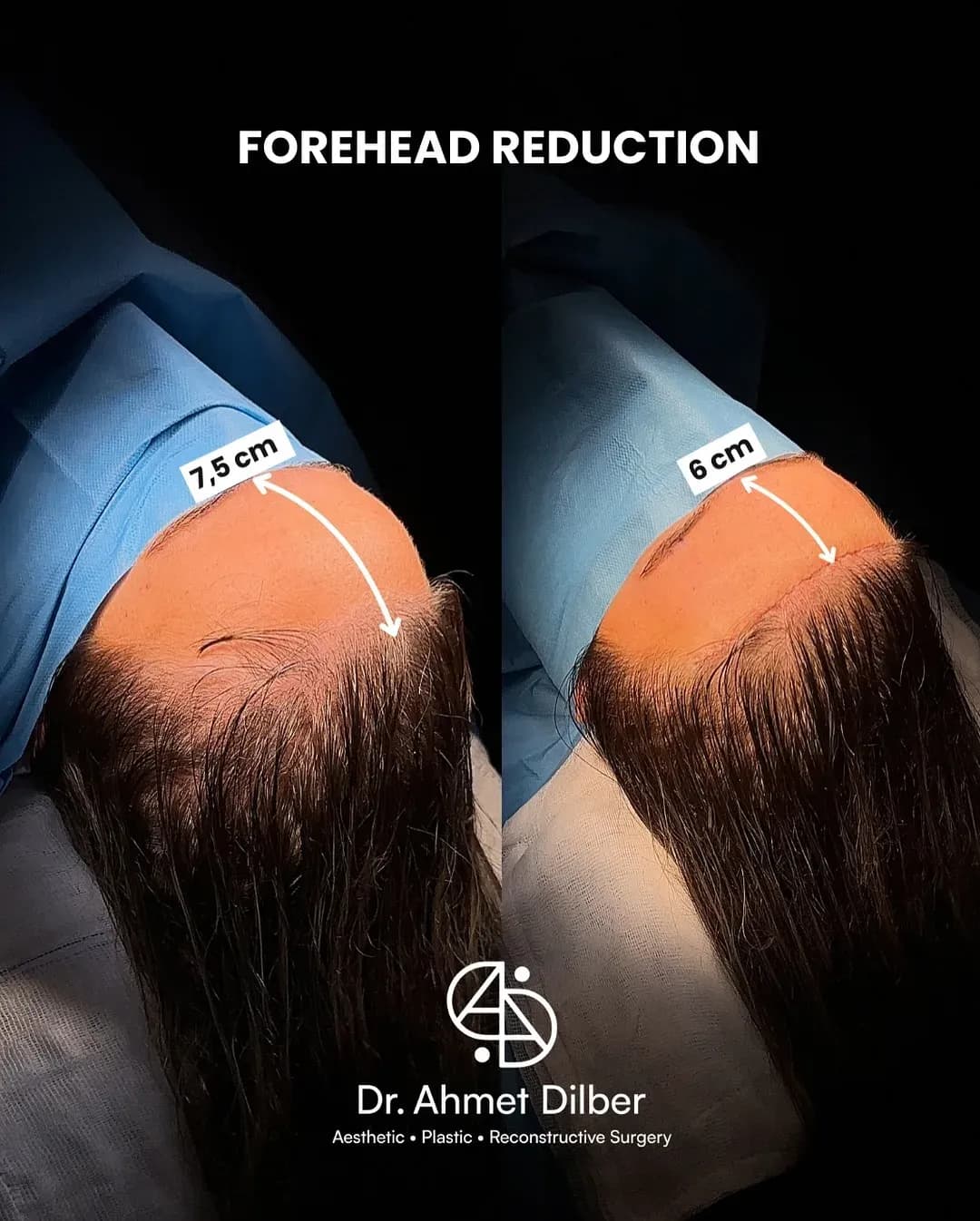
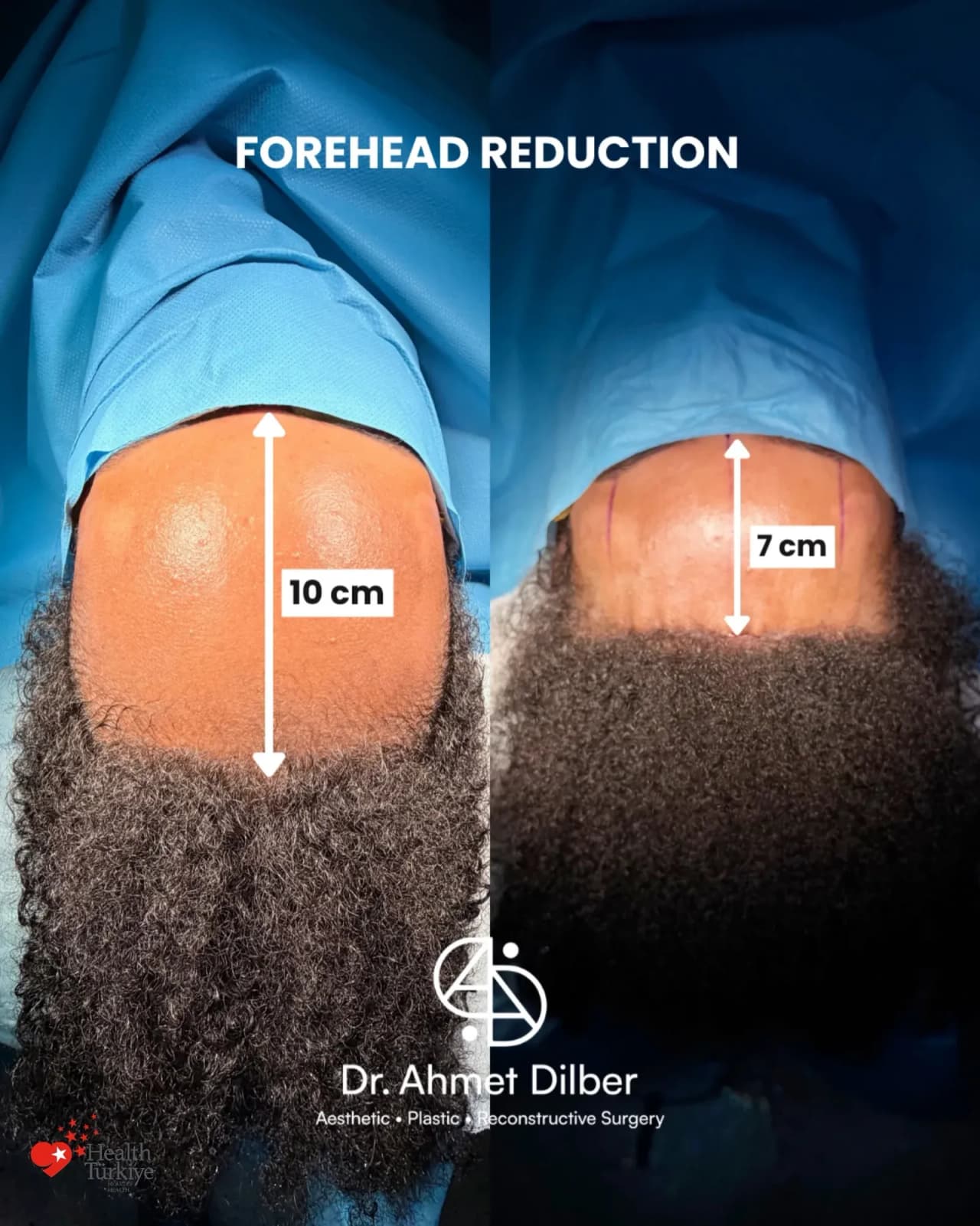
Before and after photos of Op. Dr. Ahmet Dilber's patients, from @drahmetdilber on Instagram. Results vary.
What does Dr. Dilber look at to decide?
Suitability is decided by Dr. Dilber, not by a checklist. These are the points he reviews from your photos, your medical history and the examination.
In your photos
- Forehead height and hairline shape
- Hair density at the front
- Signs of recent receding or thinning
- Older photos, if your hairline has changed
In your medical history
- Age (18 or over) and general health
- Medicines, including blood thinners
- Smoking or vaping
- Previous hair transplant, brow lift or scalp surgery
At the examination in Ataköy
- Scalp movement, checked by hand
- The new hairline, marked with you
- Risks and consent, discussed in person
- The amount, agreed before surgery
How much can your hairline be lowered?
It depends on your scalp laxity, and the amount is decided at the consultation. Laxity is how far the scalp slides forward over the skull. The looser the scalp, the further the hairline can come down without too much tension on the wound. Tension matters because a tight closure can widen the scar or cause hair loss along the incision. Your current forehead height and the shape you want also set limits.
For context, a published study of 820 consecutive cases reported an average shortening of 25.5 mm. That is a study average from the literature, not a promise for any one person. Your photos give Dr. Dilber a first view. He then checks scalp movement by hand at his practice in Ataköy the day before surgery, marks the new hairline and agrees the amount with you.
What sets the amount
Scalp laxity
Effect on the amount: A looser scalp allows more forward movement
How it is checked: By hand at the in-person consultationCurrent forehead height
Effect on the amount: A taller forehead leaves more room to lower
How it is checked: Photos, then measured at the consultationHairline stability
Effect on the amount: Receding hair limits how low is sensible
How it is checked: Your history and older photosHair density at the front
Effect on the amount: Dense hair covers the scar better
How it is checked: Photos and examinationPrevious scalp surgery
Effect on the amount: Scarring can reduce scalp movement
How it is checked: Operation records and examinationHairline shape wanted
Effect on the amount: Drawn within what scalp movement allows
How it is checked: Discussed and marked with you
How does the photo assessment work?
Take three photos
Photograph your forehead from the front, left and right in daylight, with your hair pulled back so the whole hairline shows. Keep your face relaxed and the camera at eye level. If your hairline has changed over the years, add an older photo for comparison.
Send them with your medical history
Send the photos on WhatsApp with your age, health conditions, medicines, whether you smoke or vape and any previous hair transplant, brow lift or scalp surgery. Mention any hair-loss treatment you use. This helps Dr. Dilber judge hairline stability and healing before you travel.
Review by Dr. Dilber and a first answer
Dr. Dilber's assistant presents your photos and history to Dr. Dilber, who decides whether you are likely to be a candidate. A video consultation with him and his assistant can be arranged if you want one or it is needed. Photos cannot measure laxity, so any amount at this stage is an estimate.
Examination in Ataköy the day before
If you go ahead, Dr. Dilber examines you in person at his practice in Ataköy the day before surgery. He checks scalp movement by hand, discusses the risks, and agrees and marks the new hairline with you. Blood tests and an anaesthetic examination follow at Acıbadem Bakırköy Hospital the same day. After you return home, follow-up continues by photo on WhatsApp.
Your stay in Istanbul
You see Dr. Dilber at his practice in Ataköy, have surgery at Acıbadem Bakırköy Hospital and can stay at a nearby hotel.
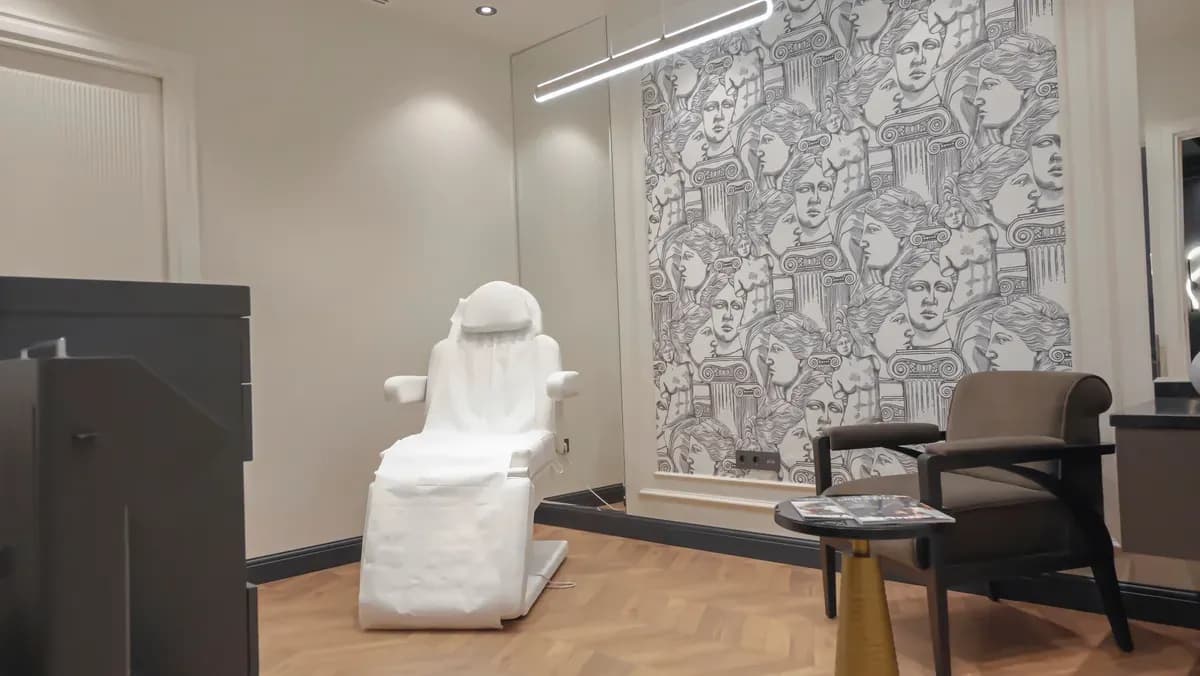
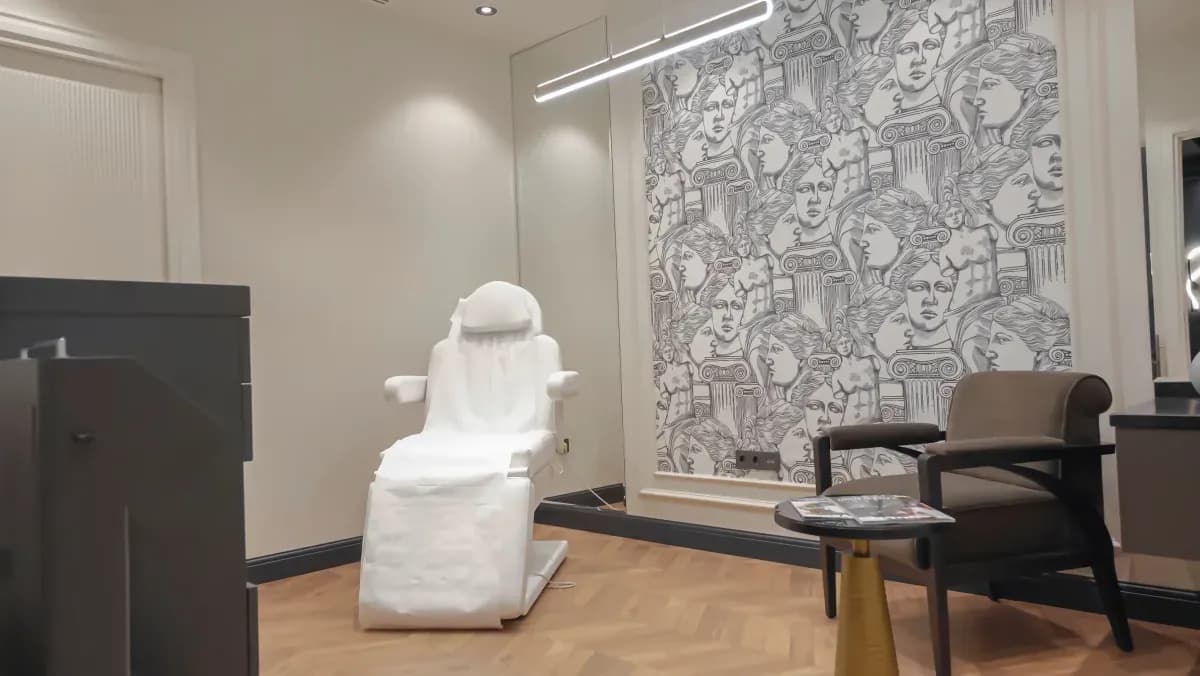
The practice in Ataköy 
Acıbadem Bakırköy Hospital 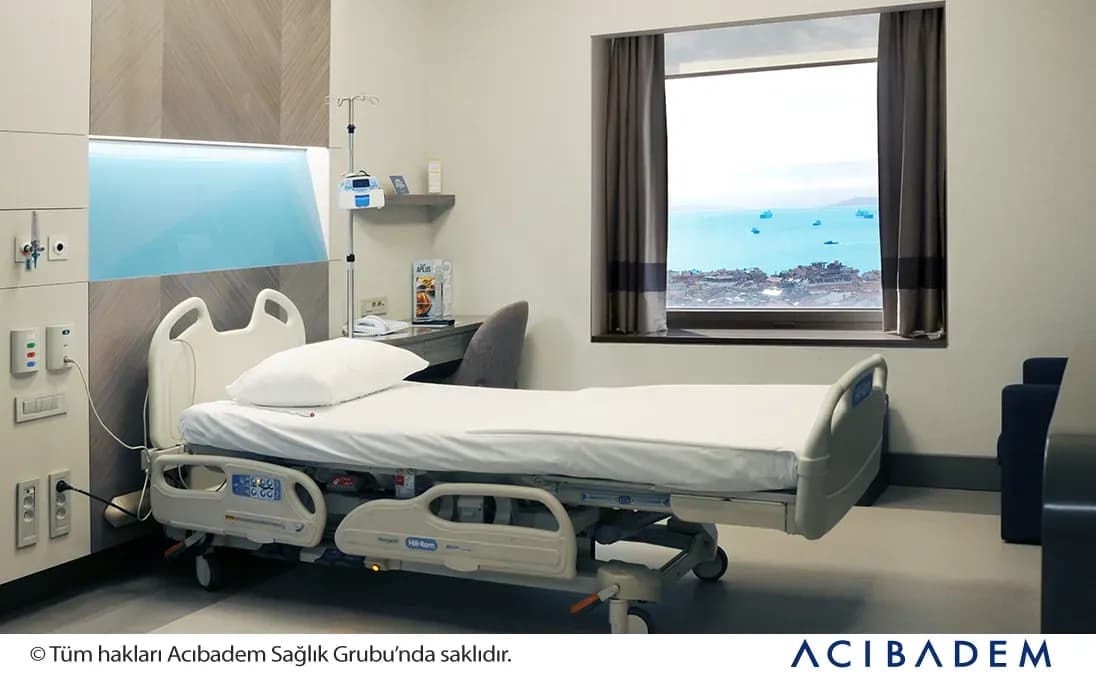
Patient room 
Hotel room, on request
Frequently asked questions
Not reliably. Pressing your fingertips on the scalp and sliding them forward shows whether it moves, but not how much skin can be removed without too much tension. Do not use a home test or another person's result to decide. Dr. Dilber checks laxity by hand at the consultation. Send your photos first; he can tell you whether a meaningful change looks likely.
Answer comes with the content seed.
Answer comes with the content seed.
Answer comes with the content seed.
Answer comes with the content seed.
Answer comes with the content seed.
Answer comes with the content seed.
Explore the practice
 Before and after resultsBefore and after photos of Dr. Dilber's patients. Results vary.See the gallery →
 Patient guide (PDF)The guide we send every patient: timeline, medication, aftercare.Download the guide →
Send three photos. Find out if you are a candidate.
Photograph your forehead from the front, left and right with your hair pulled back, and add a short note about your health and hair history. Dr. Dilber reviews them, and the team replies on WhatsApp.
