

Aftercare After You Fly Home from Surgery in Istanbul
After you leave Istanbul, follow-up continues on WhatsApp for up to one year. You send photos at set intervals, at 1, 3, 6 and 12 months, and Op. Dr. Ahmet Dilber and his assistants review your healing and adjust creams or medication as needed. Bleeding that does not stop, fever or breathing difficulty needs a local doctor or emergency care the same day.
Send your photos on WhatsAppRead about recovery


Ratings as of November 2026
Acıbadem Bakırköy
where Dr. Dilber operates, with one night of hospital care
1 year
of follow-up after surgery, in person or on WhatsApp
Licensed
for international health tourism by the Turkish Ministry of Health
Who is responsible for your follow-up once you are home?
Dr. Dilber operates and also reviews your healing after you return home. He examines you in person at his practice in Ataköy, Istanbul, the day before surgery, and the anaesthetic assessment follows at Acıbadem Bakırköy Hospital, part of the Acıbadem Healthcare Group. Before you leave Istanbul you have a final check and receive written aftercare instructions and an operation summary in English and Turkish.
At home, follow-up runs on WhatsApp. You send photos at set intervals, Dr. Dilber and his assistants review them, and creams or medication are adjusted as needed. Patients who live in Istanbul are seen at the practice in person instead. The WhatsApp line, +90 536 296 93 16, is answered from 07:00 to 24:00 Istanbul time.
WhatsApp is for planned checks and questions between them. It is not an emergency service. If something looks wrong between checks, send photos straight away. For the warning signs listed below, see a doctor locally first and then tell the team. Patients still planning their trip can read the international patients page.



Healing after forehead reduction
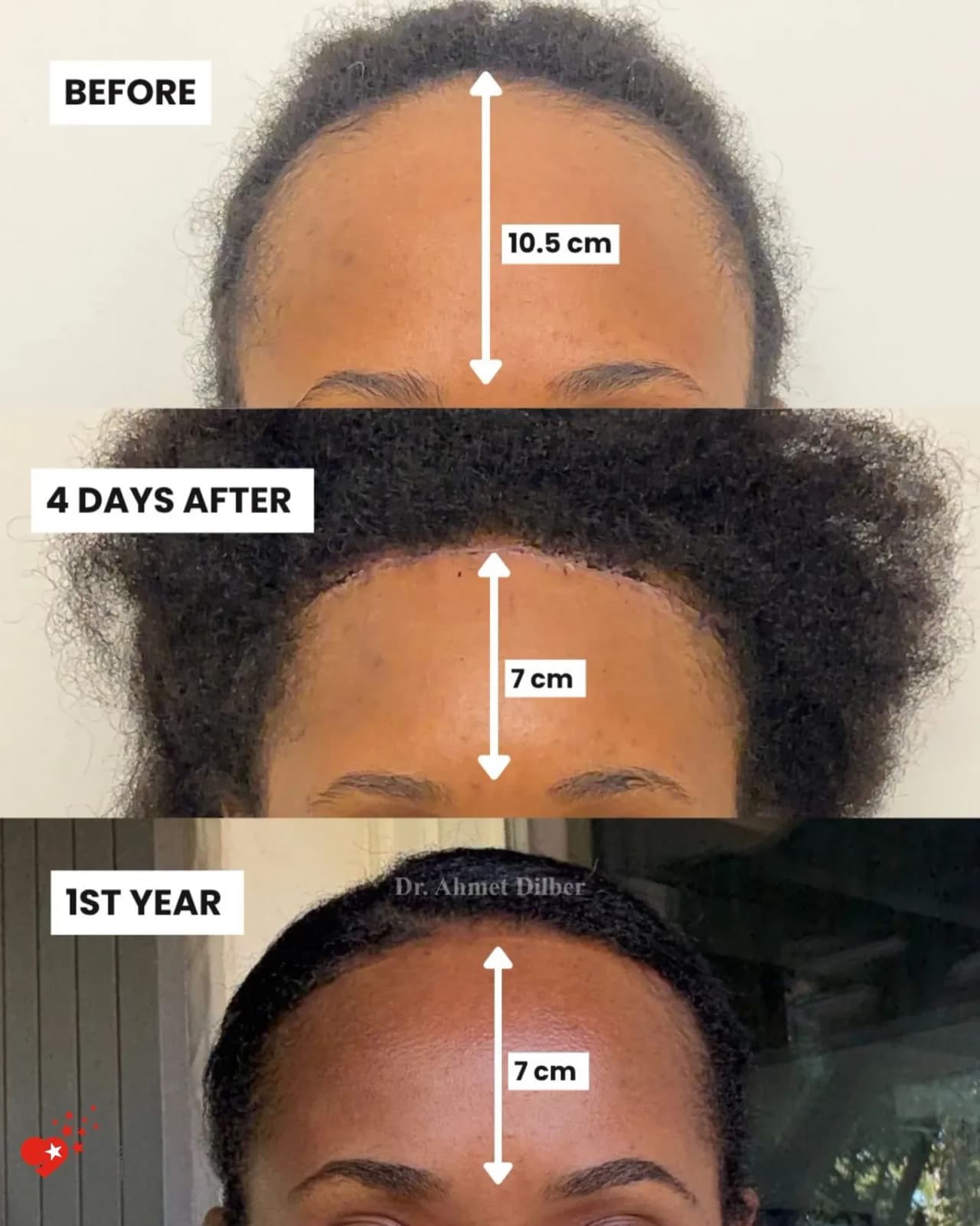
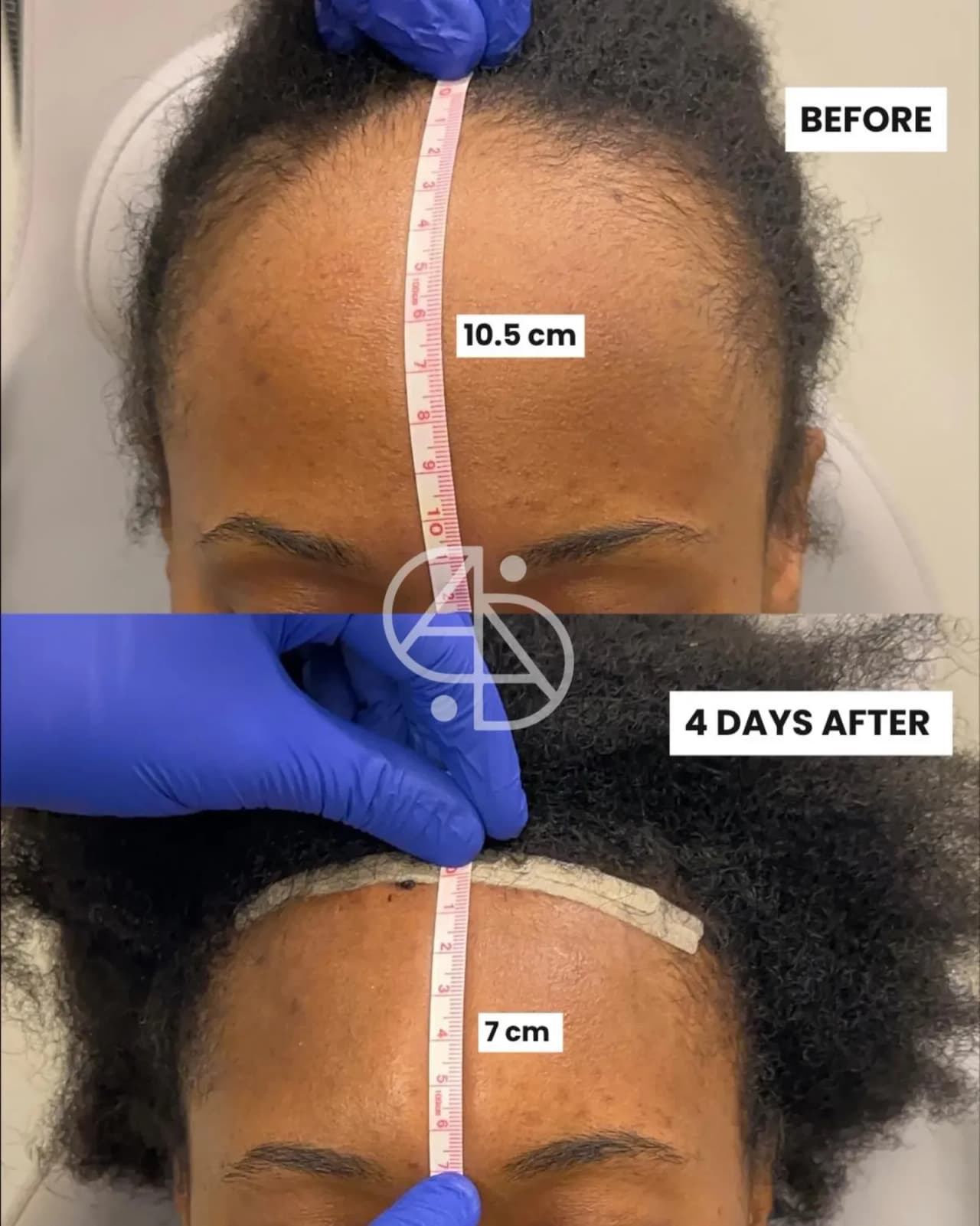
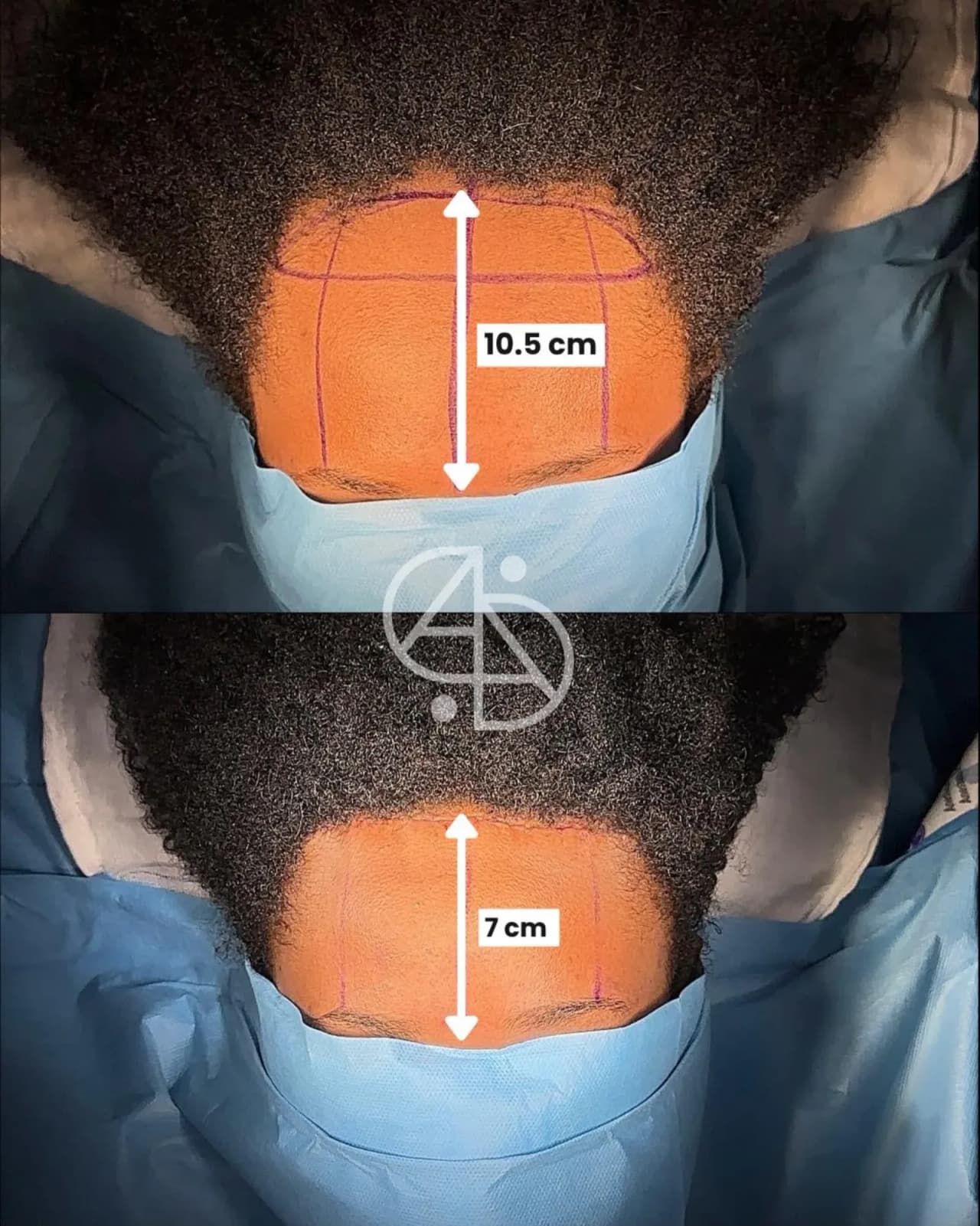
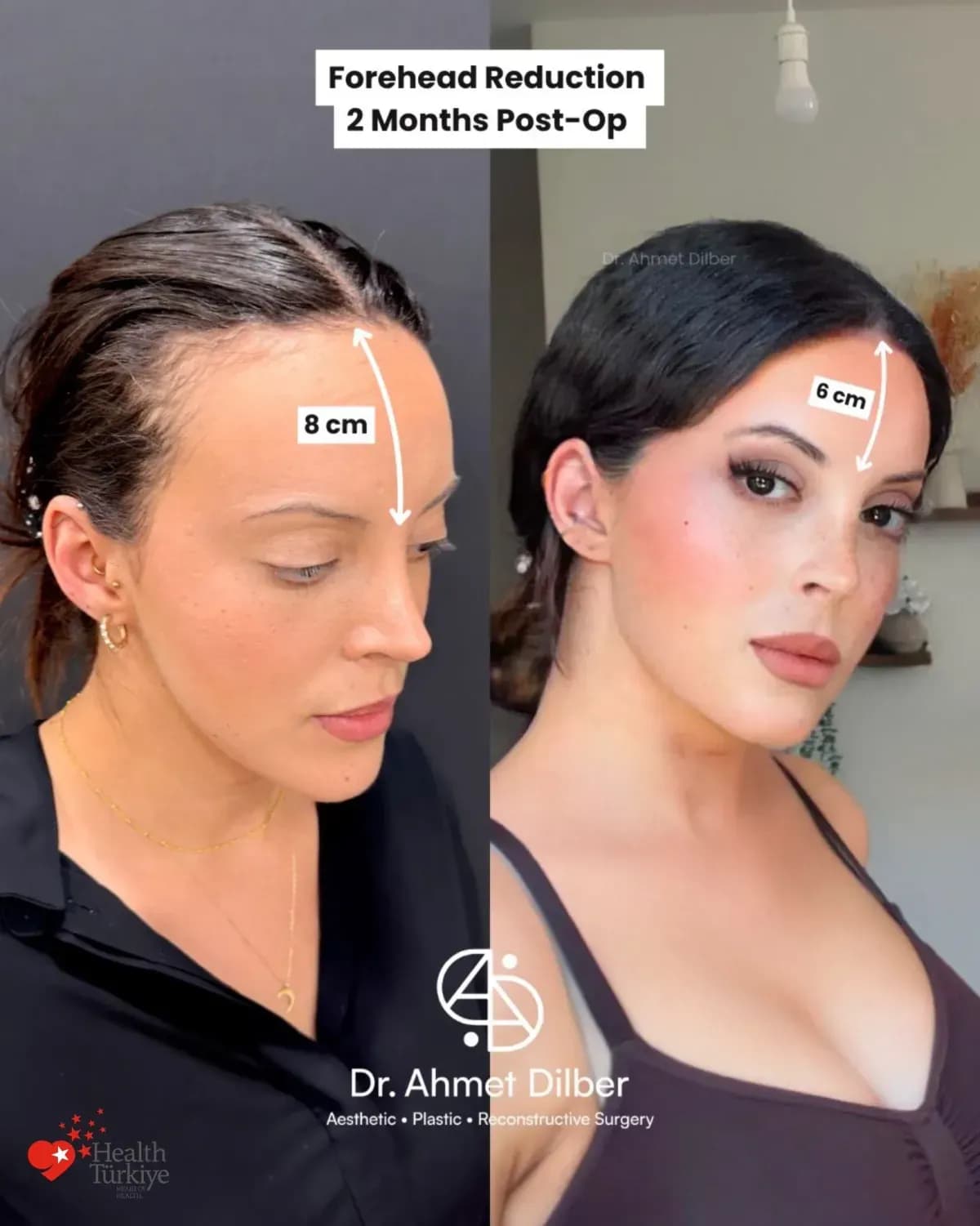
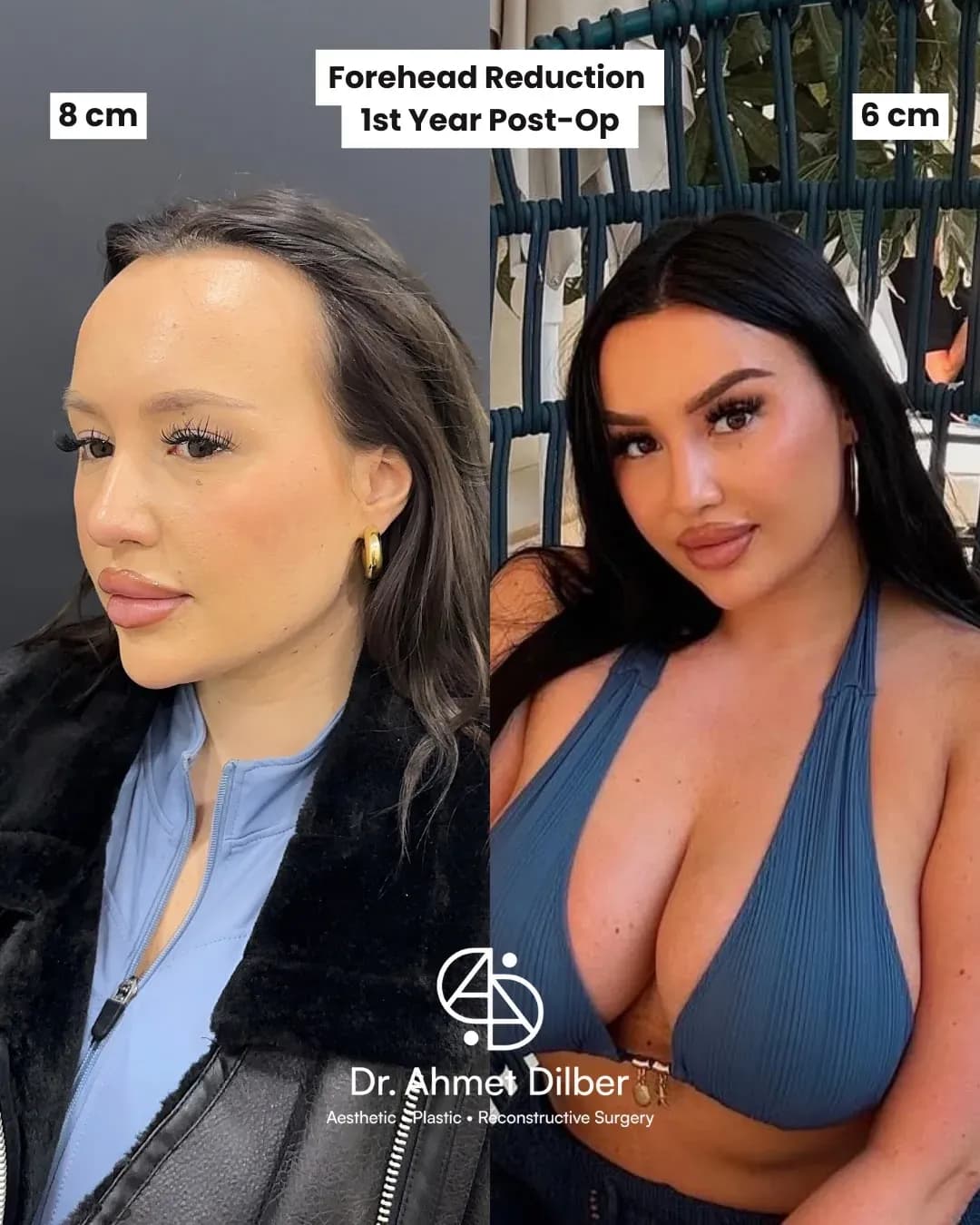
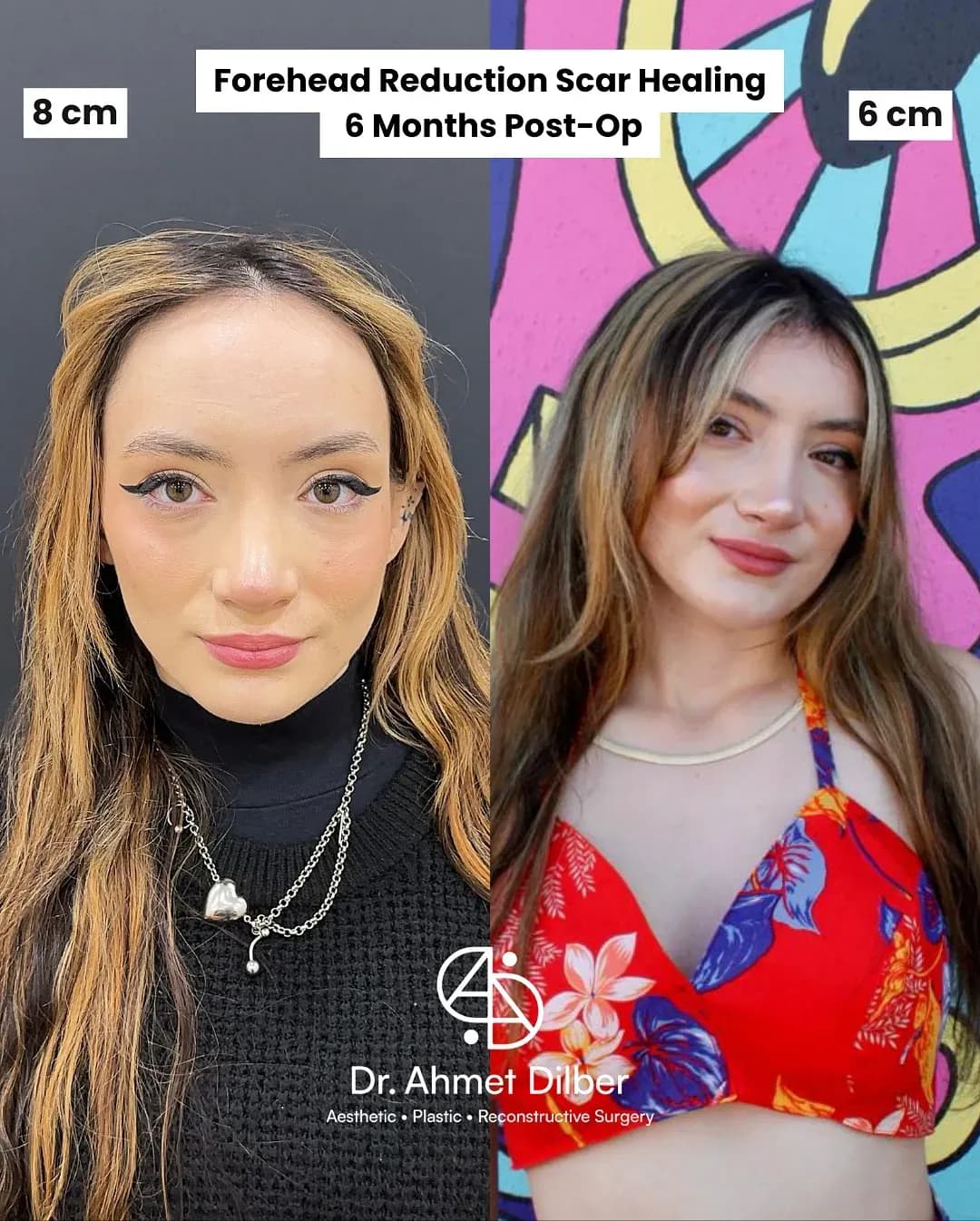
Before and after photos of Op. Dr. Ahmet Dilber's patients, from @drahmetdilber on Instagram. Results vary.
What do you do after you return home, month by month?
Before you fly: take your records
Your final check is on day 4 after forehead reduction, at the end of day 5 after a facelift and on day 7 after rhinoplasty, when the splints and cast come out. Collect your aftercare instructions, operation summary and list of medicines. Take a set of photos that day, in the light you will use at home.
Month 1: first photo check
Send photos on WhatsApp. Forehead reduction: front, left and right with your hair pulled back, plus a close-up of the incision. Facelift: front, both sides and behind each ear. Rhinoplasty: front and both profiles; continue the saline spray to the end of the month, and no glasses until month 2. After forehead reduction, the scar gel Dr. Dilber prescribes follows the 15 days of antibiotic cream, twice a day for at least 2 months. Istanbul patients are seen at the practice instead.
Month 3: keep the routine
Send the 3-month set. Use the same background, distance and daylight each time, with no make-up, filters or zoom. Keep the suture line clean, protect scars from the sun with SPF 50+ sunscreen or a hat for 6 to 12 months, and follow any change to creams or medication. After forehead reduction, some thinning along the hairline or crown can appear around now; it mostly recovers by month 6.
Month 6: scar and shape settle
The 6-month check reviews scars and remaining swelling. Mention any thinning hair that has not recovered, a widening scar or an area that stays numb, so Dr. Dilber can advise. After rhinoplasty, protect the nose from knocks, especially in these first 6 months.
Month 12: final review
Scars mature over about one year, and after rhinoplasty the nose reaches its final shape at about the same time. Dr. Dilber reviews your 12-month photos. This is the time to raise any concern about the result, once swelling has gone and scars have matured.
Which warning signs need a doctor the same day?
Do not wait for a WhatsApp reply if you notice any of these. See a local doctor, go to an emergency department or call emergency services: 999 or NHS 111 in the UK, 112 in the EU, 911 in the US. Then tell the team, with photos.
Bleeding that does not stop
Bleeding that soaks through the dressing or keeps going despite firm, steady pressure needs urgent care. Slight oozing on the first day, or slight bleeding from the nose in the first week after rhinoplasty, is expected.
Fever or feeling unwell
A high temperature, shivering or feeling generally unwell can be a sign of infection, especially together with a wound that is hot and painful.
Spreading redness, warmth or discharge
Redness that spreads out from the incision, skin that feels hot, or pus or a bad smell from the wound.
Fast swelling on one side
Swelling that grows quickly, feels tense and painful or affects one side only, especially in the first days after a facelift, can mean blood is collecting under the skin.
Breathing difficulty after rhinoplasty
A blocked nose is expected while swelling settles. Difficulty breathing through the mouth, noisy breathing or swelling in the throat is not, and needs emergency care straight away.
A wound that opens or pain that keeps rising
If the incision opens or pain keeps rising despite the prescribed medicines, send photos straight away; Dr. Dilber advises on treatment and whether to see a doctor locally.
Who does what if a problem appears at home?
Three parties share aftercare once you are back: you, the practice and a doctor near you. You watch the wound and send photos on schedule. Dr. Dilber and his assistants review them, adjust creams or medication and tell you whether you should see a doctor locally. A local doctor examines you when something needs hands-on care, such as an infection or a wound that has opened.
Your local doctor can contact the practice by phone on +90 533 085 76 86, or through the WhatsApp line, +90 536 296 93 16, to discuss your operation and the treatment you were given; other contact routes are on the contact page. Take your aftercare instructions and operation summary, written in English and Turkish, to the appointment. If Dr. Dilber advises an in-person review in Istanbul, the team explains what it involves before you book travel.
Who does what after you return home
You
What they do: Send photos, use the creams, report warning signs
When: At each check and whenever something changesDr. Dilber
What they do: Reviews photos, adjusts creams or medication, decides if a local check is needed
When: At each check and for photos sent urgentlyDr. Dilber's assistants
What they do: Pass photos to Dr. Dilber, take calls from your local doctor
When: WhatsApp line, 07:00 to 24:00 Istanbul timeYour GP or local doctor
What they do: Examines you, treats infection or wound problems, contacts the practice
When: When advised, or for a warning signEmergency services
What they do: Bleeding that will not stop, breathing difficulty, chest pain
When: Immediately: 999, 112 or 911
Will your GP or the NHS see you after surgery abroad?
Tell your GP before you travel and share your operation details when you are back. The NHS warns that clinics abroad may not provide follow-up and may have no UK professional you can go to. Do not assume the NHS will provide routine follow-up or corrective surgery after a private operation abroad. In an emergency, use NHS 111 or 999 as you normally would.
Your GP remains your doctor for general health. Routine follow-up comes from Dr. Dilber by photo review, and if he advises a local check, your GP is usually the first step. Patients from the EU and the US should tell their family doctor in the same way. Recovery timelines are on the forehead reduction and facelift recovery pages.
What happens if a complication appears?
Any cosmetic surgery carries risks. They include bleeding, infection, numbness or altered sensation, a visible or widened scar, hair loss along the incision after forehead reduction, asymmetry and the need for revision surgery. Dr. Dilber explains each risk at the consultation in Ataköy, before you agree to surgery.
Some problems settle with creams, medicines or time, and Dr. Dilber adjusts treatment from your photos as healing progresses. Others need a review once swelling has gone. If something needs an examination, he tells you whether to see a doctor locally or come back to the practice. Not every result can be fully corrected.
Your written aftercare instructions and operation summary, in English and Turkish, record what was done and which medicines you were given. Keep them with you and show them to any doctor who treats you while you recover.
Frequently asked questions
Dr. Dilber and his assistants provide it by photo review on WhatsApp, at set intervals for up to one year: 1, 3, 6 and 12 months after surgery. Creams or medication are adjusted as needed. When something needs an examination, he tells you whether to see a doctor locally. Your GP remains your doctor for general health and emergencies.
The WhatsApp line, +90 536 296 93 16, is answered from 07:00 to 24:00 Istanbul time. If a non-urgent message has had no reply, send it again or call the practice on +90 533 085 76 86. For a warning sign such as bleeding, fever or breathing difficulty, do not wait: get local care first.
You leave Istanbul with written aftercare instructions and an operation summary in English and Turkish, recording the operation, medicines and creams. Take them to any appointment. If your doctor needs more detail, they can call the practice on +90 533 085 76 86, or you can ask the team on WhatsApp to send it.
No. Photos show how a wound and scar look and let Dr. Dilber follow healing over months. They cannot replace an examination when something feels wrong, such as a hot, painful area or a new lump. Then he tells you to see a doctor locally.
You send your photos to Dr. Dilber's assistant on WhatsApp. The doctor reviews them with his assistants. He decides whether healing is on track, whether creams or medication need adjusting and whether you should see a doctor locally. Follow-up continues at 1, 3, 6 and 12 months, for up to one year.
Face a window in daylight, against a plain background, at the same distance each time. Hold the phone at face height, with no make-up, filters or zoom. Take front, left and right views plus any your notes list, and send them in one message with the date.
Patients who live in or visit Istanbul are seen at the practice in Ataköy instead of sending photos. If Dr. Dilber advises an in-person review, the team arranges a time with you; the practice is open 09:00 to 17:00, by appointment only. Plan travel only after he has seen recent photos.
Explore the practice
 About Dr. DilberTraining, hospital and how he works with patients from abroad.Read his profile →
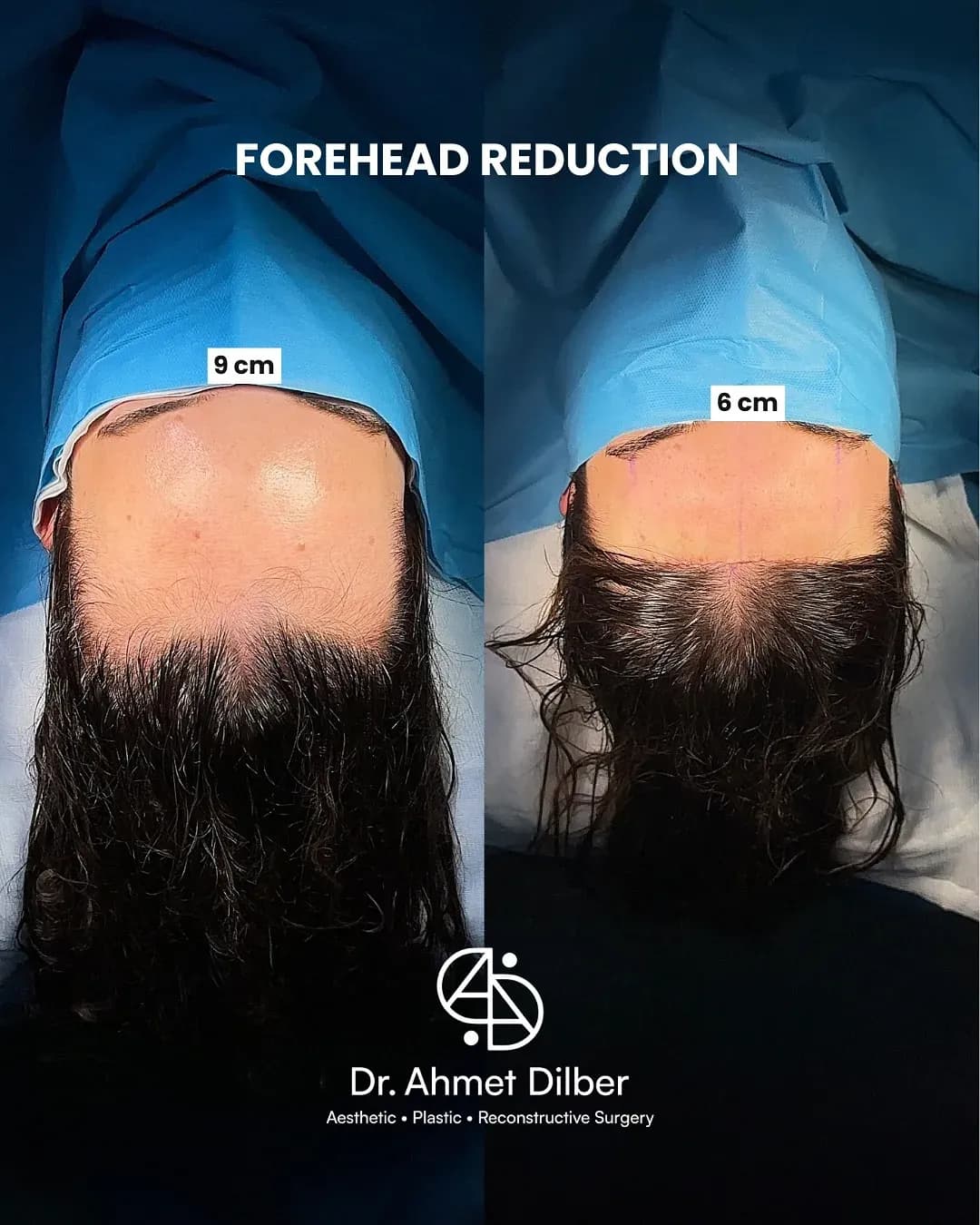 Before and after resultsBefore and after photos of Dr. Dilber's patients. Results vary.See the gallery →
 The practice and hospitalAtaköy practice, Acıbadem Bakırköy Hospital, how a visit runs.About the practice →
 Patient reviewsRealSelf, Google and Trustpilot, with dates and links.Read reviews →
Questions before you book? Send your photos.
Send three photos of the area you want to change. Dr. Dilber reviews them, and the team replies on WhatsApp with his view and how aftercare would work for you.
