

Forehead Reduction With or After a Hair Transplant
Op. Dr. Ahmet Dilber performs forehead reduction; he does not perform hair transplants. If you also want a transplant, a hair-transplant clinic can do it about one year after forehead reduction, once the scar has matured. Forehead reduction after an earlier transplant is also possible when the grafts and scalp allow it. He plans the incision around existing grafts after examining you.
Send your photos on WhatsAppCompare the two procedures

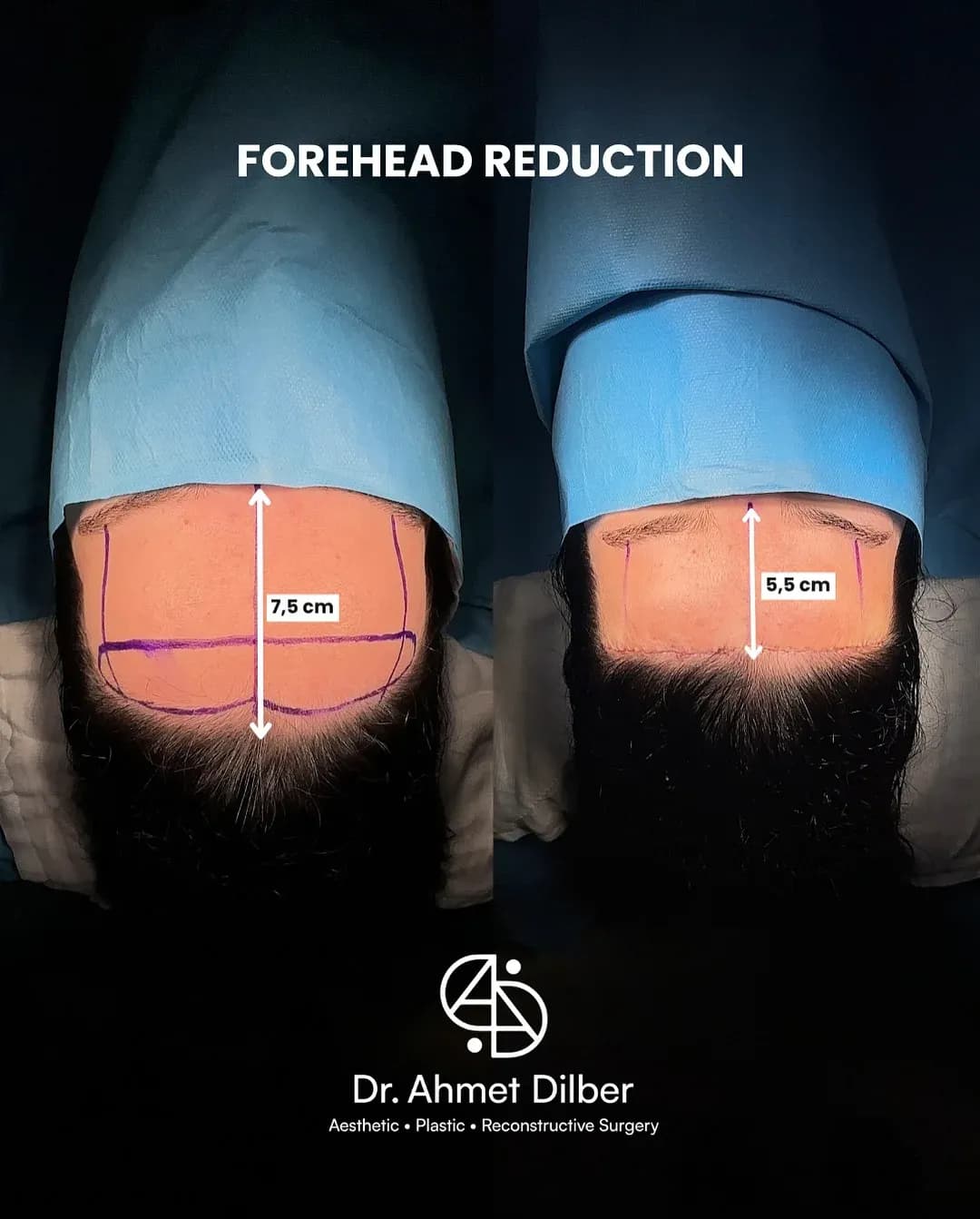
Before and after, forehead reduction. Results vary.
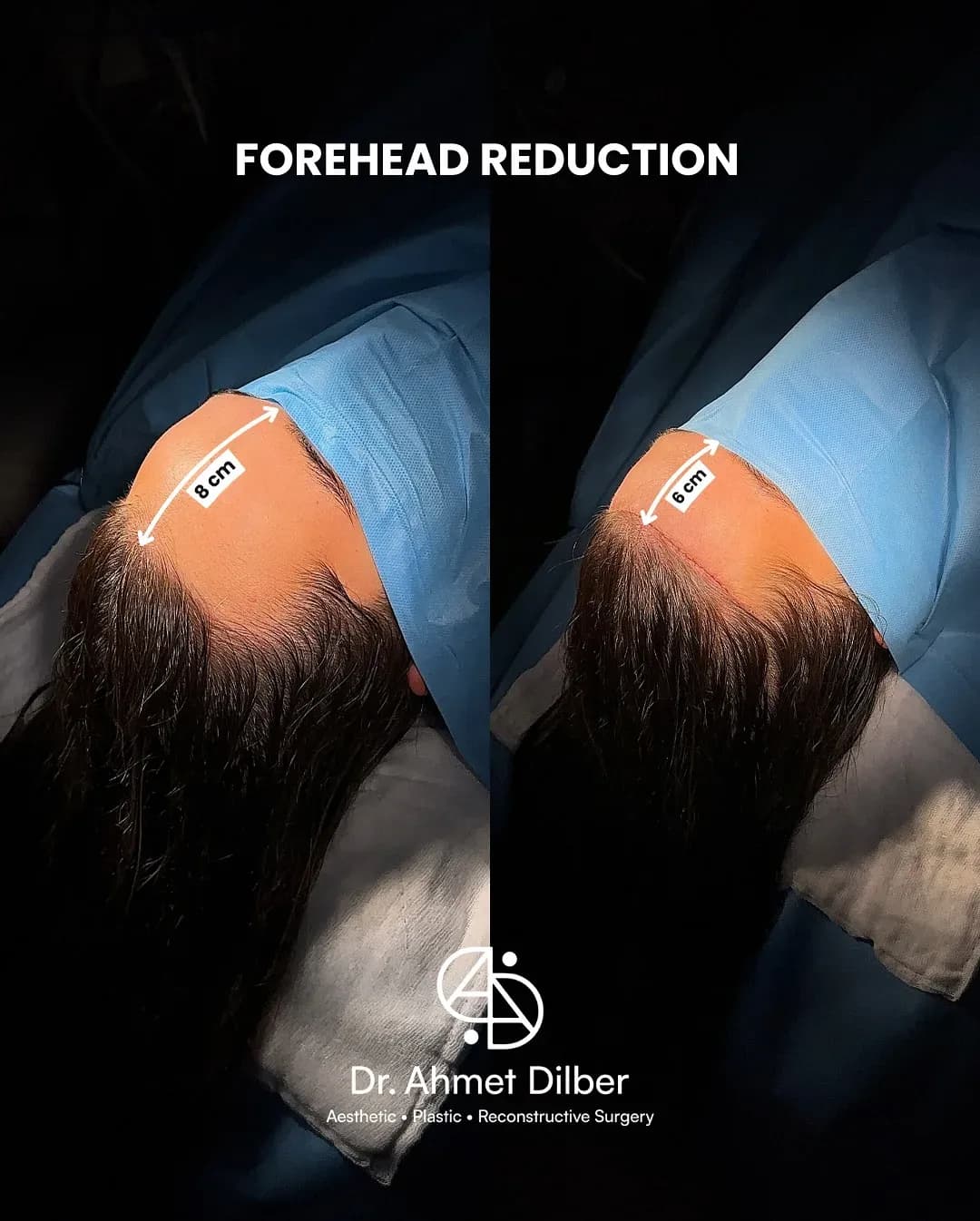
Before and after, forehead reduction. Results vary.
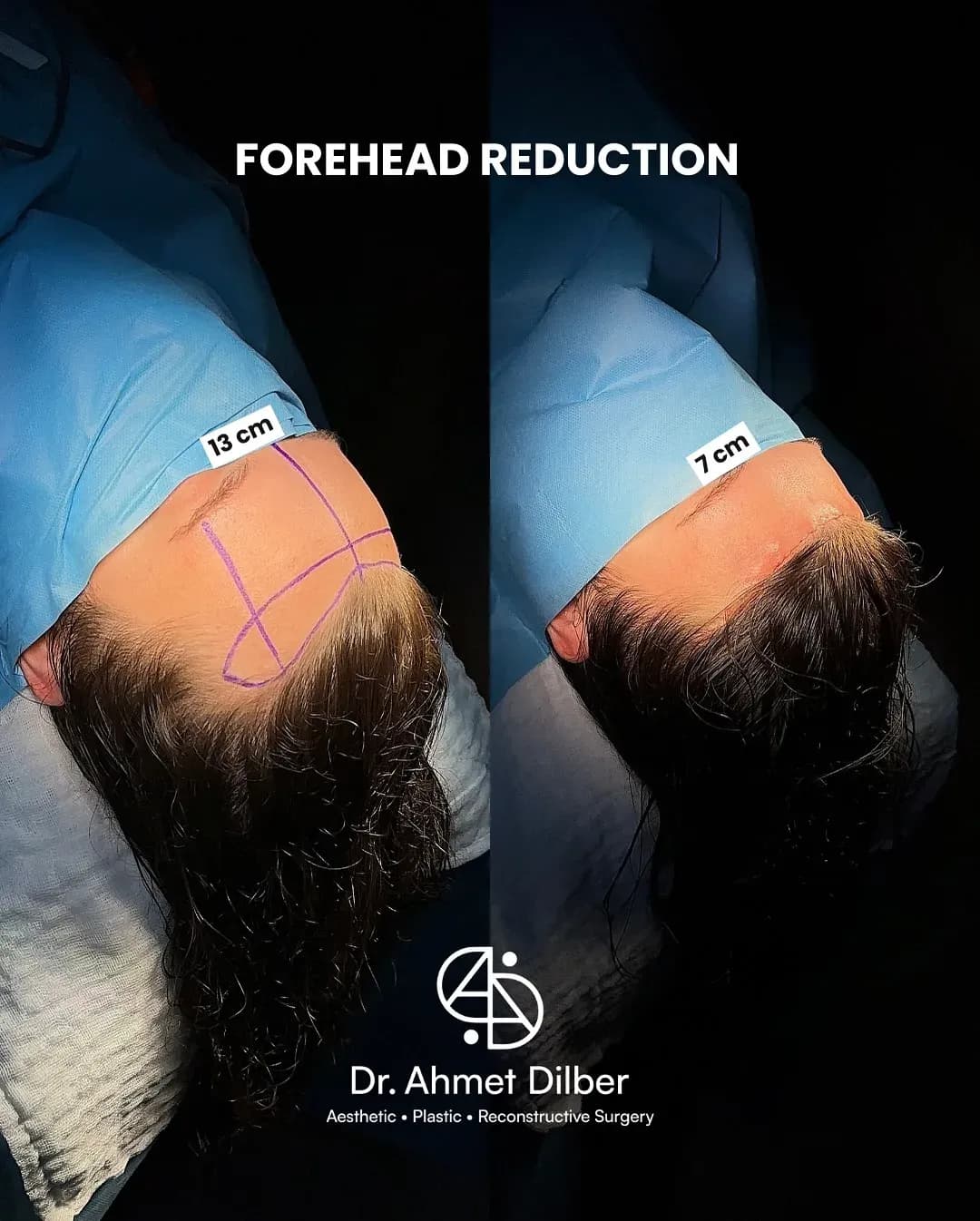
Before and after, forehead reduction. Results vary.



Ratings as of November 2026
Acıbadem Bakırköy
where Dr. Dilber operates, with one night of hospital care
1 year
of follow-up after surgery, in person or on WhatsApp
Licensed
for international health tourism by the Turkish Ministry of Health
How does a hair transplant change forehead reduction planning?
Forehead reduction lowers the hairline by removing a strip of forehead skin and moving the hair-bearing scalp forward. A hair transplant adds hair by moving follicles from the donor area at the back of the head. The two treat different problems: forehead height on one side, density and temple shape on the other. With both, the questions are order and interval.
If you have already had a transplant, the position of the grafts matters. Grafts within your original hairline move forward with the scalp. Grafts placed below it, on what was forehead skin, may sit in the strip that would be removed, or the incision may need to run in front of them. Dr. Dilber plans the new line from your photos and records, then marks it with you in Ataköy.
Dr. Dilber performs forehead reduction under general anaesthesia in 1.5 to 2 hours, with one night in hospital. He does not perform hair transplants; transplant facts here come from the NHS and the ISHRS. The candidacy guide covers what he looks at.



Forehead reduction results
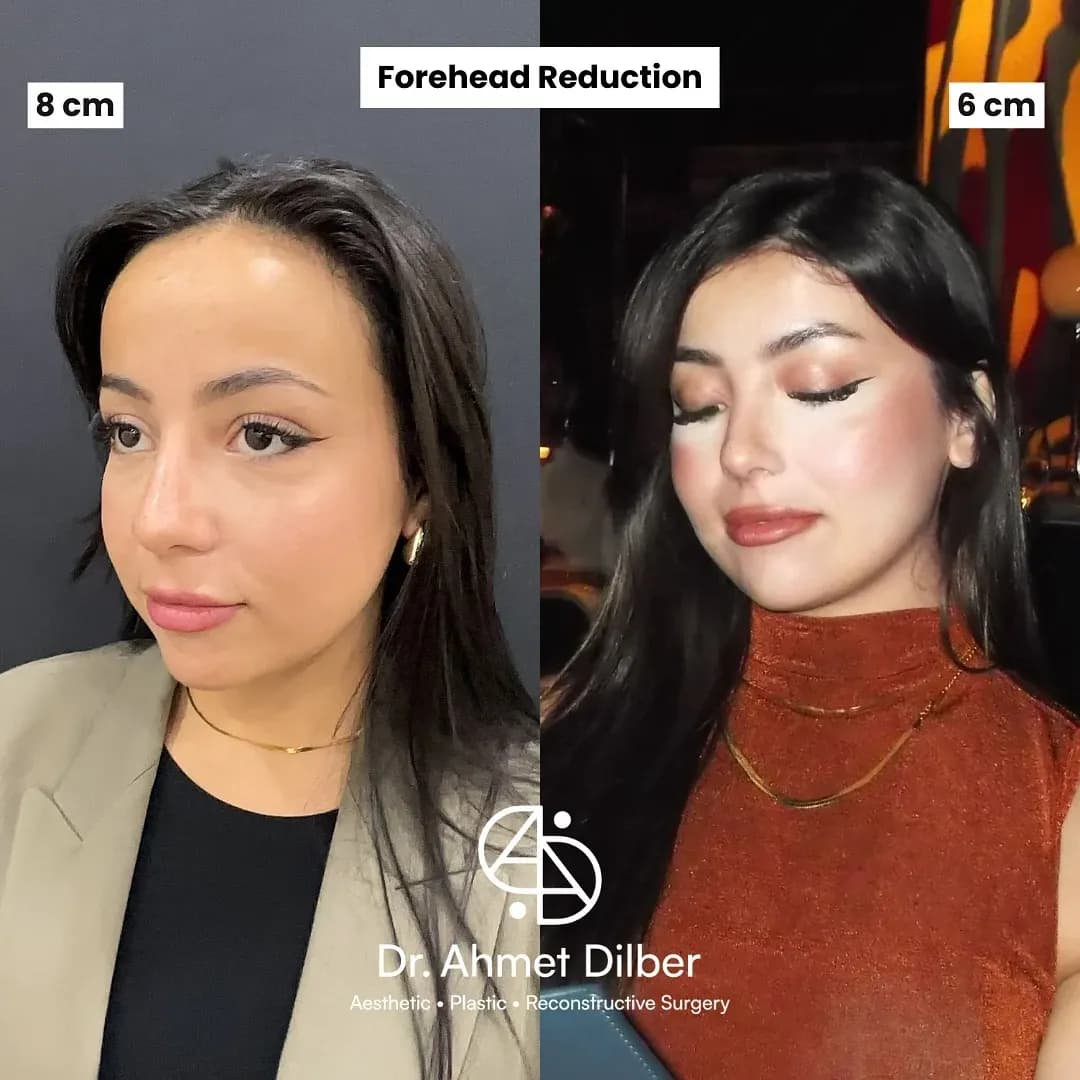
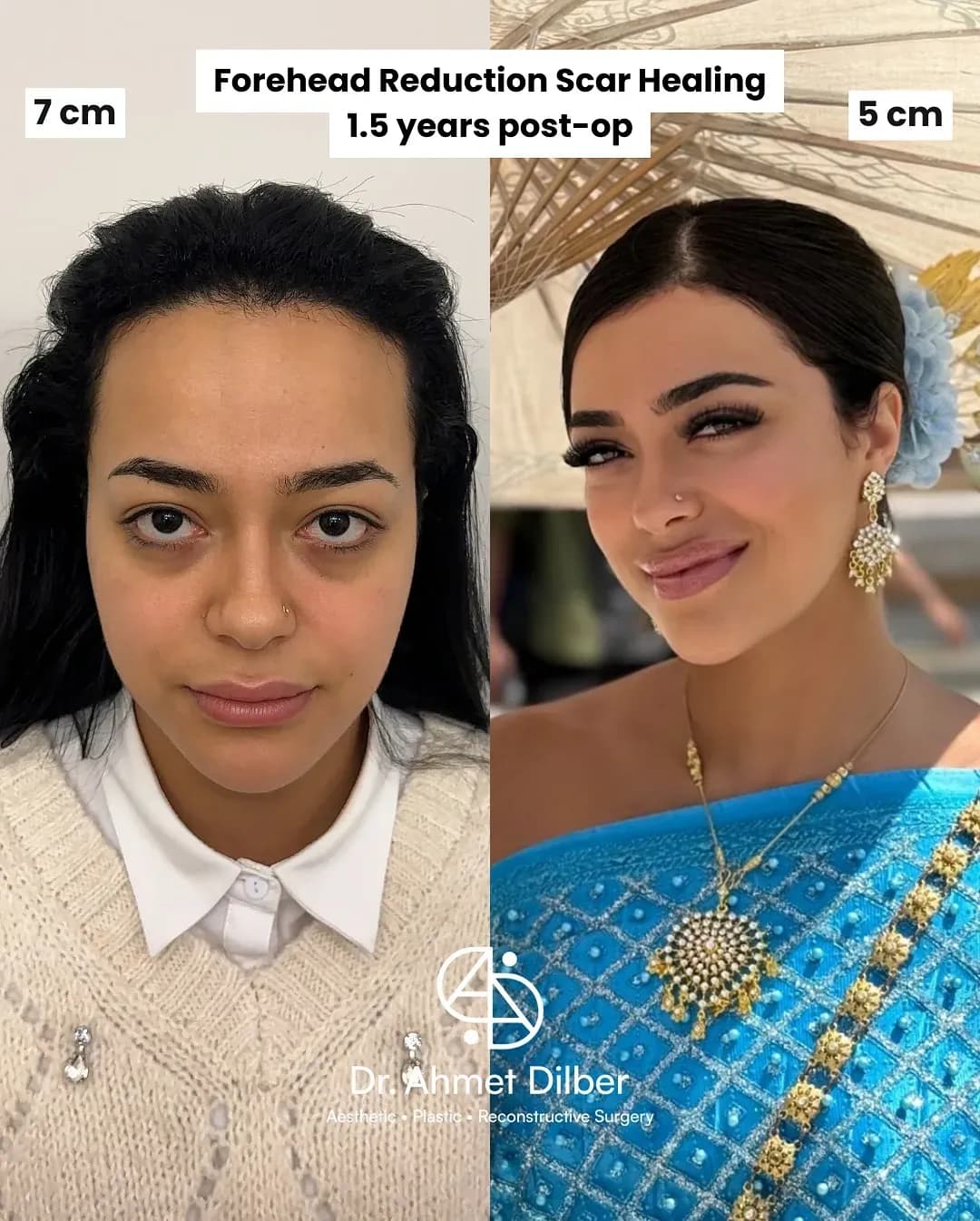
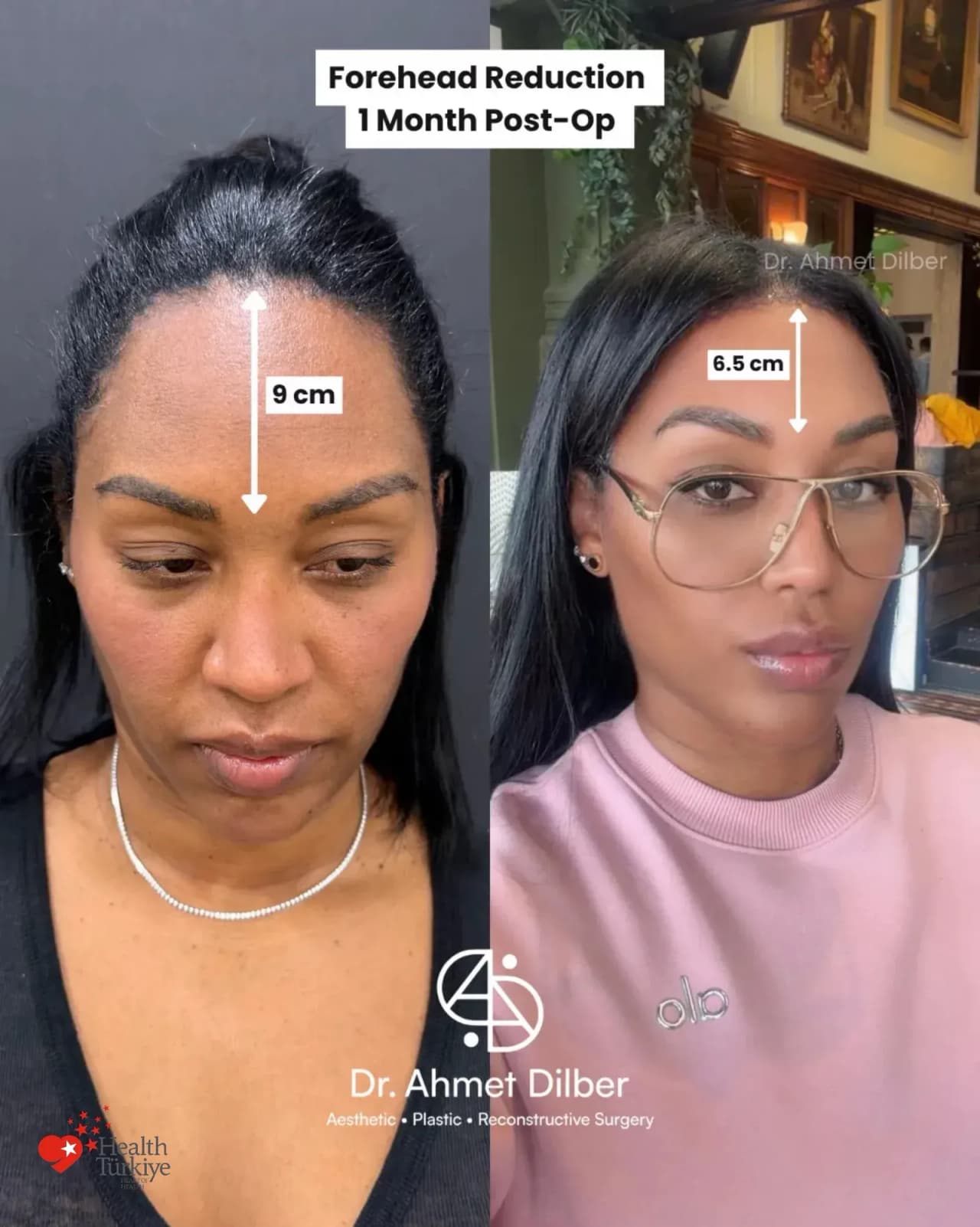
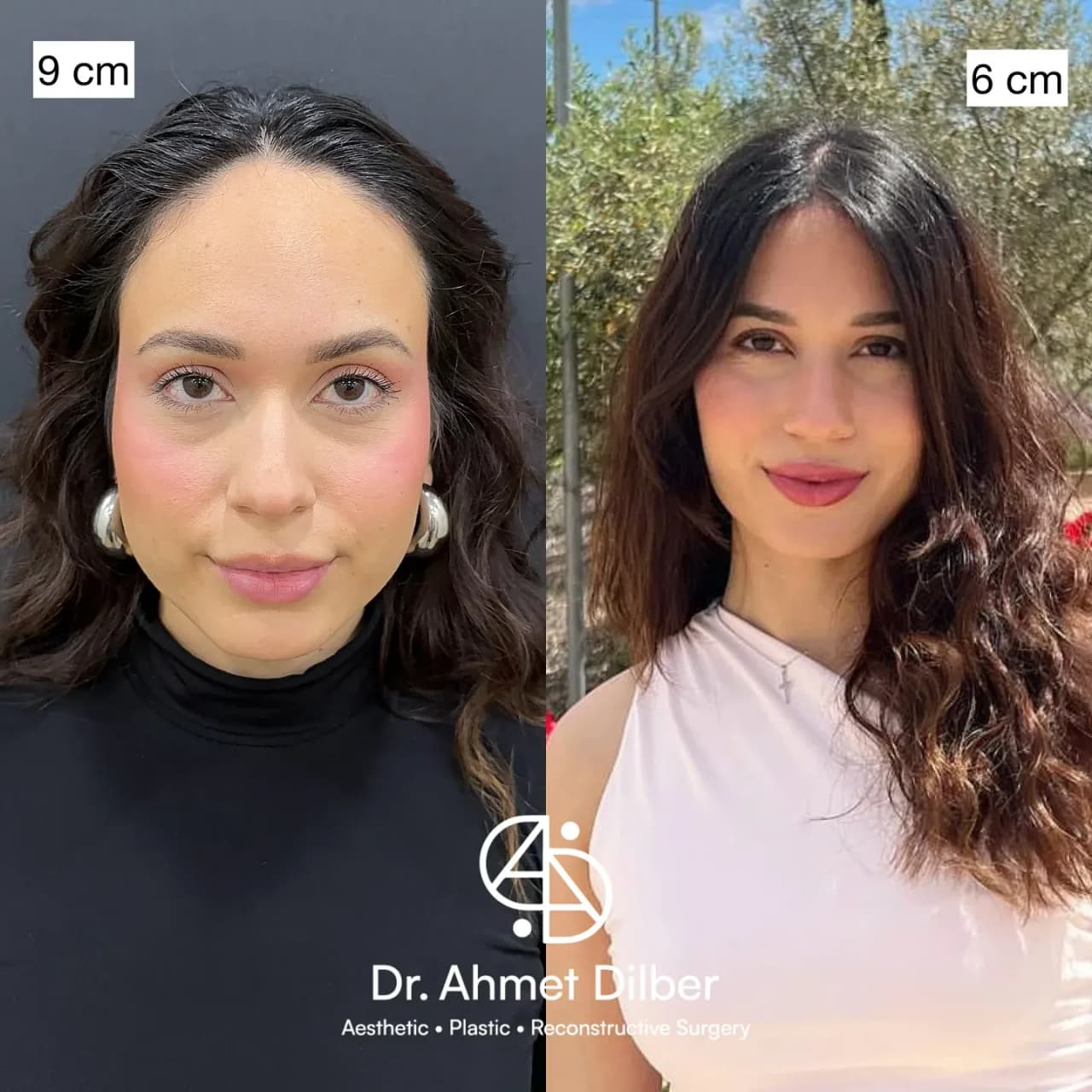
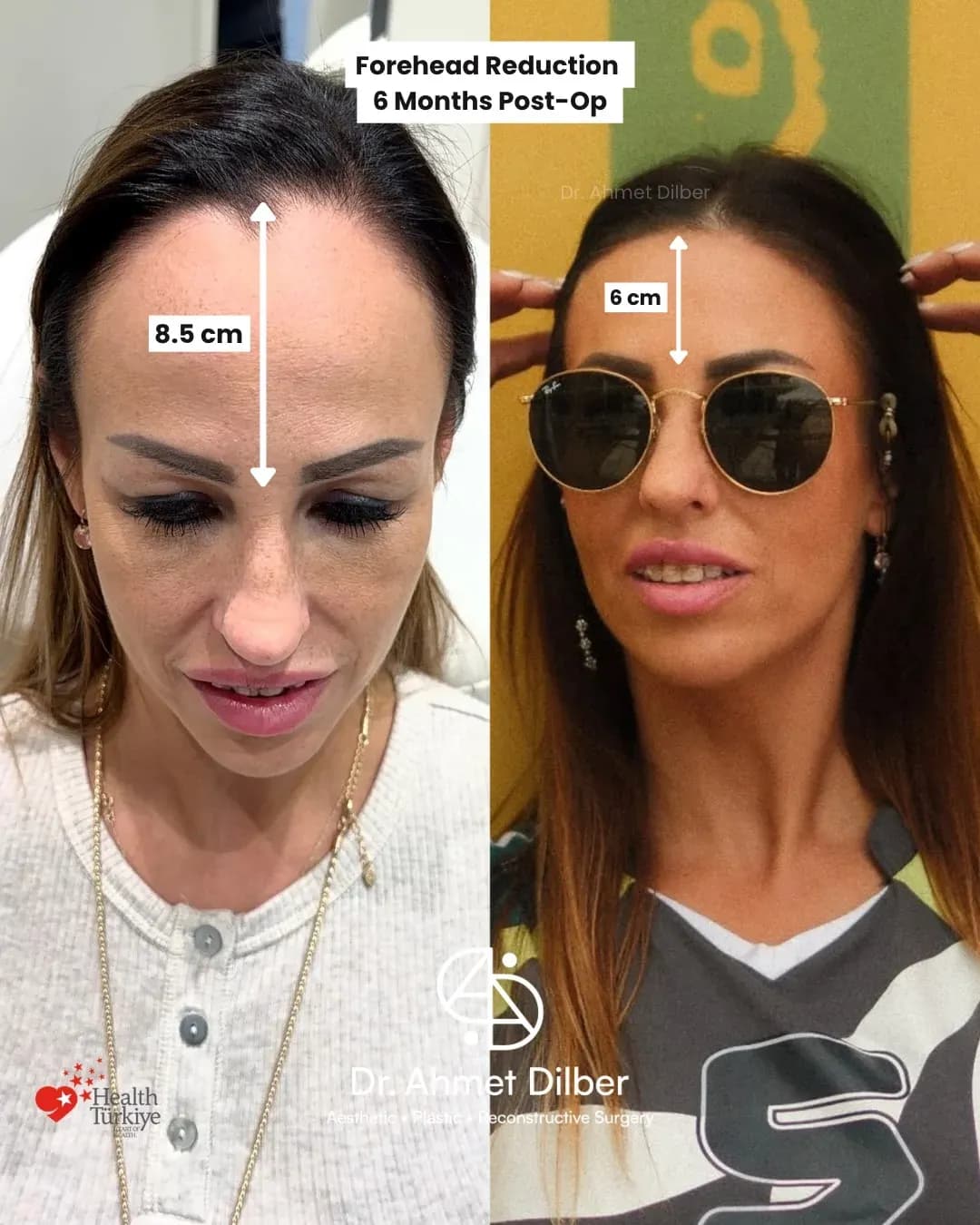
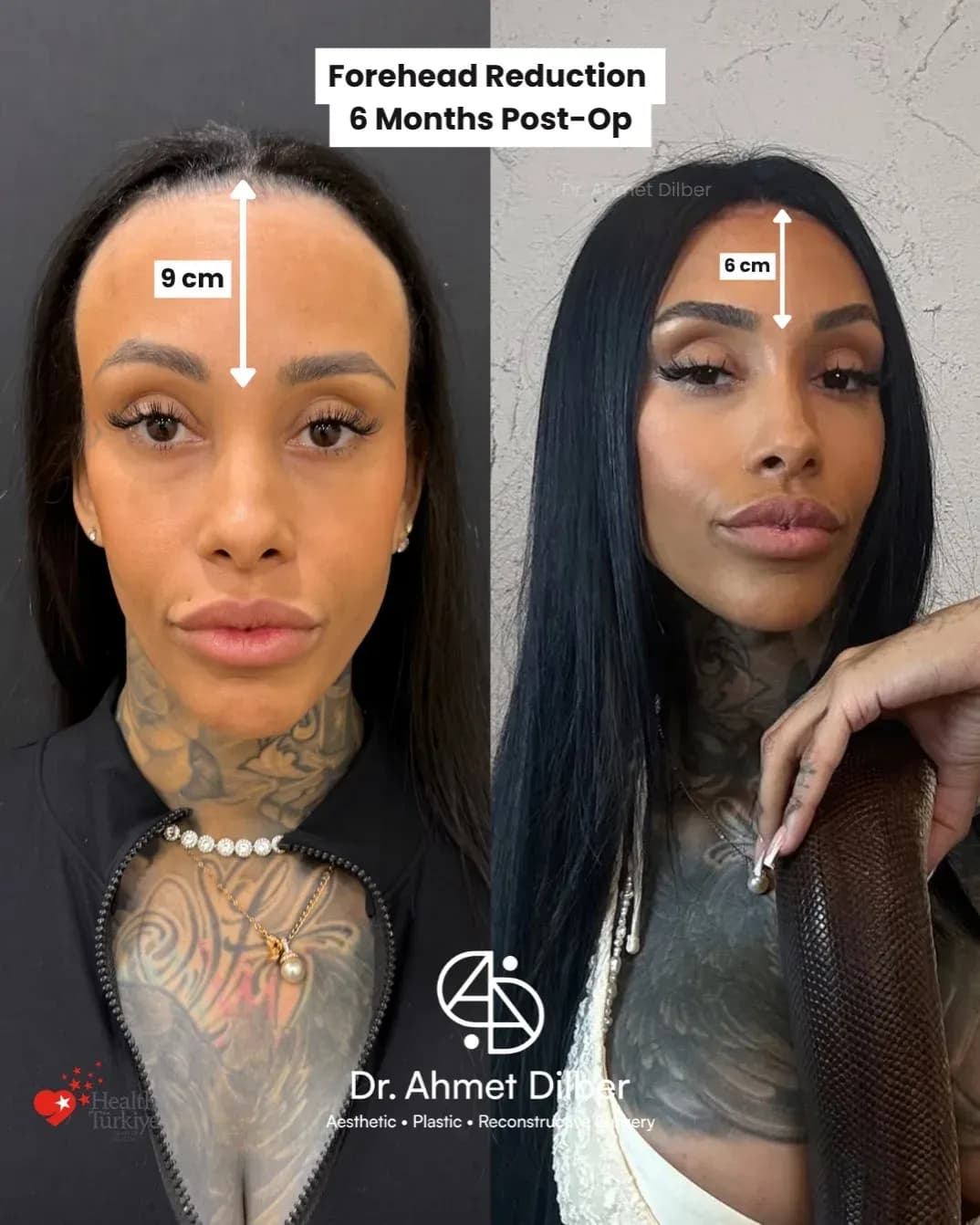
Before and after photos of Op. Dr. Ahmet Dilber's patients, from @drahmetdilber on Instagram. Results vary.
Why have forehead reduction first and a transplant later?
This order suits people with a tall forehead and thin or receding temples. Forehead reduction brings the whole hairline down in one operation, using hair you already have. The result is immediate, hair length does not matter, and the bone is never touched. Any thinning after surgery, which can appear around month 3, is usually minimal and mostly recovers by month 6.
About one year later, once the scar has matured and the hairline has settled, a hair-transplant clinic can round off the temple corners or add density along the front if you still want it. The transplant is then planned on the final hairline position, so grafts are not spent on height that surgery has already gained. Donor hair is limited, which is the main reason for this order. Your follow-up photos from Dr. Dilber show the healed line.
Can forehead reduction be done after a transplant?
Yes, when the transplanted hair has grown in and the scalp still moves enough. Some people have a transplant first and find the forehead still looks tall. Others had grafts placed to lower the hairline and want more height removed than further grafting can give without using much more donor hair.
NHS guidance says full transplant results are expected at 10 to 18 months, so Dr. Dilber needs to see where the grafts have grown before he plans an incision. Send the date of each transplant, the method (FUT strip or FUE), the number of grafts if you know it, and recent photos of the hairline and the back of the head. A previous strip scar is part of the scalp check.
What should you send before planning both procedures?
Dr. Dilber's assistant presents these to him with your photos before he gives a view. If records are missing, say so; photos still help.
Your transplant history
- Date of each transplant
- Method: FUT strip or FUE
- Number of grafts, if known
- Where the grafts were placed
Current photos
- Front, left and right, hair pulled back
- Close-up of the hairline and temples
- Back of the head (donor area)
- Older photos showing any change
Your goal and health
- What you want changed: height, shape or density
- Hair-loss medicines you use
- Medical history and smoking
- Whether you plan a transplant later
How is forehead reduction planned around a transplant?

Photo and record review
Send your photos and transplant details on WhatsApp. Dr. Dilber's assistant presents them to Dr. Dilber, who decides whether forehead reduction suits you. A video consultation with Dr. Dilber and his assistant can be arranged if you want one or it is needed.
Consultation in Ataköy, the day before
Dr. Dilber examines you himself at his practice in Ataköy, Bakırköy. He checks how far your scalp moves, looks at existing grafts and marks the new hairline with you. Health tests and the anaesthetic assessment follow at Acıbadem Bakırköy Hospital, one of Turkey's leading private hospital groups.
Forehead reduction and your stay
Surgery takes 1.5 to 2 hours under general anaesthesia, with one night in hospital. You can shower from day 2 with warm or cold water and wear a soft head band from day 1; the plaster comes off on day 4 and you can fly home after that check. Most people return to work after 5 days and resume strenuous exercise after 6 weeks.
Photo follow-up for a year
Send photos of the incision on WhatsApp at 1, 3, 6 and 12 months. Dr. Dilber and his assistants review the scar and any shedding near the hairline. If you notice redness, discharge or increasing pain, send photos straight away; he advises on treatment. Read about aftercare after you fly home.
A transplant, if you still want one
About one year after forehead reduction, the scar has matured and the hairline has settled. If you still want more density or rounder temples, a hair-transplant clinic can assess you and carry out the transplant as a separate operation, with its own consultation, consent and aftercare.
Your stay in Istanbul
You see Dr. Dilber at his practice in Ataköy, have surgery at Acıbadem Bakırköy Hospital and can stay at a nearby hotel.
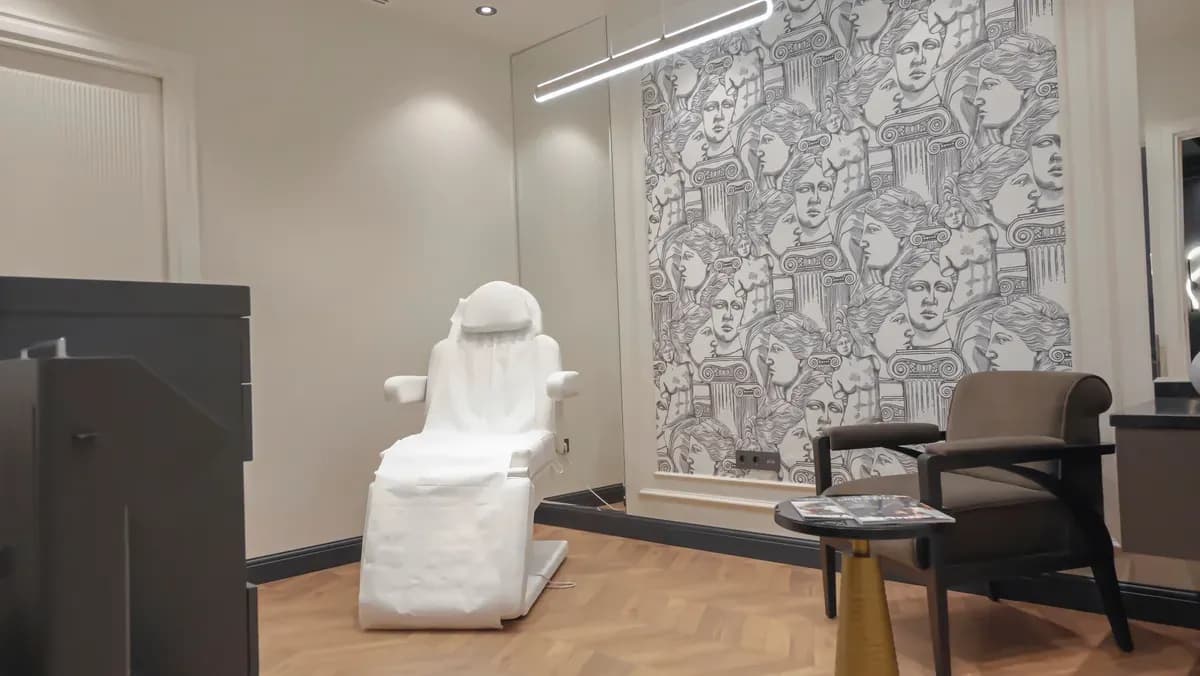
The practice in Ataköy 
Acıbadem Bakırköy Hospital 
Patient room 
Hotel room, on request
Can forehead reduction cause shock loss in existing grafts?
It can. Shedding of hair just behind the incision, known as shock loss or effluvium, is a recognised effect of forehead reduction, and transplanted hairs near the incision can be affected as well as your own. In a 2025 review of 650 forehead reduction cases, 98 patients had shedding after surgery, and men were affected less often than women. It can appear around month 3, is usually minimal and mostly recovers by month 6. Dr. Dilber reviews it on your follow-up photos.
Any cosmetic surgery carries risks. For forehead reduction they include bleeding, infection, numbness or altered sensation behind the hairline, a visible or widened scar, hair loss along the incision, an uneven hairline and the need for revision surgery. With previous grafts, add shedding or loss of some grafts near the incision. A later transplant has its own risks, which the NHS lists as bleeding, infection, grafts that do not take and a noticeable scar. The scar page explains these in full.
Planning by situation
Transplant already done
Information needed: Date, method, graft count, recent hairline photos
What is decided: Whether the grafts allow the planned incisionGrafts placed below the original hairline
Information needed: Close-ups showing where the grafts grew
What is decided: Where the incision runs relative to themRecent transplant, grafts still growing
Information needed: Transplant date and recent photos
What is decided: Whether to wait before forehead reductionTransplant wanted after lowering
Information needed: Healed scar photos from follow-up
What is decided: Done at a hair-transplant clinic, about one year later
What do patients ask about combining and spacing the procedures?
No. Dr. Dilber performs forehead reduction only; he does not perform hair transplants. If you want a transplant as well, a hair-transplant clinic can do it about one year after forehead reduction, once the scar has matured and the hairline has settled. Grafts then go only where they are still needed, which saves donor hair.
Answer comes with the content seed.
Answer comes with the content seed.
Answer comes with the content seed.
Answer comes with the content seed.
Answer comes with the content seed.
Explore the practice
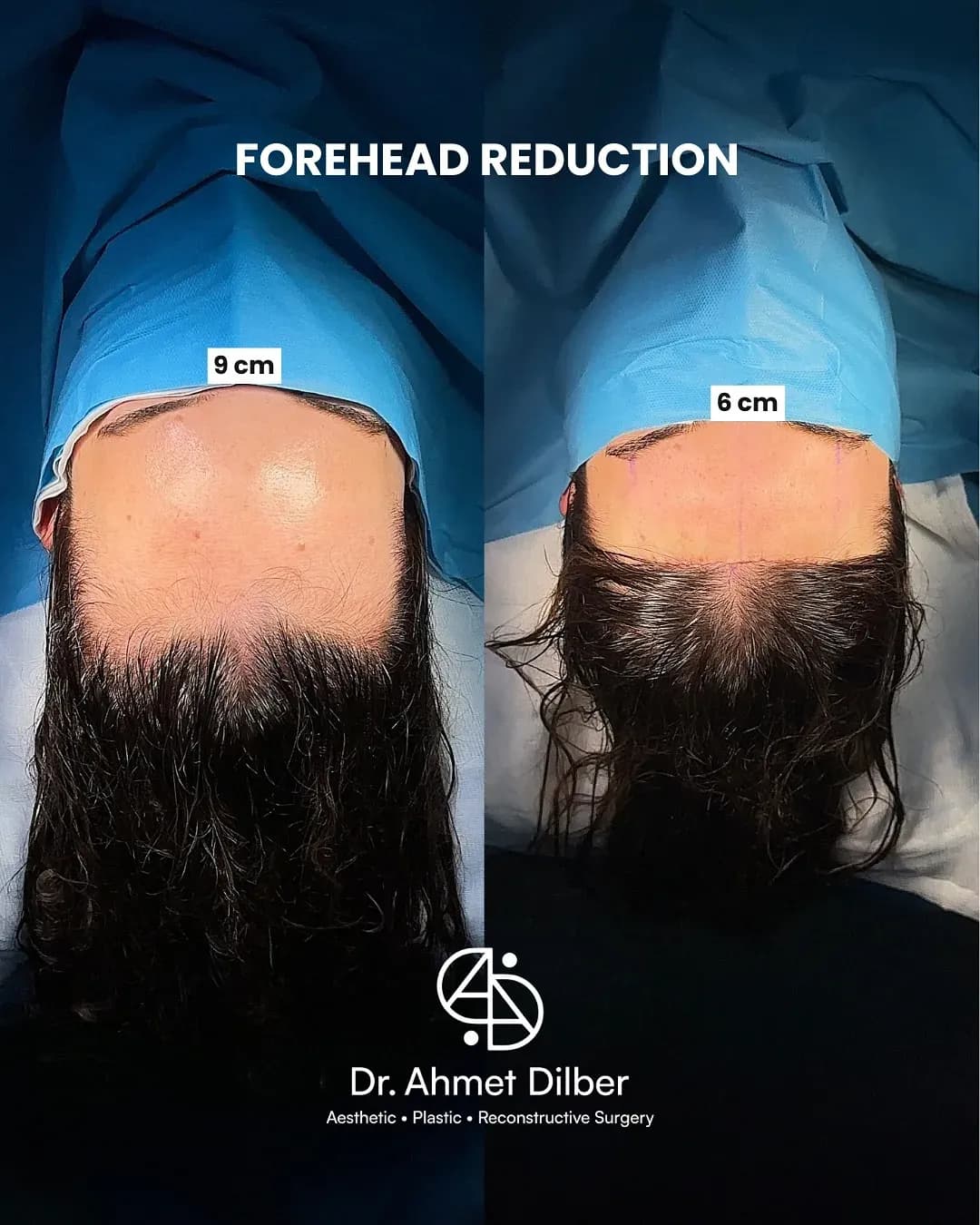 Before and after resultsBefore and after photos of Dr. Dilber's patients. Results vary.See the gallery →
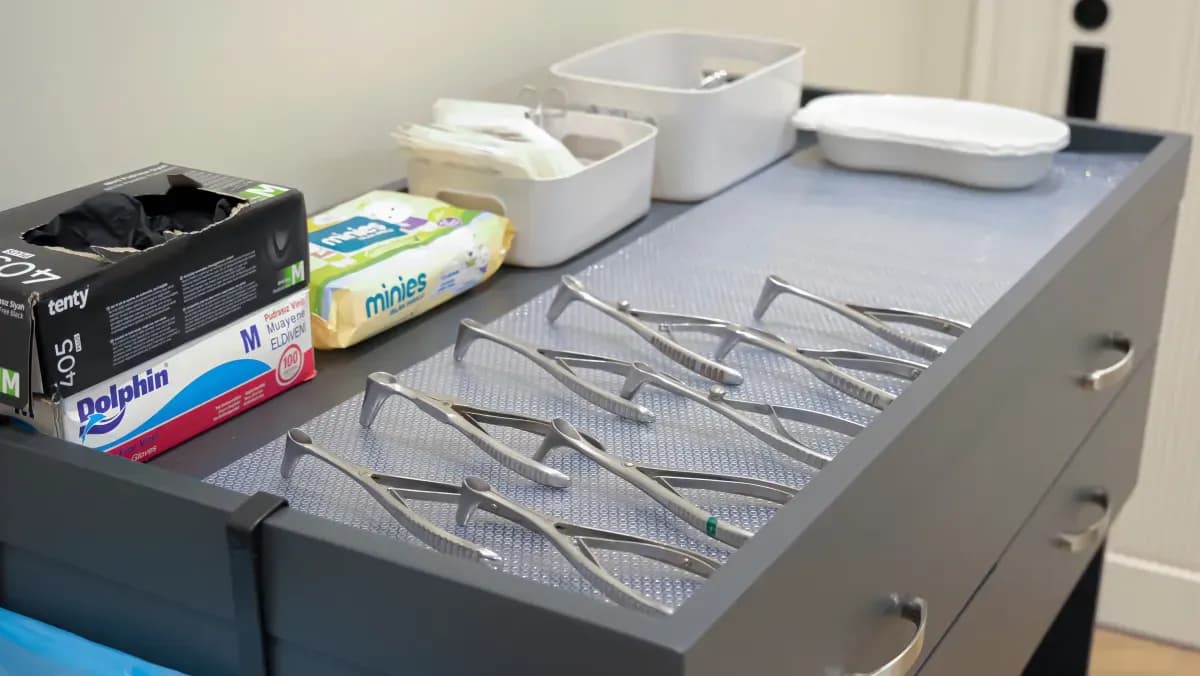 Patient guide (PDF)The guide we send every patient: timeline, medication, aftercare.Download the guide →
Send your photos and transplant details.
Include the transplant date, the method and recent photos of your hairline and the back of your head. Dr. Dilber reviews them, and his assistant replies on WhatsApp with his view on forehead reduction and timing.
