

Big or High Forehead Surgery: Which Operation Fits?
Big forehead surgery usually means forehead reduction, also called hairline lowering. It shortens a high forehead by removing a strip of skin at the hairline and moving the hair-bearing scalp forward. It does not change the forehead bone or lift the eyebrows. Op. Dr. Ahmet Dilber performs it in Istanbul under general anaesthesia, with one night in hospital, after reviewing your photos.
Send your photos on WhatsAppRead about the procedure

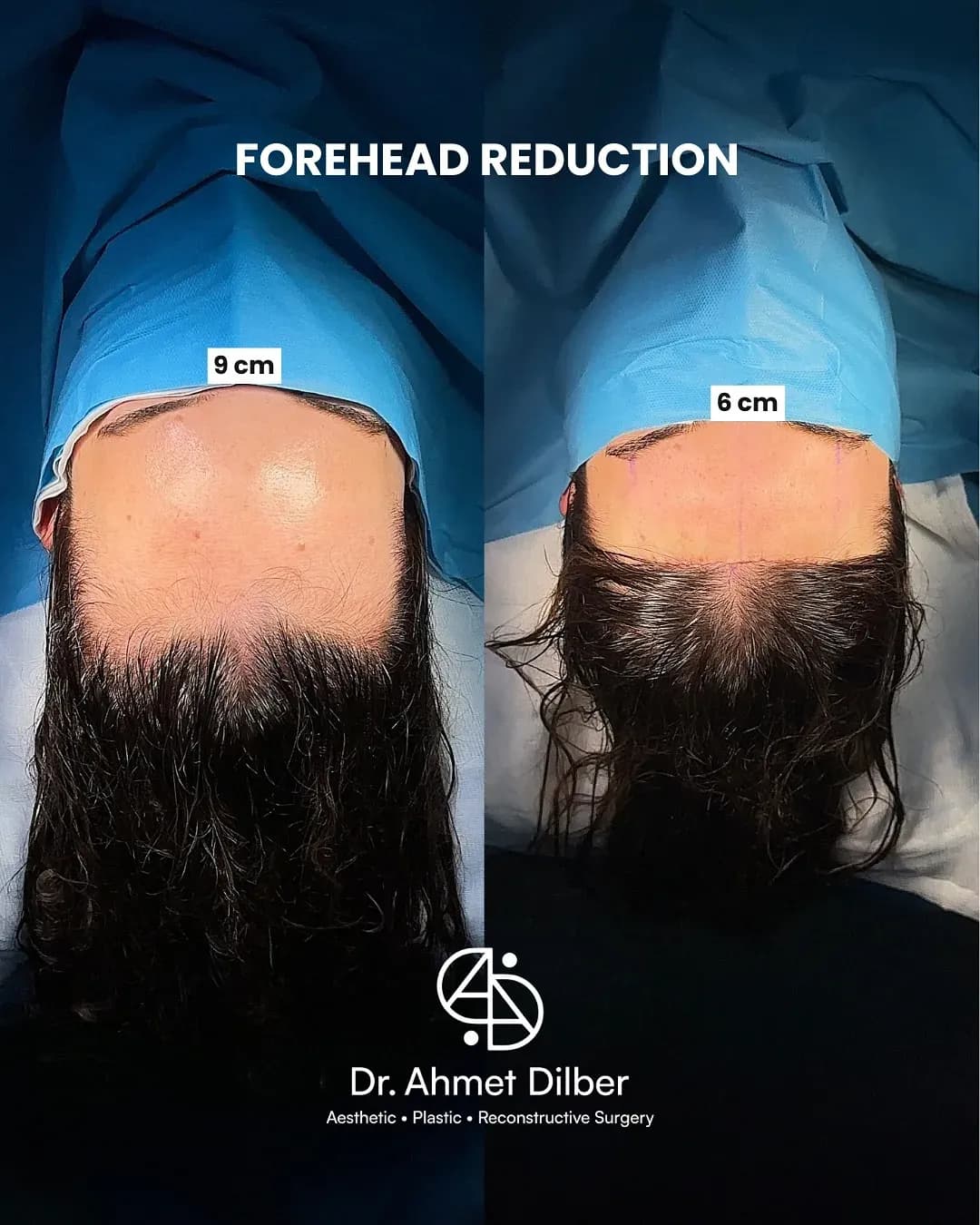
Before and after, forehead reduction. Results vary.
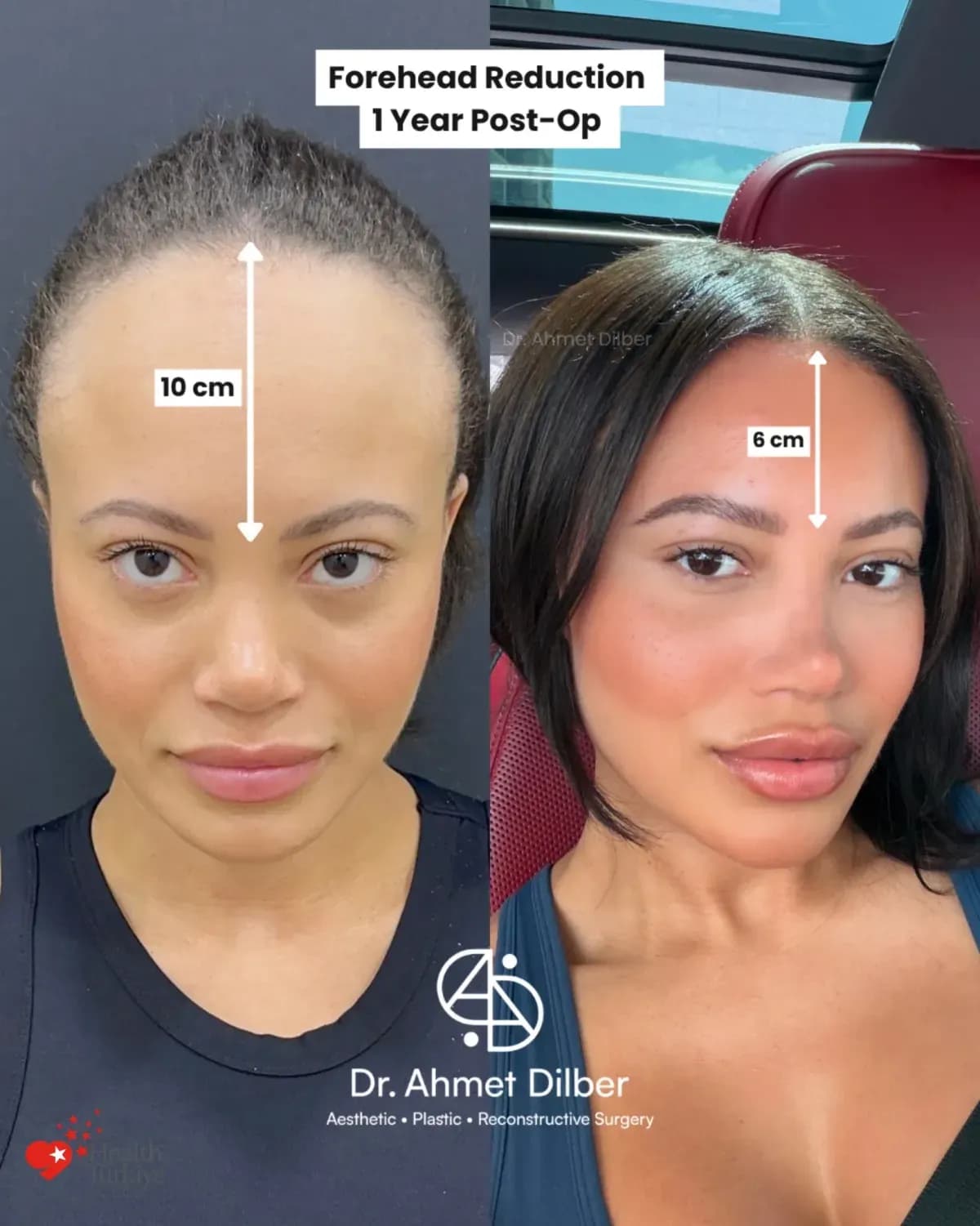
Before and after, forehead reduction. Results vary.
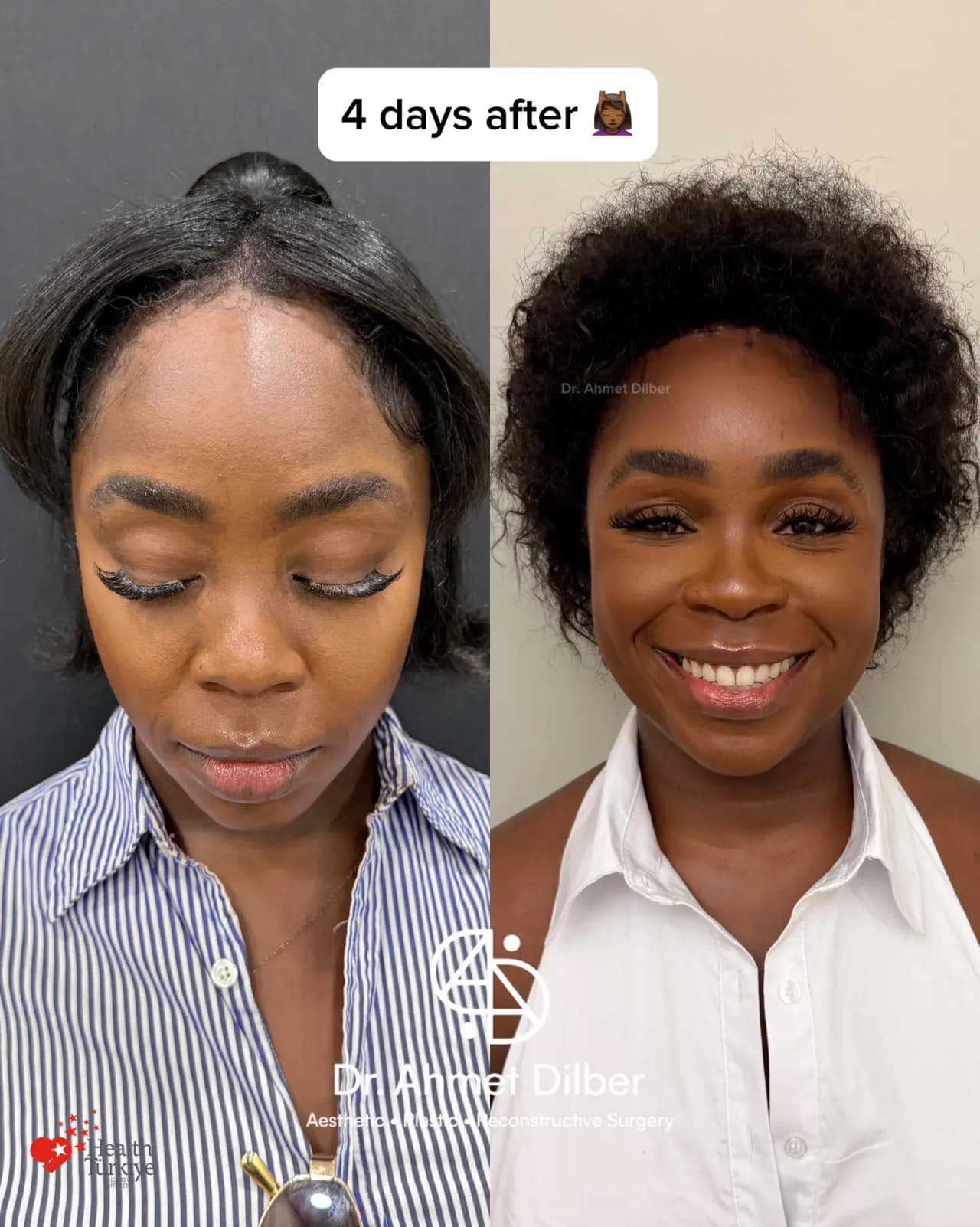
Before and after, forehead reduction. Results vary.



Ratings as of November 2026
Acıbadem Bakırköy
where Dr. Dilber operates, with one night of hospital care
1 year
of follow-up after surgery, in person or on WhatsApp
Licensed
for international health tourism by the Turkish Ministry of Health
What is the medical name for big forehead surgery?
The medical name is forehead reduction. You will also see hairline lowering, hairline advancement and scalp advancement; all of them describe the same operation. Dr. Dilber marks the new hairline at your consultation. In surgery he makes an incision along the hairline, removes the excess forehead skin, brings the hair-bearing scalp forward and closes the wound with sutures. It takes 1.5 to 2 hours under general anaesthesia.
The operation moves hair you already have. It shortens the distance between the hairline and the root of the nose, so the forehead looks shorter from the front. It does not reshape the bone under the skin, add new hair or raise the eyebrows. Those concerns need a different approach, set out below. The forehead reduction guide covers the full procedure, stay and recovery.
Op. Dr. Ahmet Dilber is a plastic, reconstructive and aesthetic surgeon. He trained at Istanbul University Cerrahpaşa Faculty of Medicine and completed his specialist residency at Okmeydanı Training and Research Hospital (2012 to 2017). He sees patients at his practice in Ataköy, Istanbul. Read more about Dr. Dilber.



Forehead reduction results
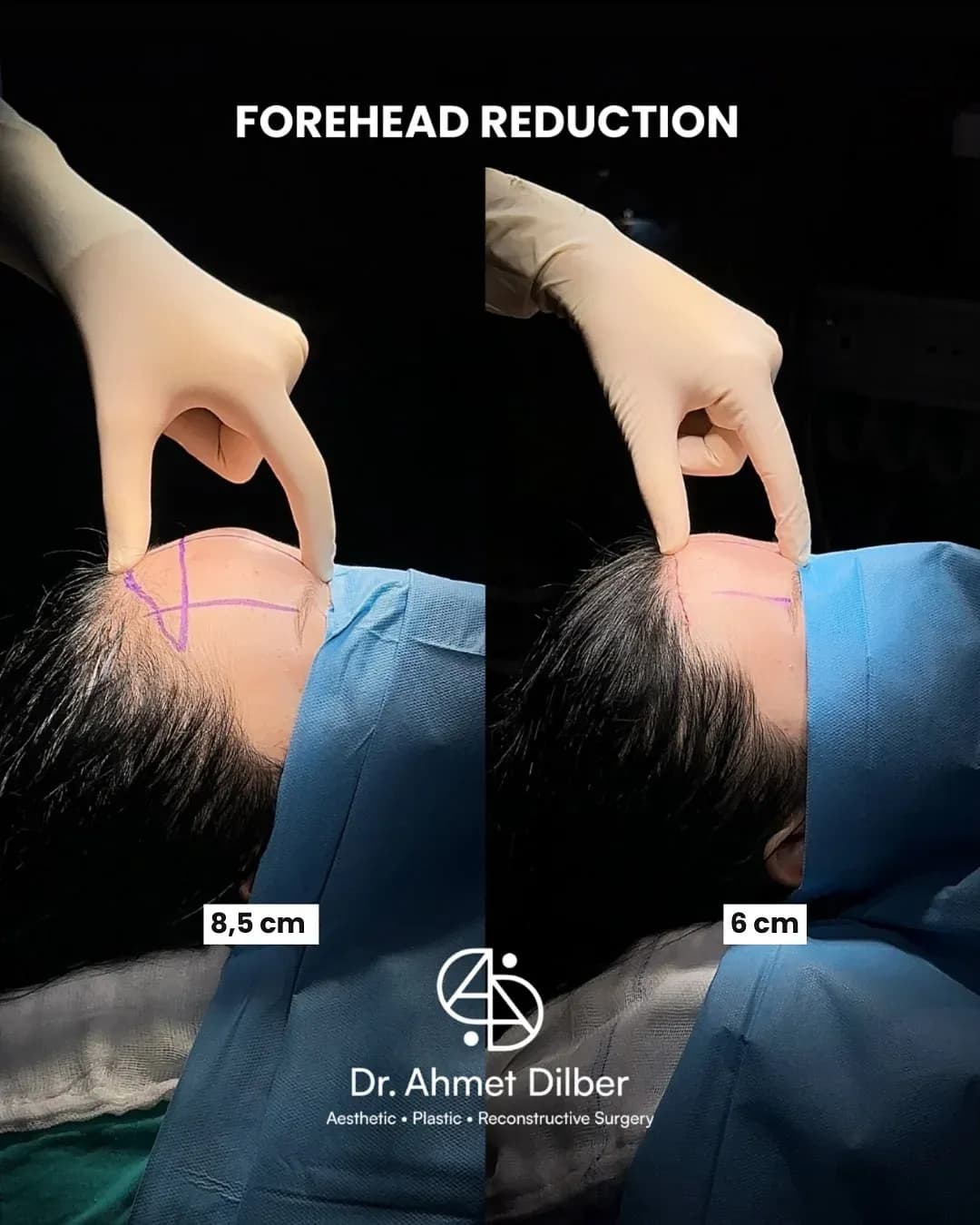
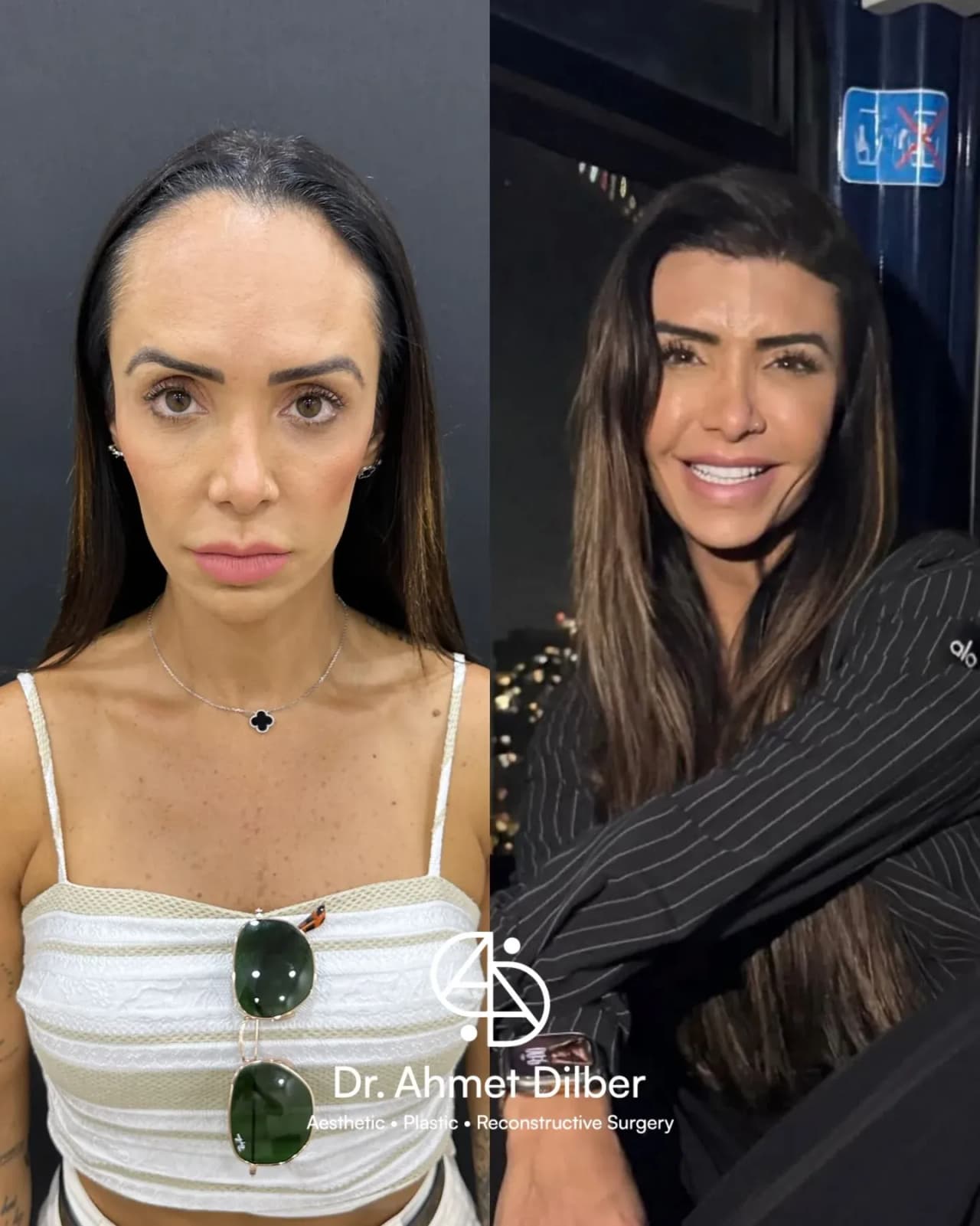
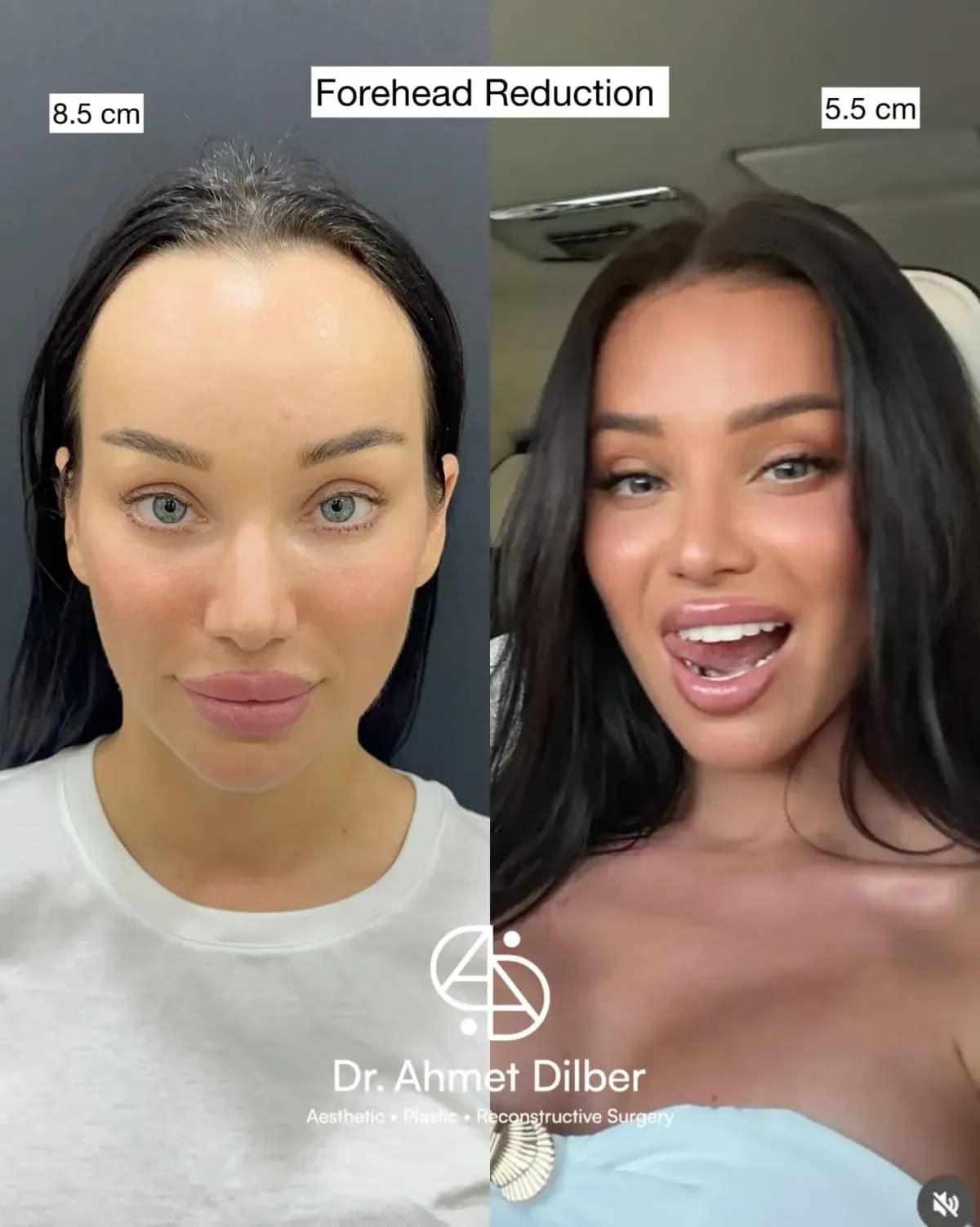
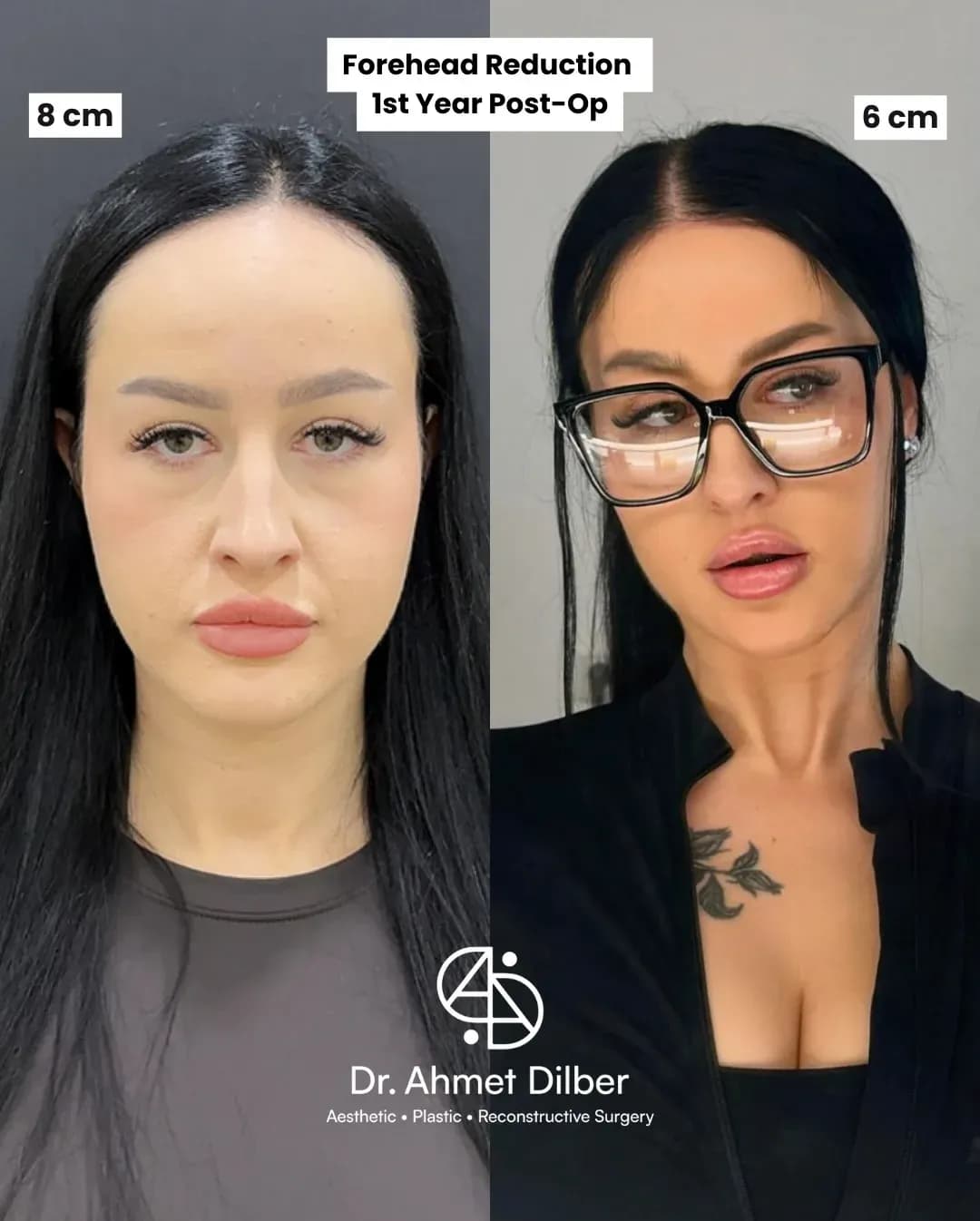
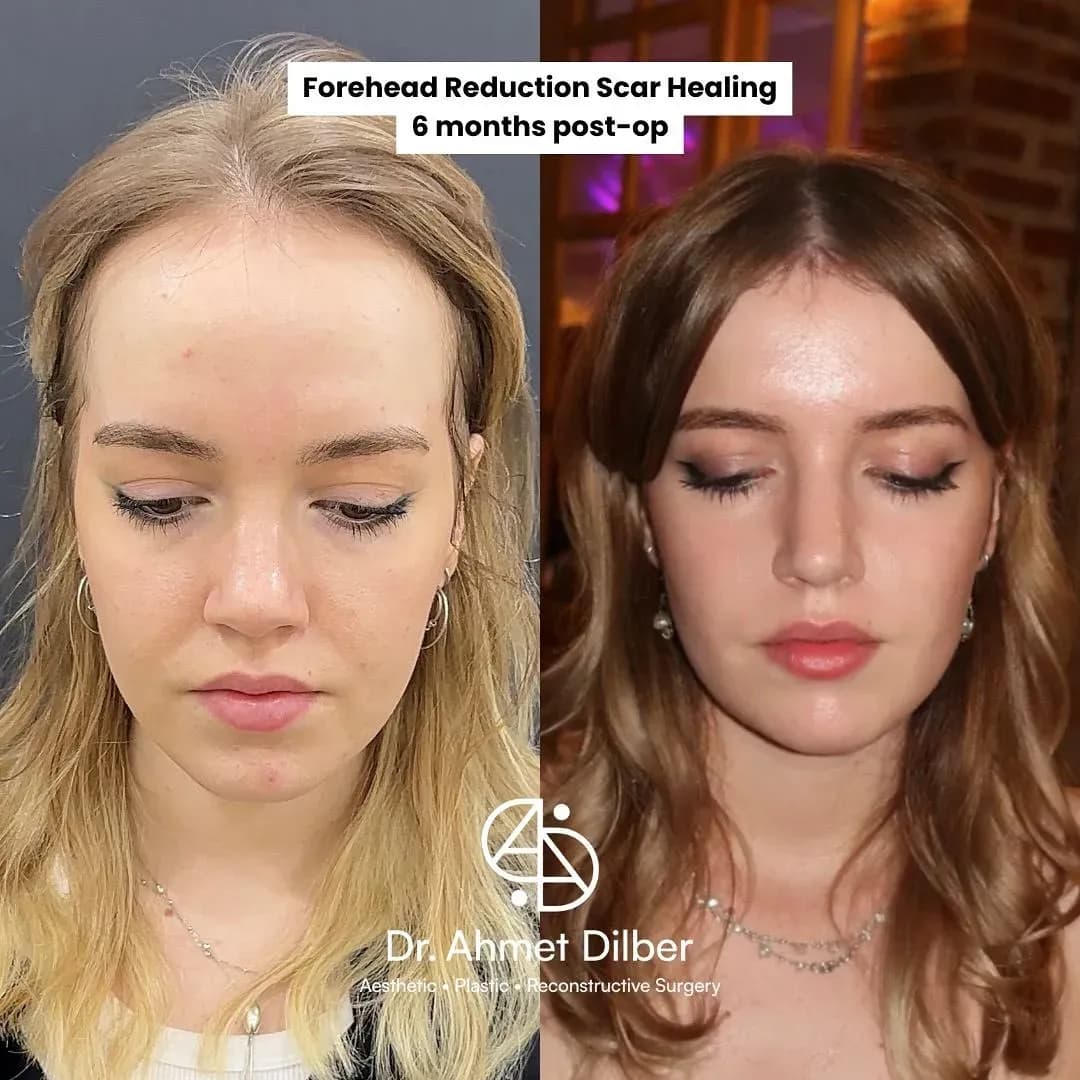
Before and after photos of Op. Dr. Ahmet Dilber's patients, from @drahmetdilber on Instagram. Results vary.
Which part of the forehead is the concern, and which operation addresses it?
A forehead can look big for three different reasons. Each points to a different operation, so the first step is working out which one applies to you.
High hairline: forehead reduction
If the distance from your eyebrows to your hairline is long and your hair is otherwise full, the position of the hairline is the issue. Forehead reduction moves the existing hairline forward in one operation. It suits a hairline that is high by nature or has stopped receding. The candidacy guide explains how this is assessed.
Projecting forehead bone: not a hairline issue
Some foreheads look big because the bone above the eyebrows projects forward, not because the hairline is high. Forehead reduction works on the skin and scalp only; the bone is never touched, so moving the hairline does not change the shape of the bone. If your photos suggest the bone is the main concern, Dr. Dilber tells you so.
Low or heavy eyebrows: brow lift
When the eyebrows sit low, the upper face can look heavy. Forehead reduction does not lift the brows, though a minimal lift can be requested. A brow lift raises the eyebrows; Dr. Dilber performs it through an incision in the scalp, so there is no visible surface scar. See forehead reduction vs brow lift for the differences.
What happens if you send your photos?
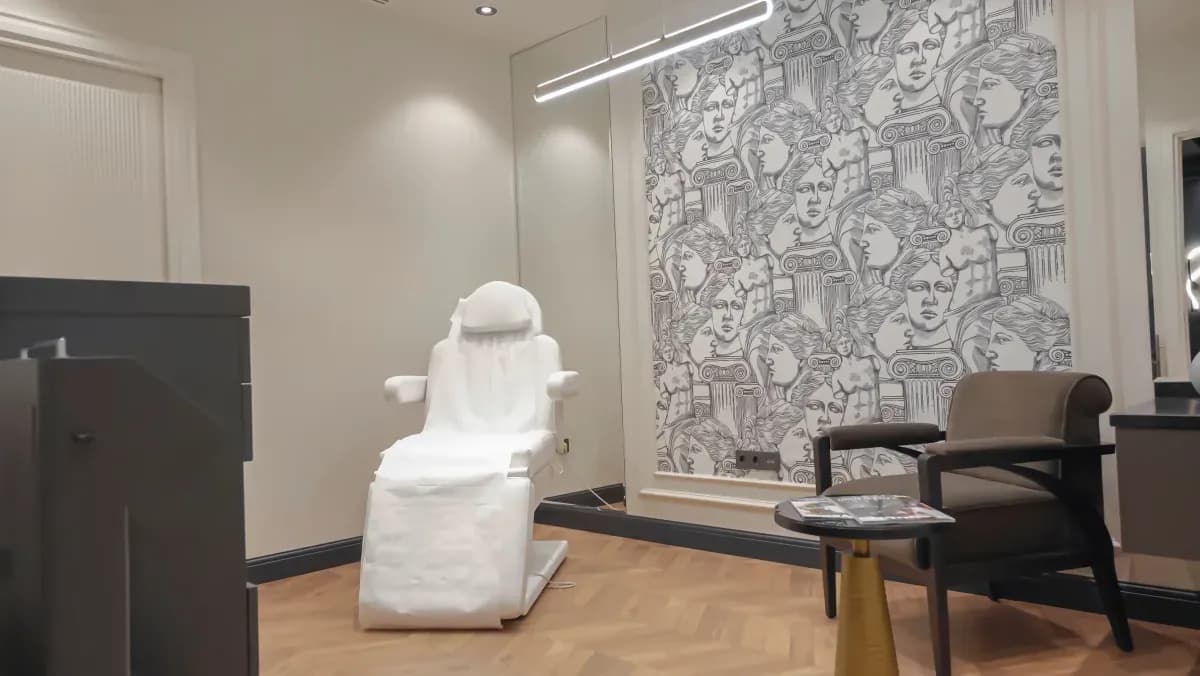
Photo review on WhatsApp
Send photos of your forehead from the front, left and right on WhatsApp, with your hair pulled back, plus your medical history. Dr. Dilber's assistant presents them to Dr. Dilber, who decides whether you are a candidate. A video consultation with him and his assistant can be arranged if you want one.
The day before: consultation in Ataköy
If you go ahead, you arrive in Istanbul the day before surgery. Dr. Dilber examines you himself at his practice in Ataköy, Bakırköy. He checks how far your scalp moves, discusses the risks, takes your consent and marks the new hairline. Blood tests and the anaesthetic examination follow at Acıbadem Bakırköy Hospital the same day.
Surgery and the days after
The operation takes 1.5 to 2 hours under general anaesthesia. You stay one night in hospital and return to your hotel the next day. A head band can be worn from day 1, and you can shower from day 2 with warm or cold water. On day 4 the plaster comes off at the Ataköy practice, and after that check you can fly home.
After you return home: photo follow-up
You send photos on WhatsApp at set intervals, at 1, 3, 6 and 12 months, and Dr. Dilber and his assistants review your healing and adjust creams or medication if needed. If you notice redness, discharge or increasing pain, send photos straight away. Read about aftercare after you fly home.
Your stay in Istanbul
You see Dr. Dilber at his practice in Ataköy, have surgery at Acıbadem Bakırköy Hospital and can stay at a nearby hotel.
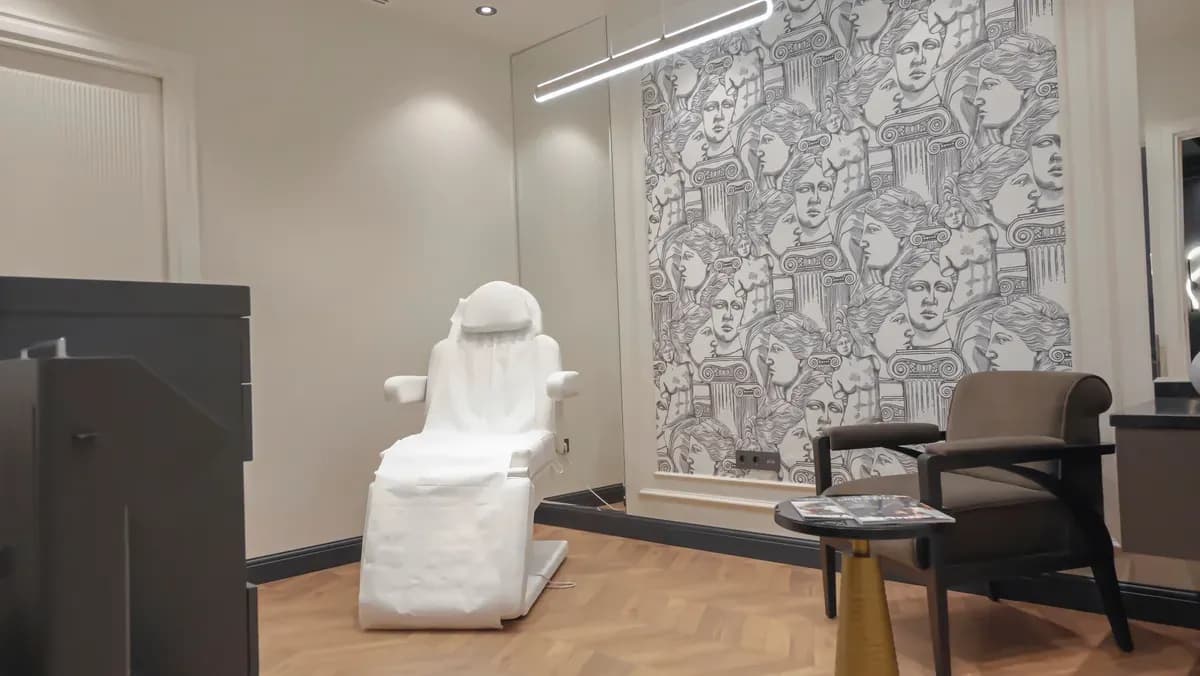
The practice in Ataköy 
Acıbadem Bakırköy Hospital 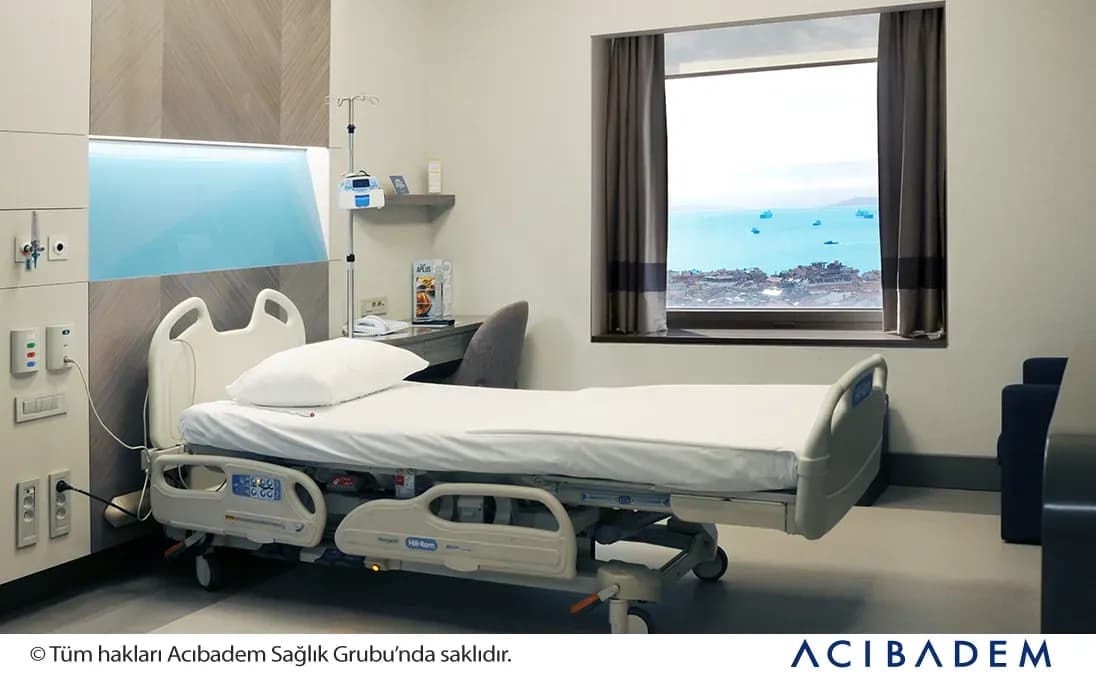
Patient room 
Hotel room, on request
What scar does it leave, and what are the risks?
Forehead reduction leaves a permanent scar along the hairline. The sutures dissolve within about 6 months and are not removed, and hair can grow through the incision line and hide it. It shows more when hair is pulled back or wet, or if the hairline recedes later. The scar matures over about one year. Keep the suture line clean, apply the antibiotic cream and scar gel Dr. Dilber prescribes, use SPF 50+ sunscreen for 6 to 12 months and wear a hat in the sun; a hair band is fine from day 1. The scar page explains healing in more detail.
Any cosmetic surgery carries risks. For forehead reduction they include bleeding, infection, numbness or altered sensation behind the hairline, a visible or widened scar, hair loss along the incision, an uneven hairline and the need for revision surgery. Dr. Dilber goes through each one with you at the consultation in Ataköy, before you agree to surgery.
Options for a big forehead compared
Forehead reduction
What it changes: Lowers the hairline at once; works with short hair
Scar: Along the hairline, hidden by hair growthHair transplant (not performed by Dr. Dilber)
What it changes: Adds density; possible about one year after forehead reduction
Scar: Donor area, usually the back of the scalpBrow lift
What it changes: Raises low or heavy eyebrows
Scar: Within the scalp; no visible surface scarProjecting bone
What it changes: Not changed; forehead reduction never touches the bone
Scar: Not applicableHairstyle, fringe or hair fibres
What it changes: Changes how the forehead looks, not its size
Scar: None
What do people ask when they first consider forehead surgery?
No. A high or large forehead is a normal variation in face shape, and there is no ideal forehead height that everyone should have. Surgery is a personal choice for adults over 18 who are bothered by the proportions of their face. If your hairline has recently started moving back, that may be hair loss rather than forehead size; the NHS advises seeing a GP to find the cause.
Answer comes with the content seed.
Answer comes with the content seed.
Answer comes with the content seed.
Answer comes with the content seed.
Answer comes with the content seed.
Answer comes with the content seed.
Explore the practice
- Before and after resultsBefore and after photos of Dr. Dilber's patients. Results vary.See the gallery →
 Patient guide (PDF)The guide we send every patient: timeline, medication, aftercare.Download the guide →
Send three photos. Find out which operation fits.
Photograph your forehead from the front, left and right with your hair pulled back. Dr. Dilber reviews them, and the team replies on WhatsApp with his view and the next steps.
